
How to Pack Light for Camping on a Budget
Most beginners carry too much because of duplicates and “just in case” extras, not because they own the wrong gear. Two flashlights, three shirts for one night, and a full-size pillow add up fast. The good news is, packing light starts at home with a list and a pile on the floor, before you spend a dollar.
To pack light for camping on a budget, build your list around shelter, sleep, water, food, and safety. Match each item to the forecast and campsite, cut duplicates, and only then replace the heaviest items you still need. Lightweight gear helps, but it comes last. Keep warmth, water, a light source, and a first aid kit on the list, no matter how hard you trim.
I’ll also show you how saving bulk (space in your pack) differs from saving weight (what you feel on your shoulders). They’re two separate goals. Want a ready-made starting point? Grab our camping packing list, lay everything out, and start crossing things off before your next trip.
What Do You Actually Need to Bring?
You need gear that keeps you sheltered, rested, fed, hydrated, and safe, and very little else. Your exact list depends on the weather, how far you’ll walk from the car, and how many nights you’ll stay. The quickest savings often come from items you already own twice.
Start with Shelter, Sleep, Water, Food, and Safety
These five groups cover your core camping essentials. Everything else is optional. Here’s the minimalist camping list I recommend beginners start with:
- Shelter: tent or tarp with stakes
- Sleep: sleeping bag and sleeping pad
- Water: bottles holding at least 2 quarts, plus a filter or purification tablets if you’ll use natural sources
- Food: meals, snacks, and a way to cook if needed
- Safety: first aid kit, headlamp with extra batteries, map, whistle, lighter, pocket knife, sunscreen, and rain gear
The National Park Service includes all of these in its backcountry checklists, and I treat that list as the minimum. A headlamp and first aid kit weigh very little. Skipping them saves almost nothing and adds real risk.
Adjust Your List for the Weather, Campsite, and Trip Length
Shape your list around three questions: How cold will it get at night? Is there water at camp? How far is camp from the car?
| Trip type | What changes |
|---|---|
| Car camping | Weight barely matters; focus on reducing bulk so everything fits |
| Backpacking | Every item rides on your back, so weight comes first |
| Weekend camping trip | One or two nights; rewear clothes and keep meals simple |
| 4-day camping trip | More food and fuel; add a spare pair of socks and plan water refills |
If the campground has a spigot, you can carry less water. At a trail camp by a lake, bring a filter instead of jugs. If rain is in the forecast, keep your rain jacket near the top of your pack. Check the forecast a few days before you leave, then check it again that morning.
Cut Duplicates Before Buying New Gear
Lay out every item and group similar things together. You’ll probably find two knives, a lantern and a headlamp, extra cookware, and more clothes than one person can wear. Keep one of each. A mug can work as your bowl, and your phone can replace a separate camera.
A bandana can serve as a towel, pot holder, and sun cover. This step costs nothing, and it often trims more weight than buying a new “ultralight” item would.
Which Shelter and Sleep Gear Saves the Most Weight?
Your tent, sleeping bag, and sleeping pad take up the most space in many packs, so they offer the biggest chance to save weight. Choose a tent that fits your group, then match your bag and pad to the nighttime low. That’ll save more than swapping out a small gadget.

Choose a Tent or Tarp That Fits the Conditions
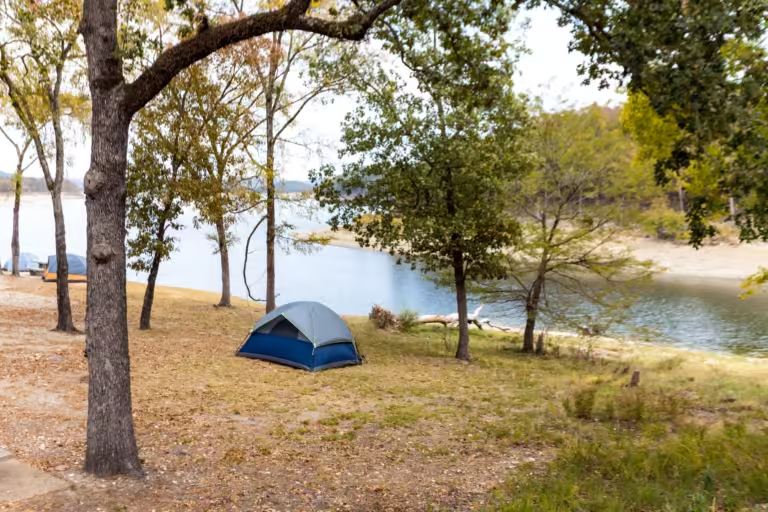
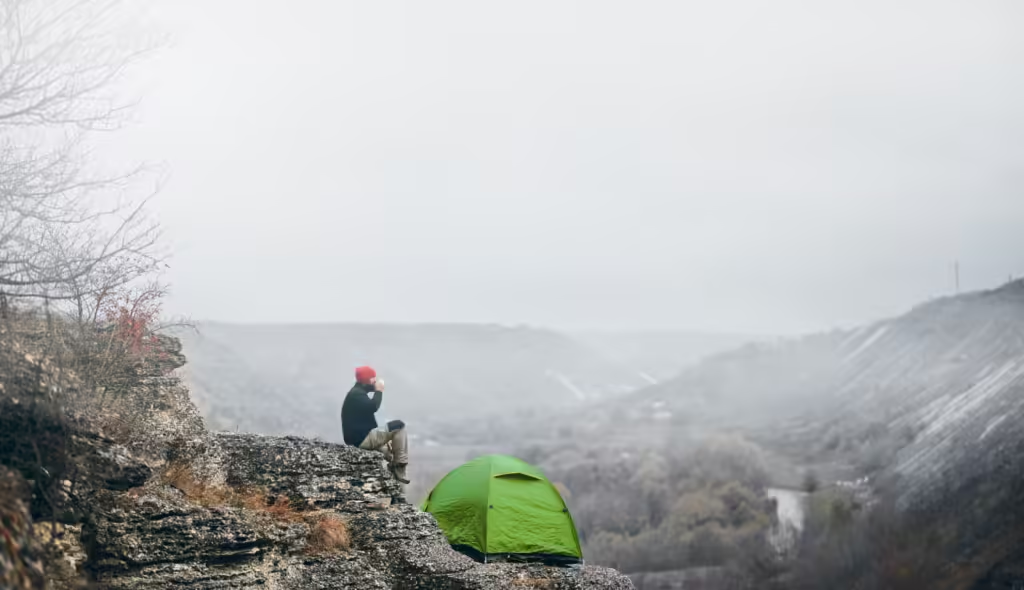
Pick the smallest tent that fits your group. The National Park Service notes that a two-person tent fits two sleepers, not two people plus all their gear. It also advises against bringing more tent than you need. Dome tents use less material for the space they provide, which keeps weight down. For a first trip, the compact tent you already own usually beats buying an ultralight model.
A tarp is the cheapest lightweight option in mild, dry weather. It offers less protection from bugs and wind, so I’d save it for trips with a calm forecast. Some parks restrict tying lines to trees, so check the rules before relying on a tarp or hammock. For warm-weather options, see my picks for the best tents for summer camping.
The best backpack for light camping fits your body well. Try on a few and see what feels right.
Match Your Sleeping Bag and Pad to Nighttime Temperatures
Pack for the coldest night in the forecast. Don’t cut warmth to save weight. Sleeping bags list two ratings: the comfort rating (where a cold sleeper stays comfortable) and the lower limit (where a warm sleeper stays comfortable). REI notes that a bag’s name often uses a rounded number, so check the actual rating on the tag.
Your pad matters just as much. It keeps the ground from pulling heat out of your body, and its warmth comes down to R-value. Closed-cell foam pads are cheap, tough, and light, with an R-value around 2, which suits summer. R-values add together, so put a foam pad under an inflatable one to add warmth in cold weather. You’ll find more ideas in my camping sleeping hacks.
The right tent should balance weight, comfort, and weather protection.
Keep Comfort Without Packing Your Bedroom
A camp pillow is one of the easiest things to leave at home. The Park Service suggests stuffing a pillowcase or stuff sack with extra clothes. A foam pad can also work as a sit pad at camp, so you can skip a chair when backpacking.
When car camping, keep your comfy pillow if it fits. Weight isn’t the issue there, just space.
How Can You Carry Less Clothing, Food, and Water?
Clothing, food, and water are where you’ll find the most “just in case” packing. Plan to rewear layers, choose dry foods, and find out where you can refill water. Your load will shrink without leaving you cold, hungry, or thirsty.
Pack Rewearable Layers and Weather-Ready Footwear
Bring layers you can combine: a quick-dry shirt, a warm long-sleeve or fleece, a lightweight jacket, and rain gear. Park Service guides recommend synthetic or wool over cotton because those fabrics dry faster. Wool also stays warm when damp. Pack one outfit to hike in and a dry set to sleep in. On longer trips, socks are the one item worth doubling up on.
Wear your hiking boots on the drive to save pack space, and break new boots in weeks ahead. Sneakers work fine on flat campground trails. Heading out in cooler months? My guide on what to pack for fall camping covers extra layers.
Plan Simple Meals and a Minimal Cooking Kit
Dry foods like rice, pasta, oatmeal, and dehydrated meals give you the most calories for the least weight. The Park Service also suggests choosing packaging you can flatten, such as bags and boxes, instead of cans and jars. Repack food into zip bags at home and toss the extra cardboard.
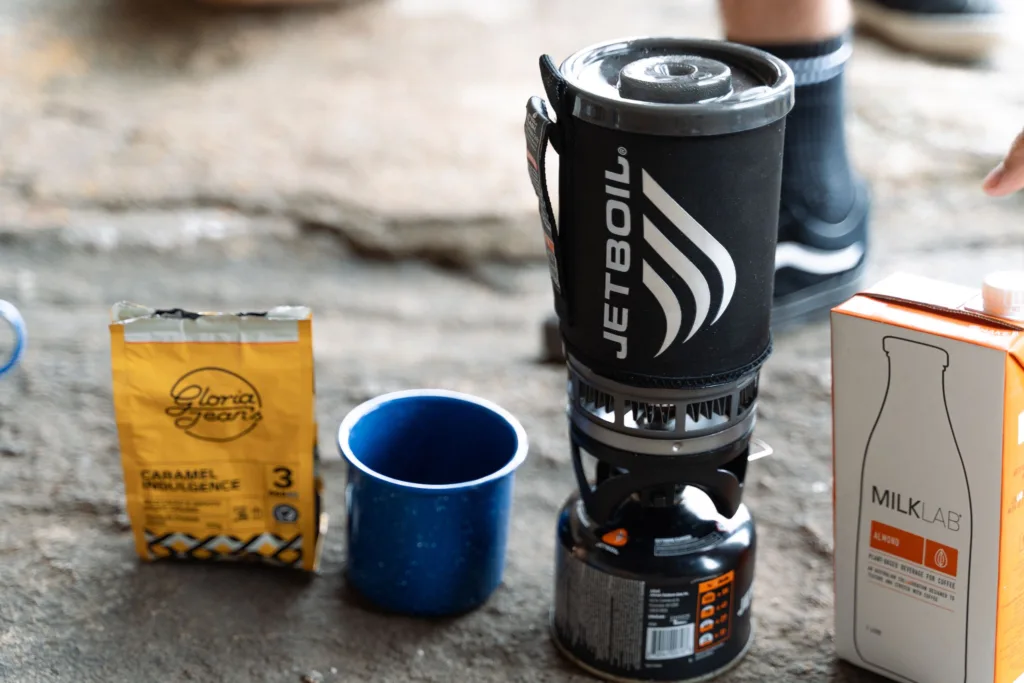
For cooking, one pot, one camping stove, a lighter, a spoon, and a mug cover most beginner trips. Skip the cutting board and skillet unless you’re car camping. I’ve got cheap, lightweight food ideas in my list of the best camping food to bring.
Carry Enough Water and Know Where You Can Refill
Water is heavy, but you need it, so plan carefully. The Park Service suggests about 2 liters of drinking water per person per day, more in hot weather, plus water for cooking and cleaning. Find out before you go whether your campsite has a tap.
If it does, use a collapsible water container to save space once it’s empty. If you’ll use a stream or lake, bring a filter or tablets. The CDC advises boiling water or filtering and then disinfecting it when safety is unclear. A hydration pack or two bottles plus a filter usually weighs far less than carrying all your water.
How Should You Organize and Check Your Pack?

Packing efficiently makes the same load feel lighter and keeps key items within reach. Put heavy things close to your back, use bags to stay organized, and test everything at home first.
Place Heavy Gear for Better Balance and Keep Essentials Handy
REI divides a backpack into zones. I find this packing order easy for beginners:
- Bottom: sleeping bag, sleep clothes, and camp shoes
- Middle, close to your back: food, stove, cook pot, and water reservoir
- Top: rain jacket, warm layer, first aid kit, water filter, and toilet kit
- Pockets: headlamp, map, sunscreen, snacks, and water bottles
Heavy gear in the middle keeps the weight balanced. Put it too low and the pack sags; too high and it feels tippy. Keep items strapped outside to a minimum because they can snag on branches.
Use Bags to Organize Gear, Not Hide Extra Weight
Packing cubes, compression bags, and space bags shrink bulk, and they’re handy for car camping. But they don’t reduce weight. A squeezed-down pile of extra clothes still weighs the same. Ziploc bags offer a budget-friendly way to group small items, keep things dry, and carry out trash. My DIY camping hacks include more cheap organizing ideas.
Do a Practice Pack and Plan to Pack Out Waste
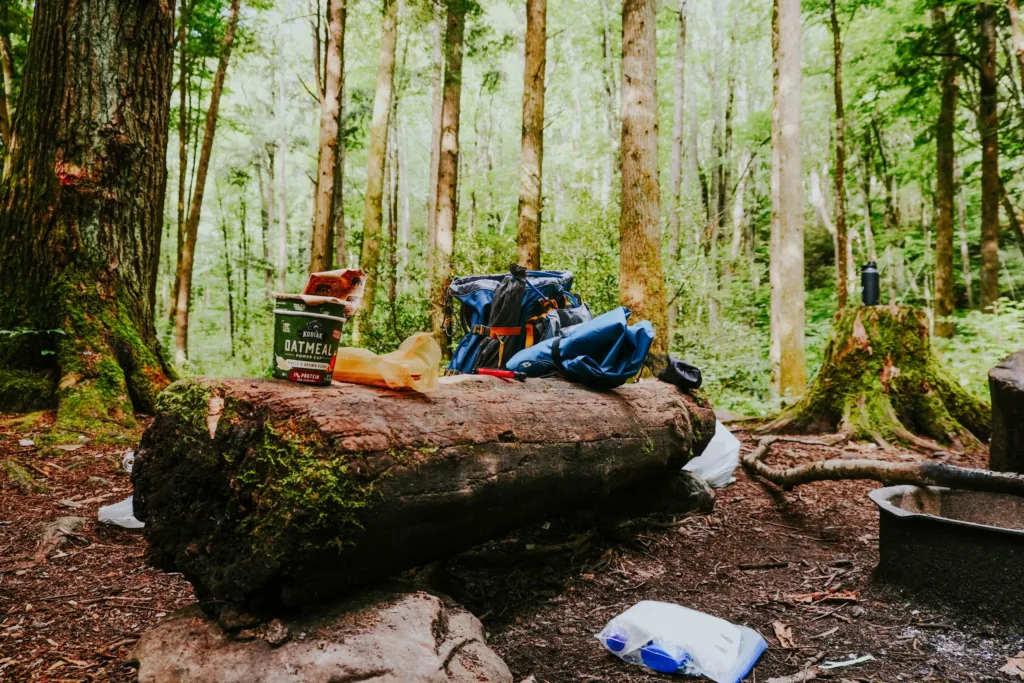
Pack everything a few days early and check items off your list as they go in. Walk around the block with the loaded pack. Anything you didn’t touch on your last trip, aside from safety gear, is a candidate to leave at home.
Follow Leave No Trace principles for eco-friendly camping: pack out all trash and leftover food, and bring a spare zip bag for used toilet paper. The Leave No Trace Center advises digging catholes 6 to 8 inches deep, at least 200 feet from water, trails, and camp, so bring a small trowel.
A Lighter Pack Starts with What You Leave Home
Packing light for camping follows a simple order: list your core needs, adjust for weather, water, and distance from the car, cut duplicates, and only then replace the heaviest items. Keep warmth, water, lighting, and first aid on the list every time. Minimalist camping means carrying what you’ll use. For a first trip, that usually means packing gear you already own, with the heavy items centered against your back. If you’re new, my tips for first time camping can help you plan the rest of the trip.
Frequently Asked Questions

How do you pack light for an overnight camping trip?
I bring one set of hiking clothes, one dry set for sleeping, and just the essentials: shelter, a sleep system, water, simple food, and safety gear. I skip the pillow and stuff a sack with clothes instead. Meals that need little or no cooking help keep things light, too.
How can you pack light for camping in winter without getting cold?
Save weight on extras, not warmth. I use a sleeping bag rated for the overnight low and a pad with an R-value of 5.5 or higher for extreme cold. You can also put a foam pad under an inflatable one.
My guide on how to pack for winter camping covers layers and extra fuel.
What should you pack for a four-day camping trip?
I pack the same core gear as I would for a weekend, plus enough food for four days and a little extra for emergencies. I also bring more stove fuel and spare socks. Plan water refill points rather than carrying all your water, and rewear your layers.
How much should a camping backpack weigh?
Aim for a load you can lift, hike with, and set down without straining after an hour on the trail. I do a practice walk at home. If my shoulders ache or the pack sways, I remove non-essentials and move heavy items to the middle, close to my back.
Can you pack light for camping without buying ultralight gear?
Yes. I’ve found that most beginners can cut plenty of weight by removing duplicates and matching their gear to the forecast. Simple swaps help, too: a foam pad, a clothes-stuffed pillow sack, and dry foods in zip bags can save weight before you buy anything new..