
Portable and Compact Gardening Ideas for Campers: Grow Anywhere!
Camping doesn’t mean you have to leave your love for plants behind. Some of my favorite gardening memories happened while I was living out of a camper, surrounded by trees and fresh air.
You can grow herbs, veggies, and even flowers in containers that move with you from one campsite to the next.
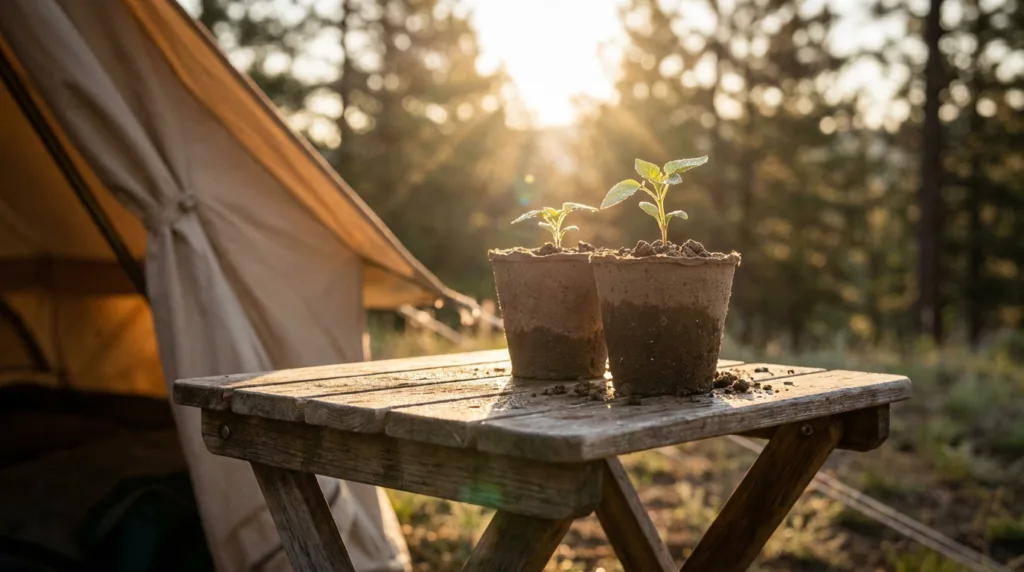
The trick is finding compact solutions that fit your travel style. I’ve noticed that herb planters work great on window sills. Vertical gardens can also turn even the tiniest RV into a green nook.
From lightweight pots to hydroponic kits, there are many ways to add fresh food and a little life to your camping setup.
Maybe you want to sip your morning coffee with a sprig of basil from your windowsill. Or maybe you’re craving cherry tomatoes for dinner. Portable gardening makes that possible.
I’ll share the setups, plant choices, and hacks that keep my mobile garden alive and happy on the road.
Key Takeaways
- Vertical planters and compact containers let you grow plants while camping.
- Lightweight soils and hydroponic kits save space and mess compared to traditional gardening.
- Picking resilient plants and using travel-proof setups keeps your mobile garden healthy between sites.
Why Go Portable? The Joy of Mobile Gardening
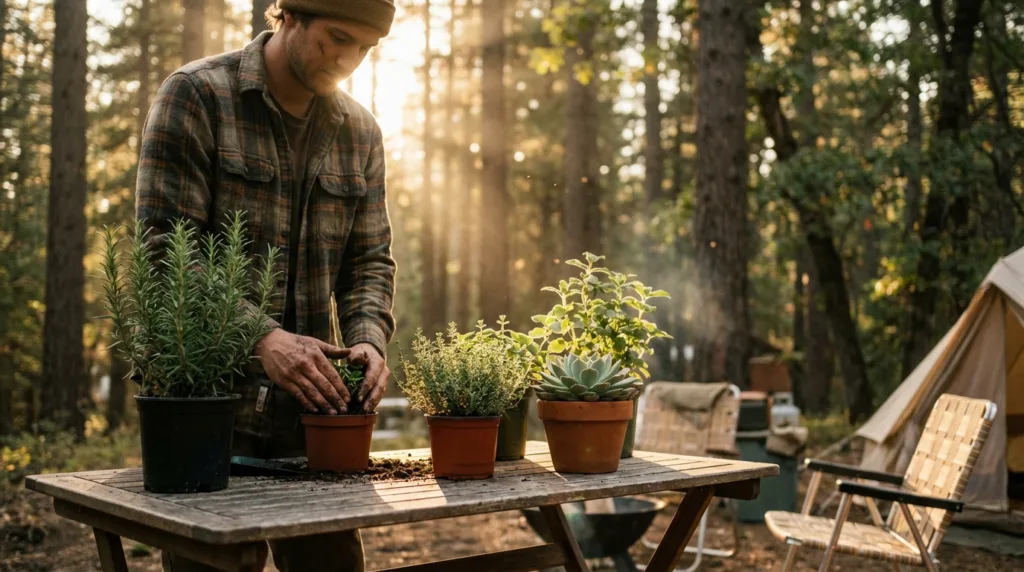
I’ve found that portable gardening changes how I connect with nature while traveling. Mobile gardens give me fresh food, flexibility, and a more sustainable way to live on the move.
Flexibility for Campers and Nomads
My portable garden adapts wherever I end up parking or pitching my tent. Unlike a fixed garden, I can move my plants to chase the sun or tuck them away from sudden storms.
When I’m living the van life, my plants come along for the ride. I use lightweight, stackable containers and sometimes just wheel them out of my rig.
There’s something comforting about not having to start over. My herbs and veggies travel with me, whether I’m camped in the mountains or parked by the beach.
Flexibility perks I’ve noticed:
- Quick setup and takedown for frequent moves.
- Protection from sudden weather changes.
- Easy to chase the best sunlight.
- Simple storage in the vehicle when driving.
Fresh Produce on the Move
Nothing beats grabbing fresh basil for campfire pasta or picking cherry tomatoes for lunch. My little portable garden keeps me stocked with ingredients that taste better than anything from the store.
I stick to compact, quick growers like lettuce, spinach, and herbs. They don’t need much space or deep roots, and I get to harvest them over and over.
The savings add up, especially if you’re camping for a while. Produce at remote campsites can cost double what you’d pay in town. My garden pays for itself after a few trips.
My top portable crops:
- Herbs: Basil, oregano, and thyme for flavor.
- Greens: Lettuce, spinach, and arugula, which are ready in a month.
- Small veggies: Cherry tomatoes, radishes, and peppers.
Sustainable Living on the Road
My portable garden helps me cut down on waste while camping. I use less plastic from packaged produce and don’t rely as much on food that has been shipped from far away.
Container gardening makes saving water easier, especially with self-watering pots. Efficient water use matters when you’re camping somewhere dry.
Composting scraps gets simpler, too. I feed my plants with kitchen waste, and in turn, my plants feed me.
Caring for plants is surprisingly therapeutic. After a long day of driving, tending to my garden helps me unwind and feel grounded. It’s almost like meditation, just with dirt under my nails.
Getting Started: Choosing the Right Portable Gardening Solution
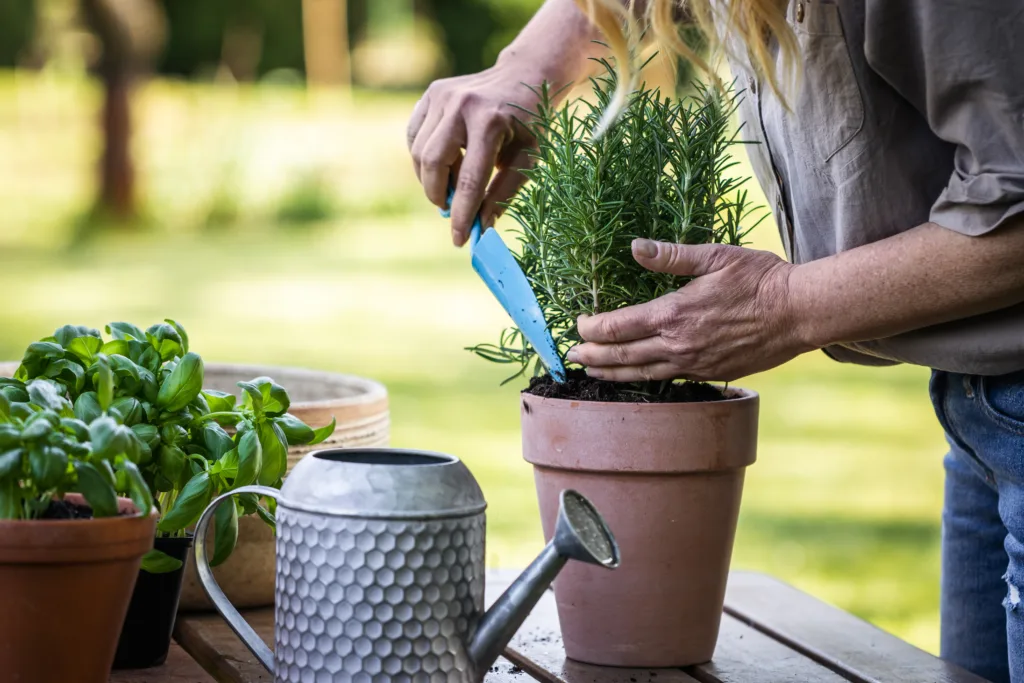
The secret to camping gardens? Match your container to your travel style, pick lightweight materials, and know the plant transport rules. I’ve learned that choosing the right pots can mean the difference between thriving plants and a mess.
Assessing Your Camping Style and Space
I always tell friends to look at their setup first. Are you car camping with a trunk to spare, or backpacking where every ounce counts?
For car campers, I like portable raised beds or bigger grow bags. They’re great if you’re staying put for a while.
RV folks have different needs. Fabric planters and hanging pots fit tight spaces best.
Backpackers should stick with ultra-light options. Small fabric grow bags or collapsible pots are the way to go.
Think about how long you’ll be camping. Short trip? Grab some quick growing herbs in tiny pots. Longer adventures? Get creative with DIY portable gardens.
| Camping Style | Best Container Type | Size Recommendation |
|---|---|---|
| Car Camping | Portable raised beds | 2-4 gallon capacity |
| RV Living | Fabric planters | 1-2 gallon maximum |
| Backpacking | Collapsible pots | Under 1 gallon |
Don’t forget your camp kitchen setup. I’ve picked containers before that didn’t fit my camping table, which is not fun. Always measure your space before buying gear.
Weight and Durability Considerations
Weight sneaks up on you fast. I once dragged heavy ceramic pots to a campsite and regretted every minute of it.
Fabric grow bags are my go-to. They’re light, fold down flat, and can handle rough handling.
Plastic pots work, but they can crack if it gets too hot or cold. I’ve watched nice planters split after one chilly night.
Make sure your pots have drainage holes. Too much water can kill plants fast. I carry a small drill bit in case I need to add holes on the fly.
Double-duty containers are smart. Storage bins that turn into planters save space. Some portable garden ideas use old buckets, and that works better than you’d think.
Look for UV resistance if you’ll be outdoors a lot. Cheap plastics get brittle and crack after a summer in the sun.
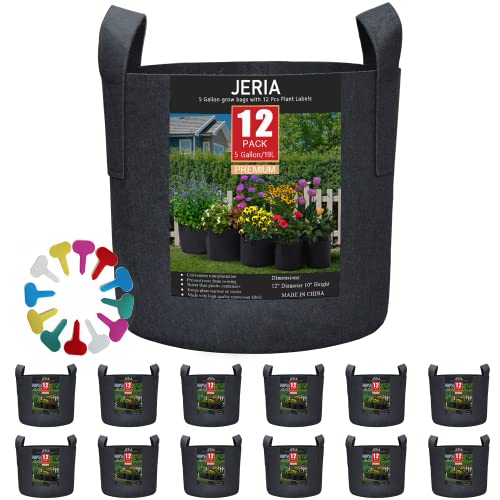
The JERIA 12-Pack 5 Gallon Grow Bags are perfect for RV or van life enthusiasts looking to bring a touch of nature with them on the road. These aeration fabric pots come equipped with sturdy handles, allowing for easy transport and placement anywhere, whether it's inside your vehicle or outside on a deck or porch. Ideal for growing vegetables and flowers, they offer flexibility and durability, making container gardening both convenient and portable.
Legal and Practical Travel Tips
Plant transport laws can mess up a camping trip if you’re not prepared. I learned this the hard way after crossing a state line with homegrown tomatoes.
California is extra strict about plants at borders. Inspectors will take your plants if you don’t follow the rules.
Always check your destination’s rules. Some states ban certain plants or soil to stop pests from spreading.
Crossing international borders means you have to declare all plant stuff. I’ve seen fellow campers lose their gardens at customs. Ouch.
Bring plant receipts if you can. They help prove where your plants came from if anyone asks. Consider starting from seeds at your destination since seeds usually have fewer restrictions.
Creative Planters and Container Ideas for Campers
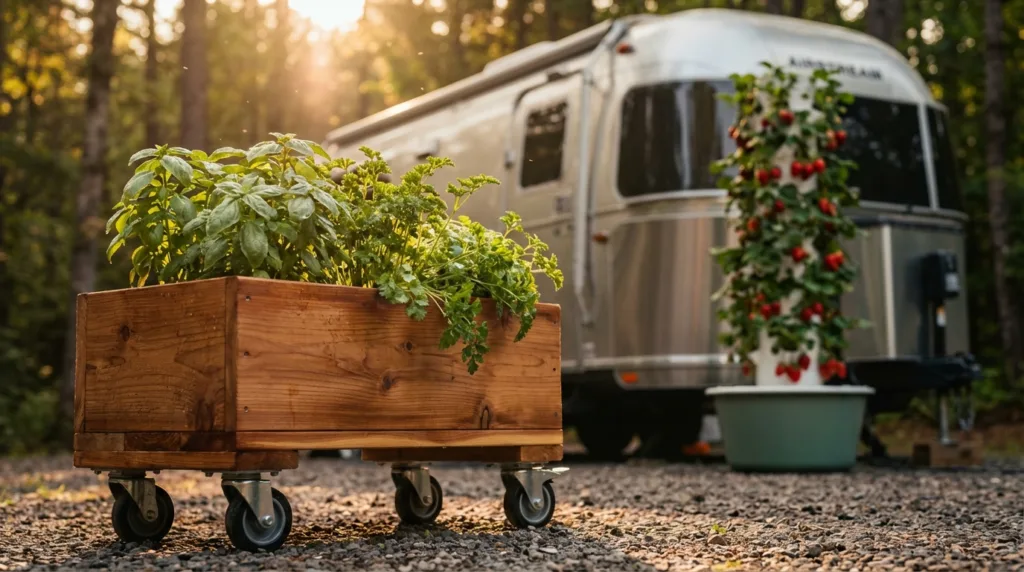
The best camping gardens start with clever containers you can take anywhere. I’ve found that wheeled planters and vertical stacking systems help turn any campsite into a cozy, mobile oasis.
Wheeled Wonders: Rolling Planter Boxes and Caddies
My camping garden got so much easier after I picked up a rolling planter box. I can move my herbs from shade to sun all day long. No heavy lifting required.
My go-to setup is a wooden outdoor planter on wheels made from cedar planks. The wheels handle gravel and grass without any drama.
I added a removable liner to keep soil from spilling. For tighter spots, I rely on a modern rolling container that fits perfectly in my RV’s storage.
It holds six herb plants and has built-in drainage. The wheeled platforms underneath keep it steady even when I’m driving over bumpy ground.
Rolling herb gardens are perfect for basil, cilantro, and parsley since they love chasing the sun. I’ve seen some folks use oak whiskey half barrel planters with heavy-duty casters for bigger gardens too.

The VECELO 5 Tier Vertical Garden Planter is designed for compact gardening, perfect for RV or van life enthusiasts. With its stackable self-watering design and wheels for easy mobility, it allows you to grow a variety of plants, such as strawberries, herbs, and flowers, in a small space whether indoors or outdoors. This modern planter not only saves space but also ensures your plants are well-cared-for with its built-in drainage system.
Vertical and Stackable Solutions
If space is tight, going vertical is a game changer. Stackable planters changed how I approach small space gardening in my RV.
My three-tier stackable system fits twelve plants in the space of one regular pot. Each level rotates, so every plant gets a shot at the sun.
I can add or remove tiers depending on how much space I have that week. I’m a fan of fabric grow bags, too. They stack inside each other when empty and barely weigh anything.
Vertical tower planters are awesome for strawberries and cherry tomatoes. I strap mine to my RV’s awning with bungee cords when it’s windy.
Some campers use shoe organizers stuffed with herbs and hang them outside. Start with a lightweight potting mix made for containers to make things easier.
Repurposed and Upcycled Mobile Planters
Some of my favorite moveable planters come from stuff I found or thrifted. Old coolers become self-watering planters with a few drainage holes and a simple water reservoir.
I once turned a vintage suitcase into a quirky herb garden; I just added wheels and a waterproof liner. It’s perfect for weekend trips and folds flat when I’m done.
The handle makes it easy to drag around. Plastic storage totes make great mobile planters as well. I pop some casters on the bottom and drill drainage holes.
I even turned an old wagon into a rolling garden. I lined it with landscape fabric and filled it with bright annuals. It is now a decoration and a handy growing space.
Lightweight Soil Mixes and Smart Growing Mediums
If you’ve ever hauled garden supplies cross-country, you know weight is the enemy. Smart soil choices and soilless growing mediums can cut your load by more than half.
Soil Selection for Portability
I learned the hard way that regular garden soil gets heavy when it’s wet. On my first trip, I ended up dragging 40-pound containers that felt like gym equipment after it rained.
Coconut coir-based mixes changed everything. A compressed coco coir brick weighs about 2 pounds but expands to fill a big tub once you add water.
Look for potting soil marked lightweight or container blend. They usually weigh less because of the extra perlite and vermiculite.
My favorite lightweight options:
- Coconut coir blends.
- Peat-based container mixes.
- Bark-based potting mediums.
I keep compressed blocks in sealed containers so they don’t soak up moisture on the road. Old coffee cans work great for storage.

The Envelor Organic Coco Coir Brick is a versatile, sustainable, and chemical-free coconut fiber growing medium, perfect for portable gardening in RVs or van life. This 10-pound brick expands to 18 gallons of nutrient-rich soil when water is added, providing a pH-balanced environment that encourages healthy plant growth and strong root systems. Its compact size and easy storage make it an excellent choice for both indoor and outdoor gardening on the move.
DIY Potting Mix Recipes
Mixing my own lightweight potting soil saves money and lets me control what feeds my plants. Plus, it’s lighter to carry.
My go-to camping mix:
- 40% coconut coir.
- 30% perlite.
- 20% vermiculite.
- 10% compost.
This blend is about half the weight of store-bought potting soil when dry. Perlite helps with drainage, vermiculite holds moisture, and compost gives a nutrient boost.
Soilless Alternatives: Perlite, Vermiculite, and More
Pure soilless mediums can make your gardening setup nearly weightless but still support healthy plants. I use these for hydroponics and for plants that hate soggy roots.
Perlite alone is perfect for rooting cuttings and growing lettuce. It’s super light, drains well, and never compacts.
Vermiculite holds more water than perlite, so it’s great for thirsty herbs like mint and cilantro. Those flakes expand when wet but barely add any weight.
Rockwool cubes are another ultra-light option for hydroponics. Each one weighs less than an ounce but can support a full-grown plant.
Brilliant Hydroponic and Indoor Garden Setups
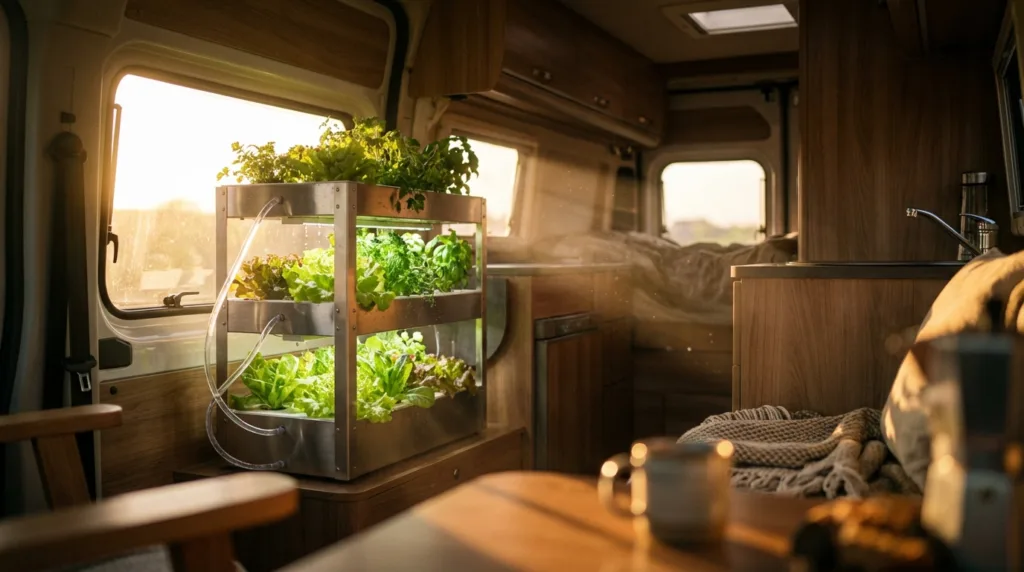
Hydroponic systems turn cramped RV spaces into productive gardens without any soil mess. Compact units fit almost anywhere and let you grow fresh herbs and veggies on demand.
Compact Hydroponic Systems for Campers
I’ve found that hydroponic indoor gardens are perfect for small camper spaces. The trick is picking a system that works with your lifestyle and your RV’s power setup.
Small countertop units are about the size of a coffee maker. I like ones with 6-9 plant pods for beginners. They fit right on your kitchen counter.
Vertical tower systems are great if floor space is tight. Most of these use LED grow lights and water pumps that can run on 12V power.
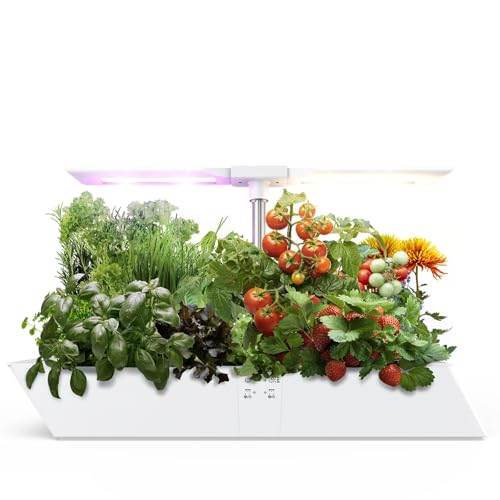
The Hydroponics Growing System by GarveeLife is a compact and efficient indoor gardening kit that accommodates 12 pods, designed for the RV and van life enthusiast. It features a 24W full-spectrum grow light that enhances plant growth by up to 50% faster than traditional soil methods, and includes a 4-liter water tank with a smart automatic timer offering three modes for flexible light cycles. This complete kit with a dry run protection pump makes indoor gardening accessible and convenient without the need for soil, ideal for those on the move.
Easy Indoor Mobile Gardens
Creating a mobile garden in your RV takes a bit of planning. With all the movement and tight spaces, I’ve learned that locking everything down is a must to avoid a mess on travel days.
Moveable indoor hydroponic gardens need solid mounting. I use bungee cords and cabinet latches to keep my setups in place while driving.
Some people get creative and build custom brackets that fold away when not in use. It’s worth playing around to see what fits your space best.
Simple growing methods work best:
- Kratky method: No pumps, just a jar of nutrient solution.
- Deep water culture: Roots sit in oxygenated nutrient water.
- Wick systems: Cotton strings pull nutrients up to the plants.
I keep backup growing supplies in clearly labeled containers. Seeds, nutrients, and pH strips all fit into small boxes, which is handy when you’re miles from any store.
Lighting and Watering on the Go
Managing power and water for hydroponics isn’t exactly set and forget. I’ve had to figure out how to meet plant needs without draining my RV’s resources.
LED grow lights make a huge difference. They use less power than fluorescents, and I run them on timers to save battery life.
Power management strategies:
- Run lights during generator hours.
- Use 12V systems to avoid inverter losses.
- Set up dedicated circuits for grow gear.
- Portable solar panels add a nice power boost.
Water system setup needs regular checks. I test nutrients weekly and top off reservoirs when they run low. Most systems only need 1-2 gallons each month.
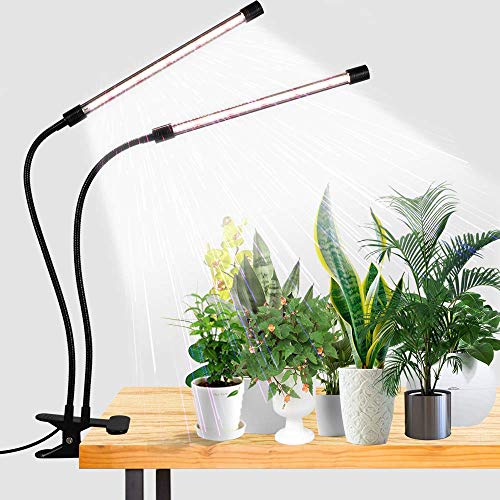
The GooingTop LED Grow Light is a versatile and essential tool for RV or van life enthusiasts who enjoy indoor gardening. Offering a full spectrum of 6000K white and red LEDs, this clip-on light features a flexible gooseneck and a sturdy clamp, making it easy to position for optimal plant coverage. With 5-level dimmable settings and an automatic timer of 4, 8, or 12 hours, it's perfect for nurturing your plants on the road.
Best Edible and Decorative Plants for Portable Gardens
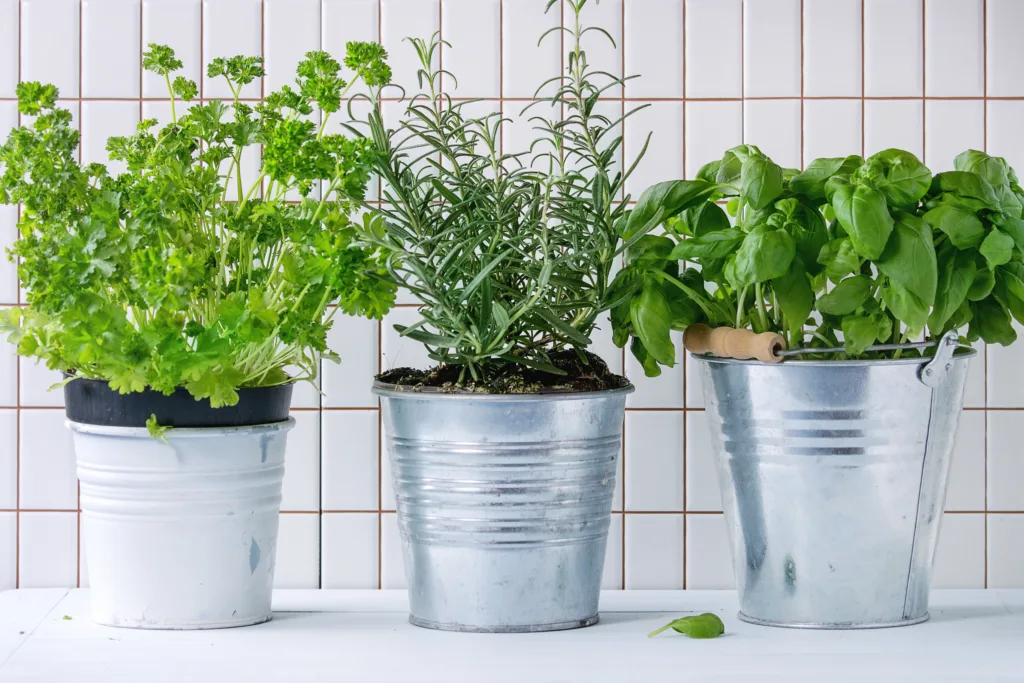
The trick with camping gardens is picking plants that don’t need much space. The right herbs, veggies, and edible flowers can turn your campsite into a mini pantry, and they just make everything feel a bit more homey.
Top Herbs for On-the-Go Growing
Herbs are basically made for camping gardens. They’re tough, take up almost no room, and freshen up any meal in seconds.
My DIY mobile herb planter is my favorite thing to bring along. Basil is always first on my list. Greek basil stays tiny and bushy, which is perfect for containers.
Rosemary barely needs any water and grows slowly, so it won’t outgrow its pot. Mint makes camp drinks way more interesting, but keep it in a pot so it doesn’t take over.
Thyme and oregano are super reliable. I use shallow containers since they don’t need deep roots. Chives are almost impossible to mess up and keep coming back after every harvest.
Space-Saving Veggies for Small Containers
Veggies seem tricky for camping, but I’ve had good luck with compact types that love bucket gardens.
Cherry tomatoes are perfect for RV life. Varieties like Tiny Tim stay under a foot tall and give tons of fruit. I grow them in 5-gallon buckets for my mobile veggie garden.
Kale stays small and keeps producing. Baby leaves are great for salads, and the plant just keeps going.
Radishes are ready in about a month, which is ideal for shorter trips. Peppers such as Baby Belle stay compact but give you full sized fruit.
Compact Edible Flowers and Fruits
If you’ve never tossed edible flowers in your moveable garden, you’re missing out. They look gorgeous and some taste surprisingly good.
Nasturtiums trail from containers and give you peppery flowers and leaves. Marigolds add pops of orange and yellow with a light citrus flavor.
Violas and pansies offer sweet, delicate blooms that look amazing in drinks. Alpine strawberries are tiny but pack a punch. They’re great in hanging pots for my mobile raised bucket garden.
Dwarf sunflowers only grow about two feet tall but produce real seeds. They’re cheerful and bring birds around.
Maintenance Tips and Travel-Proofing Your Mobile Garden
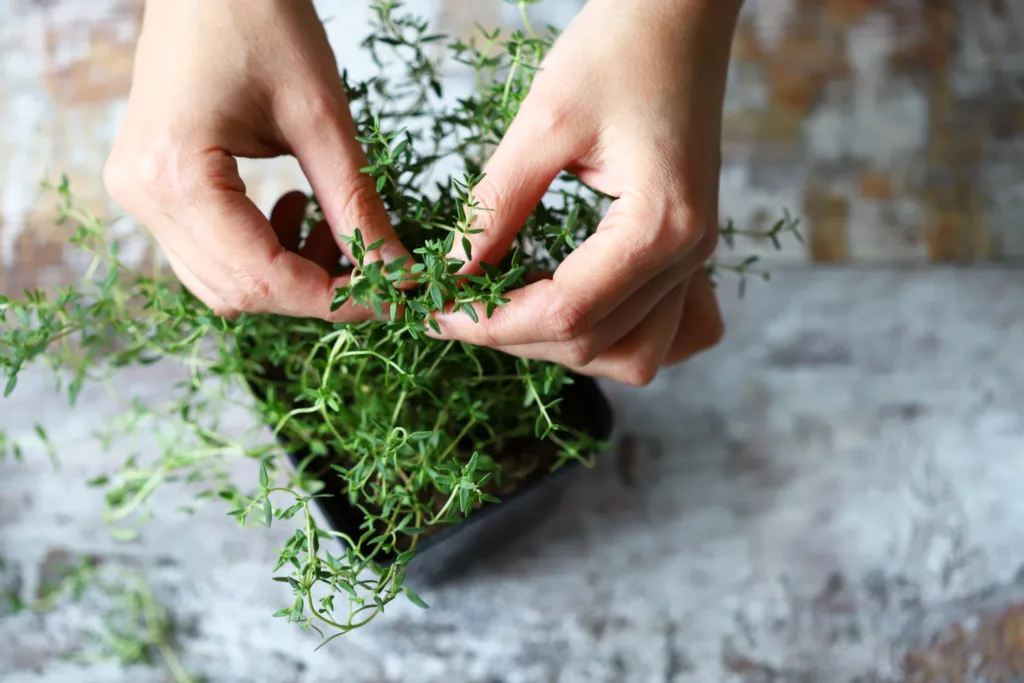
Keeping your garden alive while bouncing down the road isn’t always easy. Prepping ahead and having a reliable watering setup makes all the difference.
Securing and Protecting Plants During Transit
I’ve lost count of how many times I’ve opened the RV to find dirt everywhere because I forgot to secure my pots. Cleaning soil out of carpet is something I do not recommend.
Planter caddies are a lifesaver. They let me roll heavy pots in and out and keep things steady while driving. For lighter pots, I use non-slip mats underneath.
Bungee cords are great for bigger plants. I wrap them gently around containers and anchor points for a flexible hold.
Sometimes I stash plants in the shower for travel. The enclosed space protects leaves, and any spilled water just drains away.

The Bamworld Plant Stand Outdoor Rolling Tray Plant Caddy is designed for RV or van life enthusiasts who need to move heavy plants effortlessly. This 12-inch plant dolly features robust wheels with 360° rolling mobility and locking casters, ensuring easy maneuverability and secure placement of pots or other heavy items, with a high load capacity of up to 240 lbs. Made from premium wood and metal, it offers both functionality and a natural aesthetic, making it an ideal solution for portable gardening.
Irrigation Tricks for Campers
Watering gets weird when you’re always moving. I swear by self-watering containers; they are worth every cent.
These pots have built-in reservoirs that keep soil moist for days. I top them off before a drive and relax, knowing my plants won’t wilt.
Wine bottles make solid DIY watering spikes. Just fill, flip, and stick them in the soil. The water releases slowly as needed.
I always group plants with similar water needs. Thirsty basil hangs out with parsley, while drought-loving rosemary gets its own corner.
Seasonal Mobility: Adjusting for Weather
Traveling with the seasons means my garden faces all sorts of conditions. I pack shade cloths for those blazing desert stops where lettuce would otherwise fry.
In summer, I move my mini greenhouse to the shadier side of the RV. It keeps seedlings cool but still lets air flow.
Winter camping is a different beast. I bring plants inside and use small LED grow lights that won’t kill my battery. Portable garden beds are also awesome in spring and fall.
I check my weather app constantly. If a storm is coming, I know which plants need shelter and which can tough it out. I keep a frost protection kit with covers and a tiny heater just in case.
Frequently Asked Questions
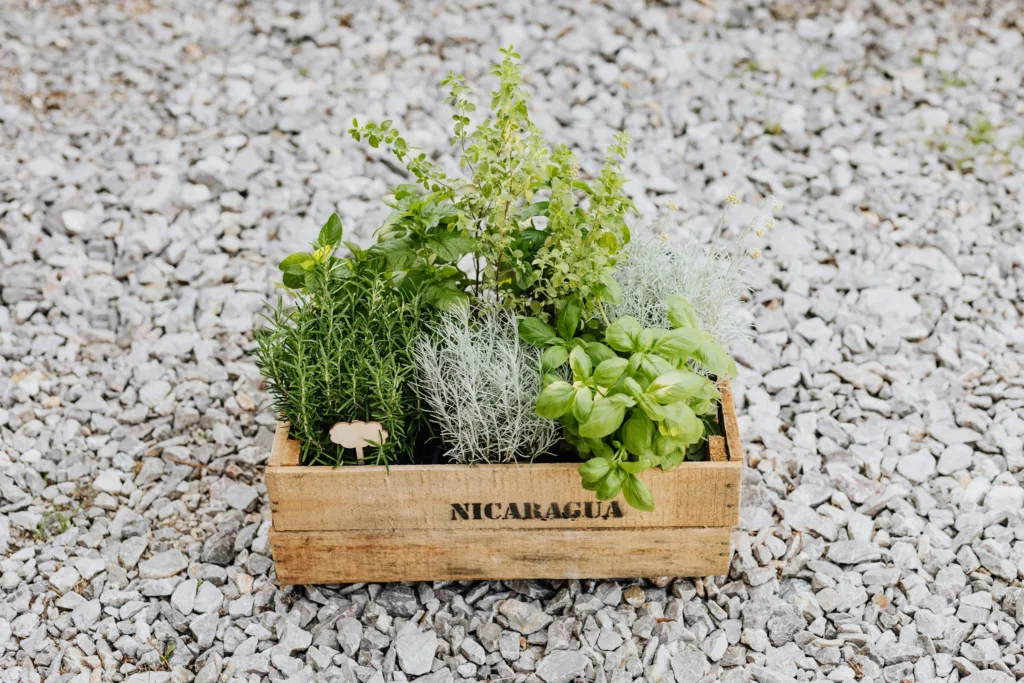
Bringing a garden camping sounds tough, but it’s totally doable. Here are some of the questions I get most, from container choices to easy-care plants that won’t stress you out on the road.
How can I create a mini garden in my RV that I can easily pack up when on the move?
Fabric planters and hanging pots are total lifesavers for RV gardening. They are super light, fold flat when empty, and I never worry about them shattering like ceramics.
I’m all about modular containers that nest together. I grab stackable plastic bins, drill a few drainage holes, and when it’s time to roll, I just lift the plants out and stack everything up.
A rolling plant cart is a game changer. I wheel my garden outside when we’re parked, then roll it back in before we hit the road.
Mason jars work perfectly for herbs and little plants. They are nearly unbreakable and tuck right into cupboards for travel.
What are the best plants to grow in a small space while I’m exploring the great outdoors?
Herbs win for RV life. Basil, parsley, and cilantro barely take up any room and seriously upgrade my camp meals. They are also forgiving if I forget to water them now and then.
Leafy greens like spinach and lettuce grow fast and don’t need deep pots. I pick the outer leaves and let the centers keep growing, so salads happen for weeks.
Cherry tomatoes deserve their space. I let them trail from hanging baskets. Fresh tomatoes with breakfast is a major win.
Succulents like jade plants handle bumpy roads and wild temps like pros. They add some green without demanding much attention.
Could you share some tips for maintaining a travel-friendly garden without it taking up too much of my chill time?
I try to keep things low effort. Self-watering containers are my go-to. I fill them up and don’t stress about daily watering.
Grouping plants by water needs keeps things simple. I water thirsty herbs together, and my succulents get their own routine. Morning check-ins have become part of my coffee ritual.
A spray bottle is a must for quick misting. It is way faster than hauling out a watering can, especially for smaller pots.
What kind of portable containers should I look for to kickstart my gardening adventure on the road?
Lightweight containers are everything in a tiny space. I skip heavy ceramics and stick with food-grade plastic, fabric, or fiberglass options.
Drainage holes are non-negotiable. I’ve lost too many plants to soggy roots, so if a pot doesn’t have holes, I make them myself.
Repurposed items work beautifully too. I’ve used old boots and tin cans. Just clean them and add drainage.
I’ve got a real knack for forgetting to water, do you have any advice for a hands-off approach?
Self-watering planters have saved my plants. They keep soil moist for days or even weeks. I’ve also had luck with water spikes, which are bulbs you fill and stick in the dirt.
Drought-tolerant plants are the real MVPs. Snake plants and succulents actually prefer drying out between waterings.
I toss some pebbles or bark chips on top of the soil to help it hold moisture longer. It looks tidy and keeps dirt from flying around when we are on the move.
What are the smartest ways to make use of vertical space for my plants when parked?
Wall-mounted shelves can transform blank RV walls into a mini jungle. I use fold-down shelves that snap flat against the wall whenever it is time to drive.
Over-the-door shoe organizers are a perfect hack for herbs. Each pocket fits a little plant, and you can hang the whole thing on a door or a cabinet, wherever you’ve got space.
I’m obsessed with tiered plant stands. They give you a ton of growing room in a tiny footprint. Sometimes I even hang baskets from the RV awning to create an instant outdoor plant nook.