
Summer Glamping Tent Cooling: 10 Smart Ways
Summer glamping lets you soak up the outdoors in comfort, but the heat can be a shocker – especially for beginners. When the afternoon sun turns your cozy canvas tent into a sauna, the whole “luxury camping” vibe kind of melts away.
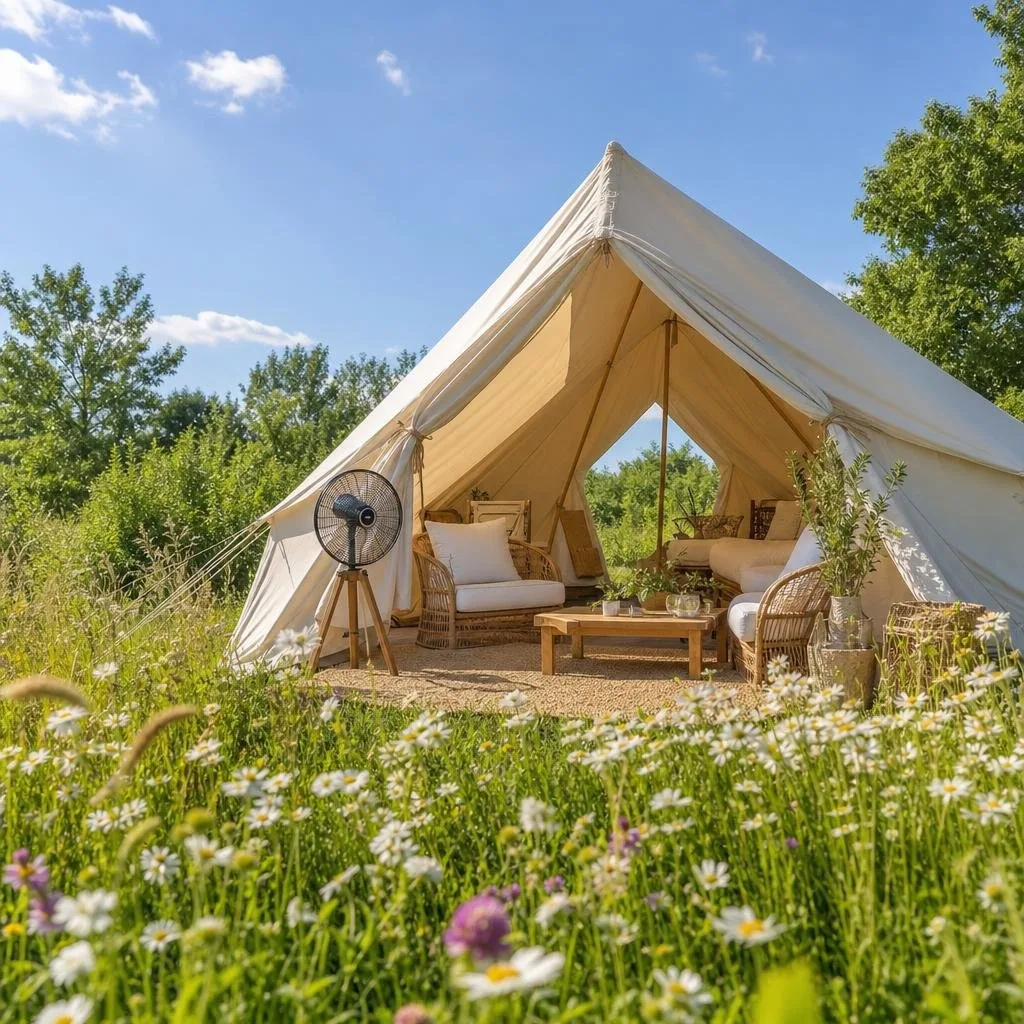
The good news? Summer glamping tent cooling doesn’t have to mean fancy gadgets or complicated gear. Most tricks are simple: smart tent placement, solid airflow, and a few lightweight accessories you can toss in the trunk.
I’ve spent my fair share of sweaty nights figuring out what actually works, so here’s my list of ten practical ways to keep your glamping tent cool this summer. If you want more real-world camping tips (and maybe a few stories from the road), Wanderland Xperience is packed with inspiration for your next adventure.
1) Pitch Your Glamping Tent Under Afternoon Shade
This is hands-down the most effective thing you can do, and it costs nothing. When you get to your campsite, skip the first sunny patch and look for trees or natural shade that’ll block the afternoon sun (roughly 2 p.m. to 6 p.m.).
That’s when tents heat up fastest, and the greenhouse effect can get brutal. Pitching in shade stops the heat buildup before it starts.
A few things I always check:
- Scout early. Notice where shadows fall as the afternoon goes on.
- Skip dead trees. Shade is great, but you don’t want falling branches.
- Partial shade helps. Even dappled cover is way better than none.
I usually set up camp, unzip everything, and leave the tent open while I wander. When I come back, the inside feels way cooler than if I’d zipped it up tight.
2) Hang A Reflective Aluminet Shade Cloth Above The Tent
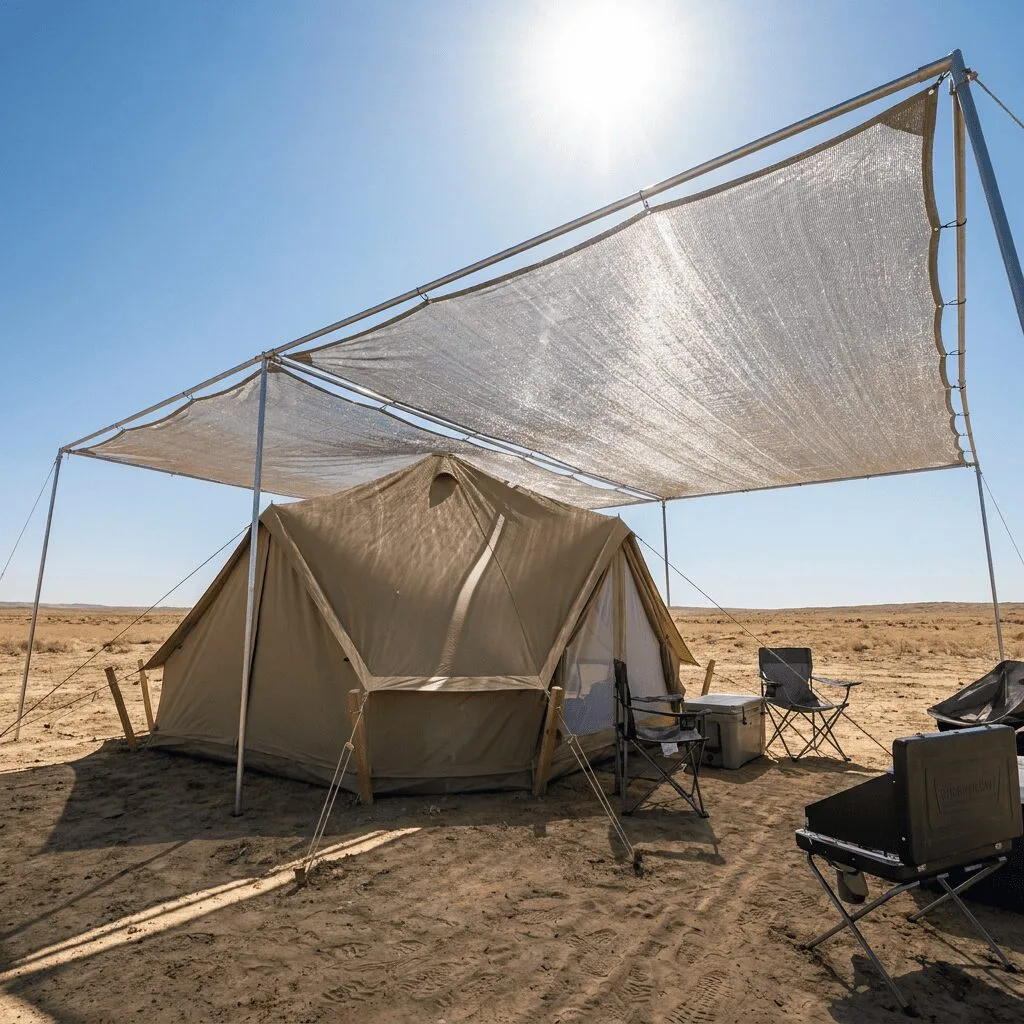
No trees? No problem. An aluminet shade cloth is a lightweight, reflective fabric that bounces sunlight away from your tent, acting almost like a giant sun umbrella.
Hang it above the tent with at least a six-inch gap. That space lets heat escape instead of pressing down into your tent.
I usually tie the corners to trees or use tarp poles. Aluminet cloths come in different shade ratings – a 70% one works for most setups and still lets in some diffused light.
They fold up small, weigh next to nothing, and usually cost between $25 and $60. I love this trick because it’s reusable and makes a noticeable difference, especially on blazing days. On a 95-degree afternoon, I’ve felt a 10–15 degree drop under my aluminet canopy compared to direct sun.

Beat the summer sizzle in your glamping tent with the vensovo 50% Aluminum Shade Cloth (8x12ft). This lightweight (1.2 lbs), reflective polyester netting with aluminum coating blocks 50% of sunlight, slashing heat buildup while allowing breathable airflow and enough light to maintain your camp vibe. Grommets make it easy to secure over your tent, reflecting UV rays and dropping interior temps—perfect for hot-weather escapes. One user raved: "My daughter used this to cover her tent during Coachella... kept her tent cool and let her sleep-in without feeling like a baked potato." Durable against wind, rain, and UV, it's ideal for glampers seeking comfort without the bake.
3) Open Roof Vents, Mesh Windows, And Both Doors For Cross-Breeze
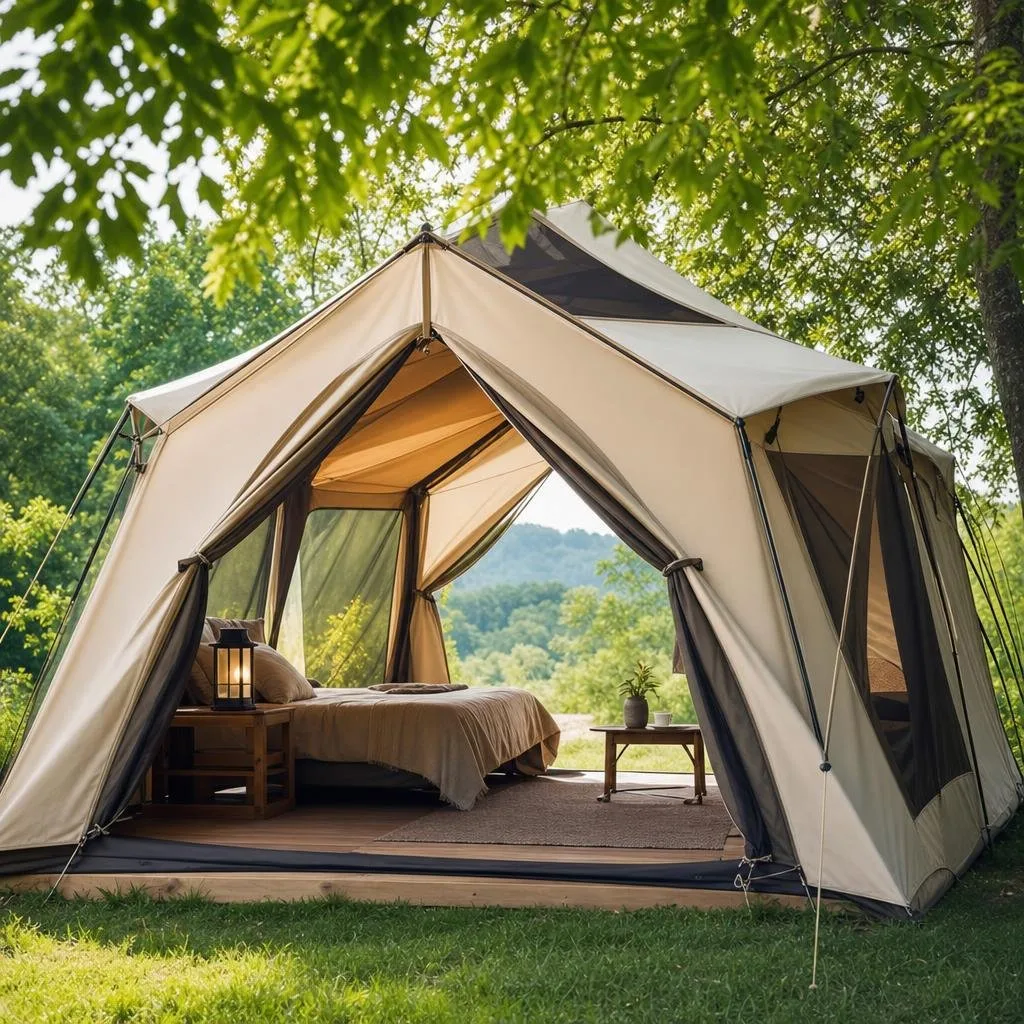
Airflow is your best friend in hot weather. Most glamping tents have roof vents, mesh panels, and multiple doors, but I see a lot of people forget to open them all.
Open everything. Seriously, don’t be shy.
Cross-ventilation only works if air can flow in one side and out the other. That means both doors open, mesh windows unzipped on opposite sides, and roof vents fully extended.
Hot air rises, so the ceiling vents are especially good at letting trapped heat out.
Here’s what I do:
- Unzip all mesh panels and keep the bug netting closed.
- Roll back the door flaps and tie them up.
- Check roof vents and prop them open as wide as they’ll go.
Even a light breeze feels powerful when the tent is fully open. On still nights, I’ll use a small fan at a doorway to jumpstart the airflow; it really helps.
4) Use A Battery-Powered Geek Aire Rechargeable Outdoor Fan
A portable fan is a game-changer for a hot tent. I like the Geek Aire rechargeable outdoor fan – it’s made for camping, runs on battery, and actually moves air.
I put it near an open door or window to pull in cooler air from outside. Campers swear by this trick, and I have to agree.
A few reasons I keep this fan in my kit:
- USB rechargeable, so any power bank will do.
- Multiple speeds for balancing airflow and battery.
- Quiet enough to run all night without keeping you up.
It’s compact, not too heavy, and fits easily in the car. For glamping, where comfort matters, a good fan is just part of the deal. Charge it before you leave and you’re golden.

Stay cool under the stars in your glamping tent with the Geek Aire 12" Portable Battery Fan. This rechargeable, cordless powerhouse delivers 1170 CFM of airflow with a quiet brushless motor and metal blades for durable, rust-resistant performance. Featuring 360° vertical tilt and up to 24 hours of runtime (2-3 hour fast charge), it's perfect for off-grid adventures—hang it in your tent or clip it nearby to circulate air and combat heat. Users love its portability: "Great for light duty... utility lies in portability, not volume of air moved," ideal for breezy relief without cords. Weighing little and built tough, it pairs seamlessly with shade cloths for ultimate tent comfort.
5) Face The Tent Entrance East To Avoid Harsh Evening Heat
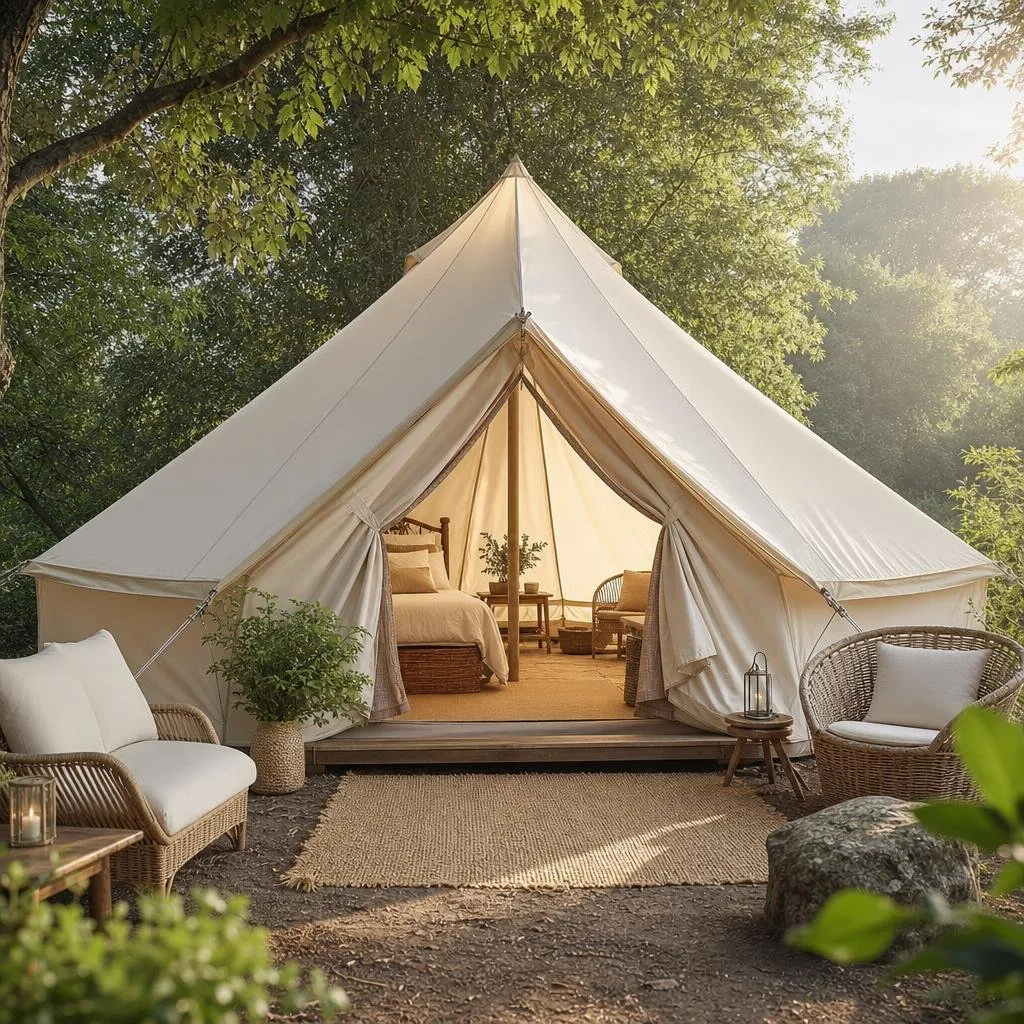
Tent orientation seems minor, but it actually matters. If you face the entrance east, you get gentle morning sun and avoid the worst of the late afternoon heat.
That western sun is brutal. If your door faces west, you’ll get blasted with heat during the hottest part of the day.
I always check my compass app and set up so my entrance faces east. Takes a few seconds and saves a lot of sweat later.
Bonus: If your tent has a big vestibule or awning, facing east keeps your outdoor space shaded longer in the afternoon. That’s prime hangout time.
6) Remove Or Roll Back The Rainfly When Weather Is Clear
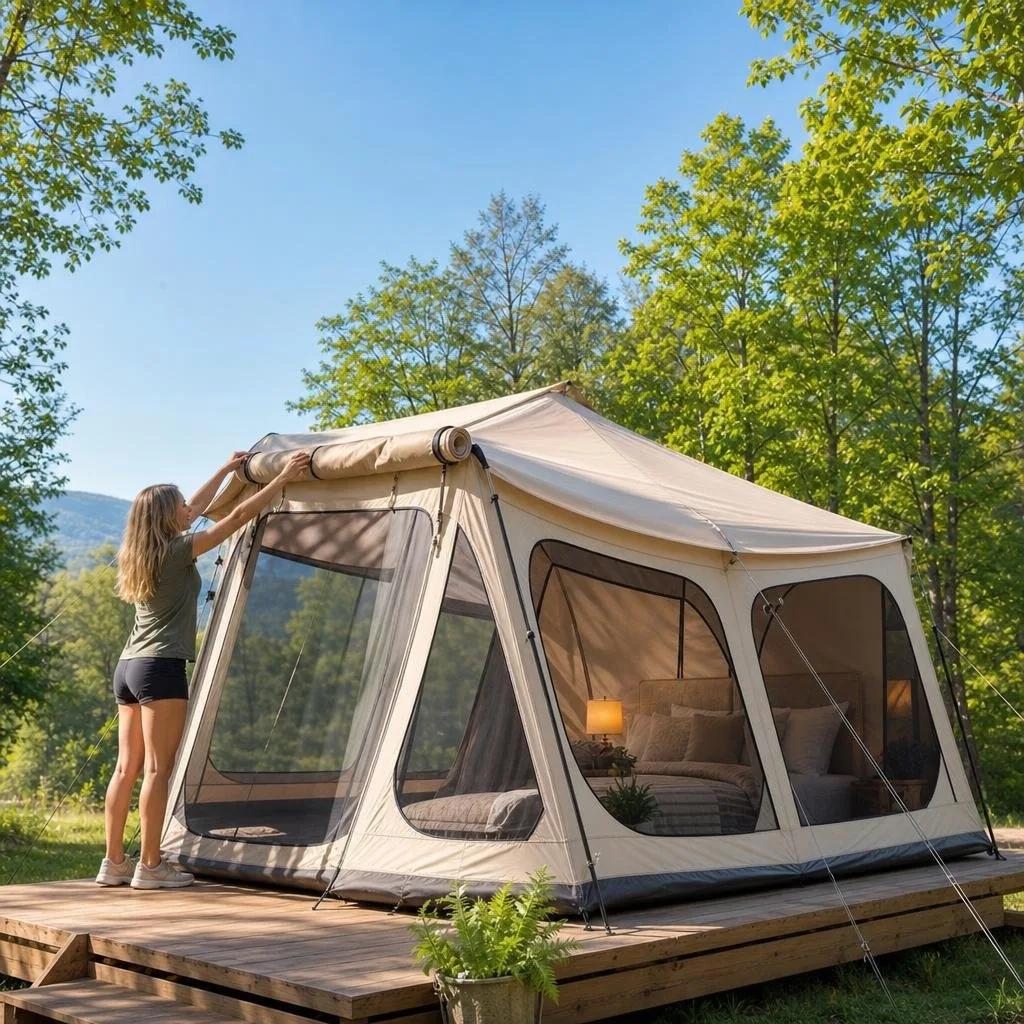
If your tent has a separate rainfly, take it off or roll it back when the weather’s good. The rainfly traps heat between itself and the tent, making things stuffy.
When the forecast looks clear, just peel it back. The mesh inner walls will keep bugs out and let breezes through.
Here’s a tip: don’t toss the rainfly in the car. Leave one corner attached and fold it under, so you can throw it back on fast if a sudden storm hits.
A few reminders:
- Check the weather for your exact spot before pulling off the fly.
- Morning dew can still dampen gear, so stash valuables in dry bags.
- Canvas tents without a separate fly? Try rolling up side panels instead.
7) Camp Near A Lake, River, Or Breezy Waterfront Site
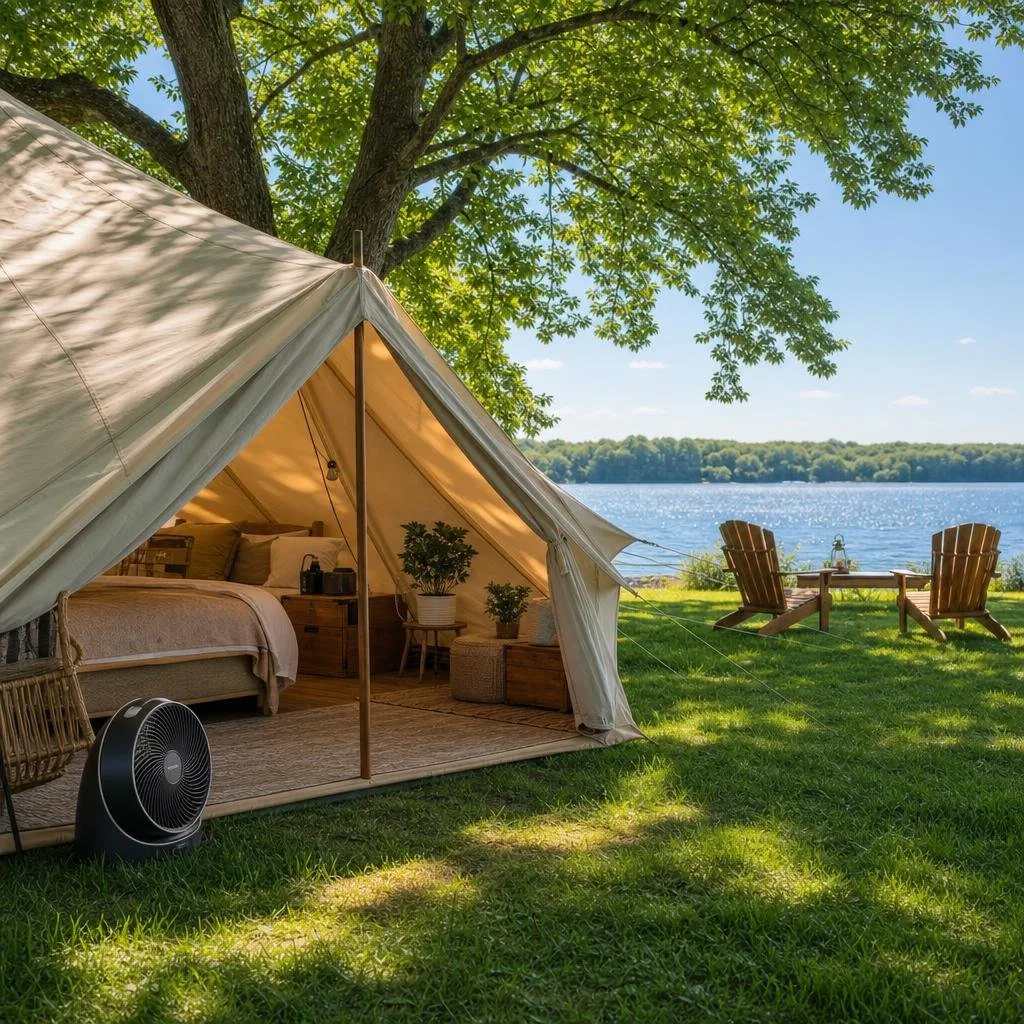
Water is nature’s air conditioner. Lakes, rivers, and streams cool the air around them, and that chill drifts across campsites – especially in the evening.
Even a spot a couple hundred feet from the water can feel cooler than an inland site. Waterfront spots also tend to catch more breeze, which helps keep the tent ventilated and mosquitoes slightly more at bay.
A few perks:
- Cooler temps day and night.
- Natural breezes off the water.
- White noise from moving water that helps you sleep.
Leave No Trace says camp at least 200 feet from water to protect the ecosystem, but that’s still close enough for the cooling effect.
When I browse campsites in summer, I always check for lakeside or waterfront options first. They go fast, so book ahead. The difference in temperature can be kind of shocking sometimes.
8) Sleep With A Light-Colored Cotton Sheet And Breathable Cot
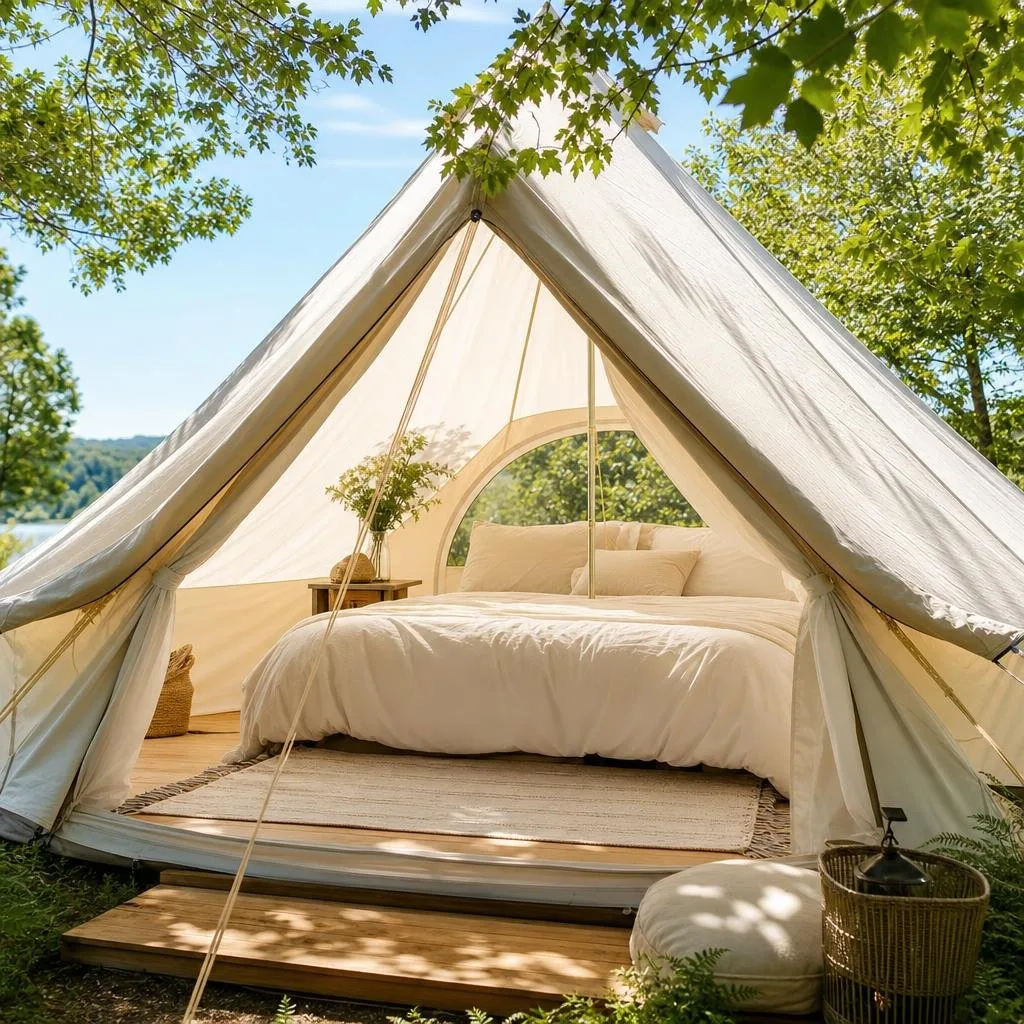
Your bedding choices matter just as much as where you put your tent when you’re trying to stay cool at night. Heavy sleeping bags can feel stifling, so swap them out for a light-colored cotton sheet.
Cotton lets your skin breathe, wicks away moisture, and doesn’t hold onto body heat like flannel or synthetics. It’s a small change that feels huge after a sticky summer day.
Pair your sheet with a breathable camping cot. Sleeping on a cot elevates you off the ground, letting air move underneath.
That airflow underneath your body? It really makes a difference on muggy nights.
Here’s my own go-to setup for summer:
- A lightweight aluminum cot with mesh fabric
- One white or cream cotton flat sheet (lighter colors reflect heat)
- A small camp pillow with a moisture-wicking cover
If you’re glamping, it’s a chance to add a bit of style. Toss in a couple of linen-look throw pillows and maybe a soft cotton blanket at the foot of the cot.
It gives off a cozy, farmhouse vibe that still feels practical in a small tent. Save the thick quilts for fall.
9) Place Frozen Nalgene Bottles At Pulse Points Before Bed
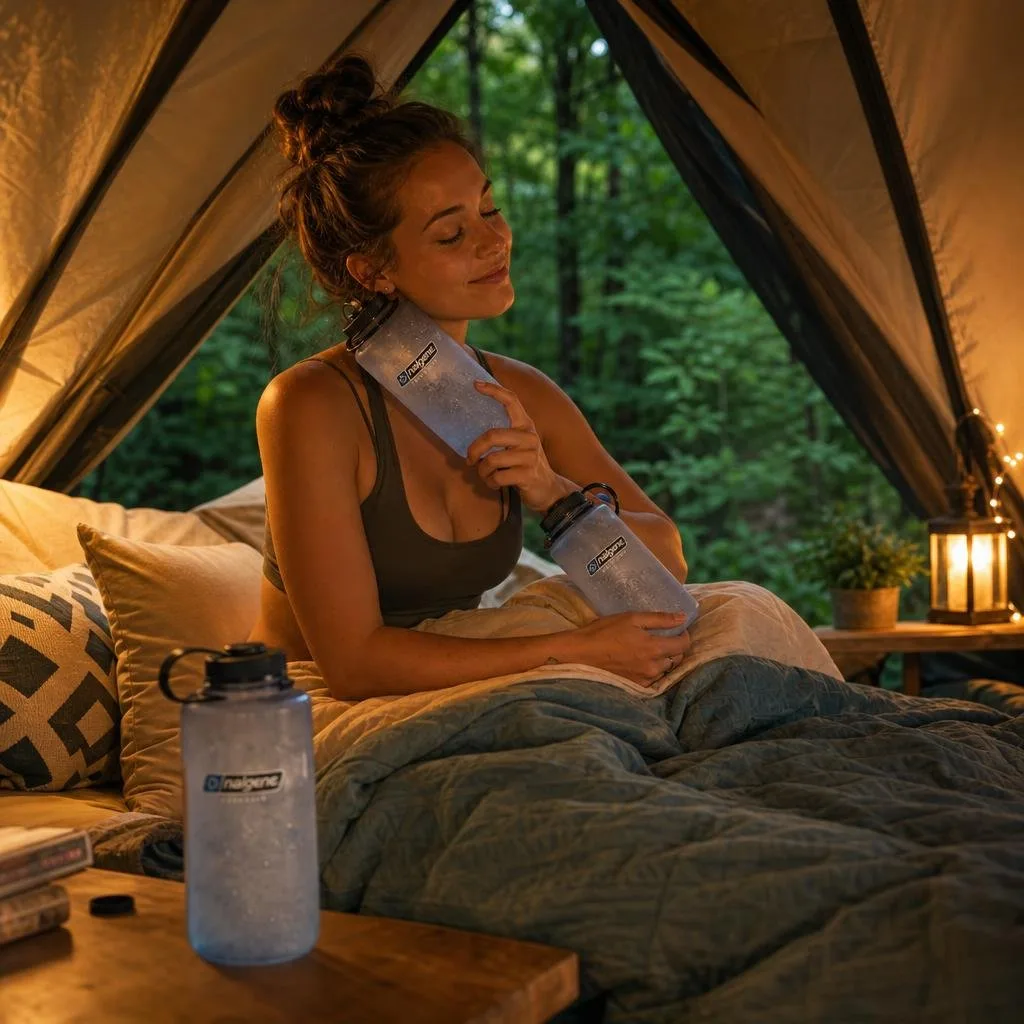
This little trick works surprisingly well for hot nights. Before your trip, fill a couple of wide-mouth Nalgene bottles about three-quarters full and freeze them.
At bedtime, wrap one in a thin cloth and hold it against a pulse point – like your neck, inner wrists, or behind your knees. These spots have blood vessels close to the skin, so cooling them helps bring down your overall body temperature fast.
It won’t chill the whole tent, but you’ll feel cooler, and that’s really what matters when you’re trying to sleep.
A few quick tips:
- Freeze bottles the night before and keep them in your cooler during the day.
- Wide-mouth bottles are easier to fill and freeze flat.
- As they melt, you’ve got cold drinking water for the morning.
I usually bring three or four bottles to rotate through the night. One goes by my feet, one near my neck, and the extras stay in the cooler.
It’s a no-electricity fix that’s lightweight, reusable, and basically free once you own the bottles.
10) Shift Your Schedule To Early Mornings And Midday Shade Breaks
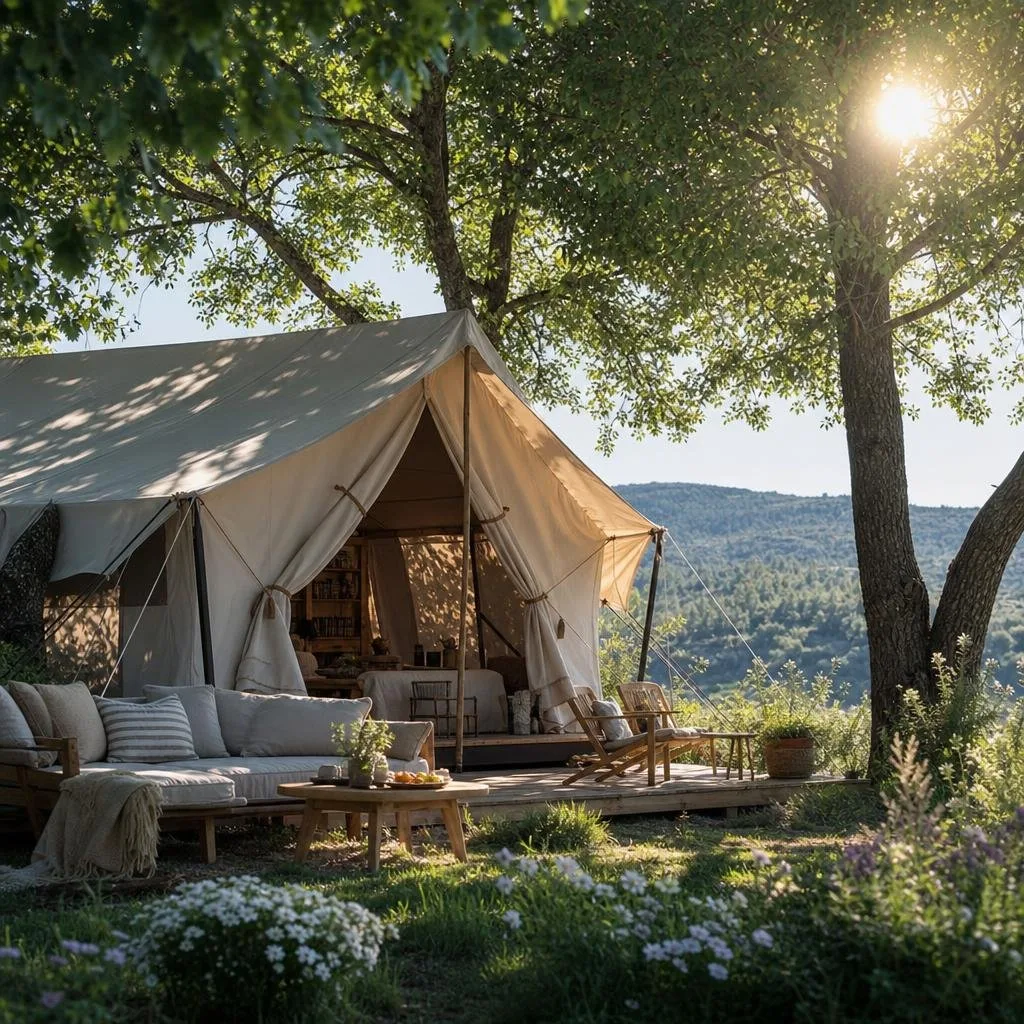
Sometimes the smartest way to keep cool isn’t about gear at all. It’s about when you choose to do things.
During summer, the hours between 11 a.m. and 3 p.m. are just brutal for activity or sitting inside a tent. Plan your hikes, exploring, and camp chores for early morning when the air feels fresh.
When midday rolls around, take a break in the shade. Find a hammock under a tree, read by the water, or nap in a breezy spot outside your tent.
Here’s a simple summer glamping schedule I like:
- 6:00 a.m. Wake up, enjoy coffee while it’s still cool.
- 7:00 – 11:00 a.m. Hike, explore, do anything active.
- 11:00 a.m. – 3:00 p.m. Relax in shade, swim, read, eat lunch.
- 3:00 – 7:00 p.m. Light activities as the heat fades.
- Evening: Cook dinner, enjoy the campfire, stargaze.
Staying out of the tent during peak heat hours helps keep it cooler. Less body heat inside, fewer door openings, and the temperature stays steadier.
It’s more of a lifestyle shift than a hack, but it really makes summer camping feel way more comfortable.
What To Look For In A Cooler Glamping Setup
If you’re shopping for a glamping tent or thinking about upgrades, certain design features can make a huge difference in summer comfort.
Breathable Tent Fabrics And Light Colors
Canvas and polycotton blend tents breathe a lot better than fully synthetic ones. They let moisture and heat escape, rather than trapping it.
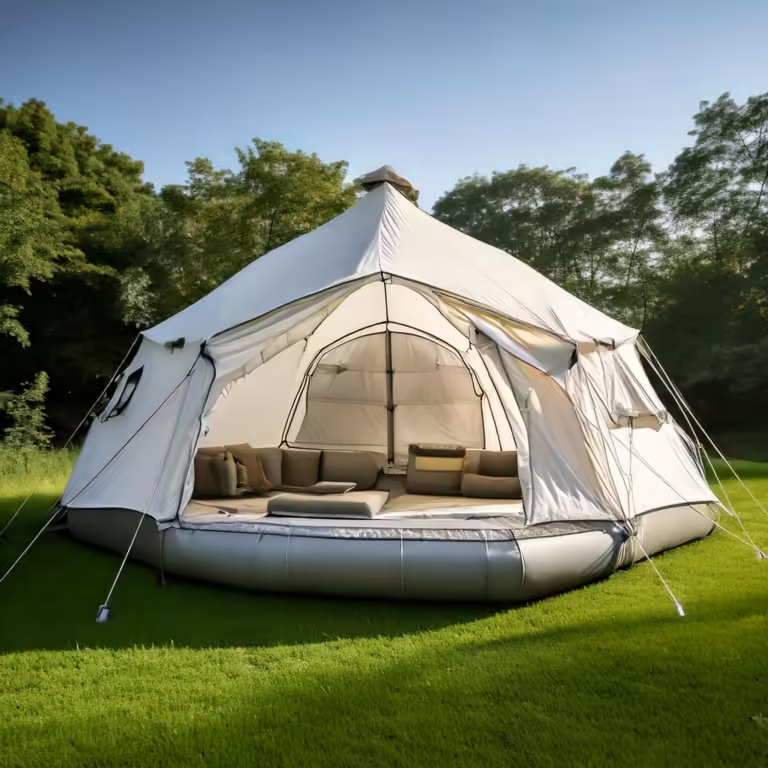
Light-colored tents – think cream, khaki, or white – reflect sunlight instead of soaking it up. If you want better airflow, a large, breathable canvas tent in a light color with plenty of windows will beat a dark synthetic tent every time.
Vent Placement And Ceiling Height
Tents with vents near the roofline help hot air get out naturally. Hot air rises, so ceiling vents just make sense.
Taller glamping tents with peak heights over six feet also help. The hottest air sits above your head, so the living space feels a bit cooler, even when it’s steamy outside.
Shade Gap Between Tarp And Tent
If you use a tarp or aluminet shade cloth, check that there’s a gap between the covering and the tent roof. A tarp draped right on the tent just traps heat.
Leave a six-to-twelve-inch air gap to create a buffer zone where hot air can escape. That keeps the tent below much cooler.
Portable Power For Fans And Small Cooling Gear
A portable power station or a big USB battery bank lets you run fans, charge devices, and power small coolers. Even a modest 200-watt-hour station can keep a rechargeable fan running all night.
If you’ve got solar panels, you can recharge during the day and stay comfortable at night – no campground hookup needed.
Common Summer Tent Cooling Mistakes
Knowing what to do is great, but knowing what not to do can really save your trip. Here are the most common mistakes I see people make.
Pitching In Full Sun For The View
That wide-open meadow with the mountain view? It looks amazing, but a tent in full sun all afternoon turns into a sauna.
The greenhouse effect inside a tent traps heat fast, and the inside can get 20 degrees or more hotter than the outside air. Pick shade over scenery when it’s hot. You can always wander over for the view later.
Blocking Airflow With Tight Tarps
Throwing a tarp right on top of your tent might seem smart for sun protection, but it blocks airflow and just makes things hotter.
Always leave a gap between any covering and your tent. If you can’t make a gap, it’s probably better to skip the tarp entirely.
Closing Everything Up Too Early
Zipping up your tent before bed to keep bugs out is tempting, but doing it too soon locks in all the heat from the day.
Wait until the outside air feels cooler than inside before sealing things up. Let the tent breathe as long as you can in the evening.
Using Heavy Bedding In Hot Weather
That thick sleeping bag rated for 30 degrees? It really doesn’t belong in your summer glamping setup.
Heavy bedding traps heat and makes you sweat. Try swapping it out for lightweight cotton sheets or a thin quilt.
Sometimes, a sleeping bag liner is all you need. Your body puts out enough warmth on its own during summer nights, so it’s better to keep bedding simple and breathable.