
Color Schemes That Work in Small Campers: Brighten and Maximize Your Space
Beige walls and dark wood paneling don’t have to be part of camper life. A few smart color choices can make a cramped rig feel open, bright, and personal, and most of those changes cost less than a weekend away. The color schemes that work best in small campers are light neutrals (white, cream, soft gray) used on walls and upper surfaces, paired with one or two bold accents in textiles or lower cabinets, because pale tones bounce light around and make a tight space feel close to twice its size.
Color works differently in 200 square feet than it does in a house. Dark shades close in fast, while lighter tones catch every bit of daylight from your windows. Once you know a few basic rules, you can pick a palette, paint your cabinets, and add colorful pillows or peel-and-stick wallpaper without hiring anyone. Whether you want calm neutrals or a punch of color, you’ll be able to choose a scheme that fits your rig and your budget.
Key Takeaways
- Light neutrals and soft colors make a small camper feel bigger and brighter.
- Two-tone cabinets and well-placed accents add interest without crowding the space.
- Removable wallpaper and washable textiles let you add personality with no permanent changes.
Why Color Choices Shape a Small Camper
The colors inside your camper change both how you feel and how big the space looks. Like a tiny home, a camper puts your kitchen, seating, and bed in one line of sight, so a good palette links those zones into one calm space.
How Color Affects Your Mood in Tight Quarters
When you spend long stretches inside a camper, color affects your mood every day. Light blues and soft greens feel calming after a long drive. Warm yellow can lift your spirits on a gray, rainy morning.
Dark browns and heavy grays tend to make a small room feel closed in. Bright white and cream feel easier to breathe in. Think about how you use each spot. Many owners like a warm pop of red or orange near the coffee station for an energy boost, and quieter neutrals near the bed to help them wind down at night.
Making Your Camper Look Larger With Color
Light colors make a room feel larger, and dark colors make it feel smaller. Painting your walls white is one of the cheapest ways to gain visual space without moving a single wall.
Placement counts too. Keep the ceiling lightest, the walls a touch deeper, and the floor darkest. That order pulls the eye up and makes a low ceiling feel taller.
Try these budget-friendly tricks:
- White or cream cabinets reflect daylight back into the room.
- Light flooring keeps the space from feeling heavy at the bottom.
- A mirror across from a window doubles the light and the sense of depth.
- One main color throughout blurs the lines between zones.
You can still use bold color. A couple of navy pillows or a coral throw on a neutral couch gives you personality without shrinking the room.
Keeping the Look Connected From Kitchen to Bed
Your eye needs a clear path from the front of the camper to the back. Using one base color the whole way through removes visual breaks between the kitchen, dinette, and bedroom.
Soft gray is an easy base for beginners. You can repeat it on kitchen cabinets, then on dinette cushions, then on bedroom curtains. Each zone looks a little different, but they all belong together.
In a space this small, clashing colors look messy fast. Add variety with texture: smooth painted cabinets, linen curtains, a velvet cushion. The space stays interesting while the color story holds steady.
Top Color Palettes for Small Campers
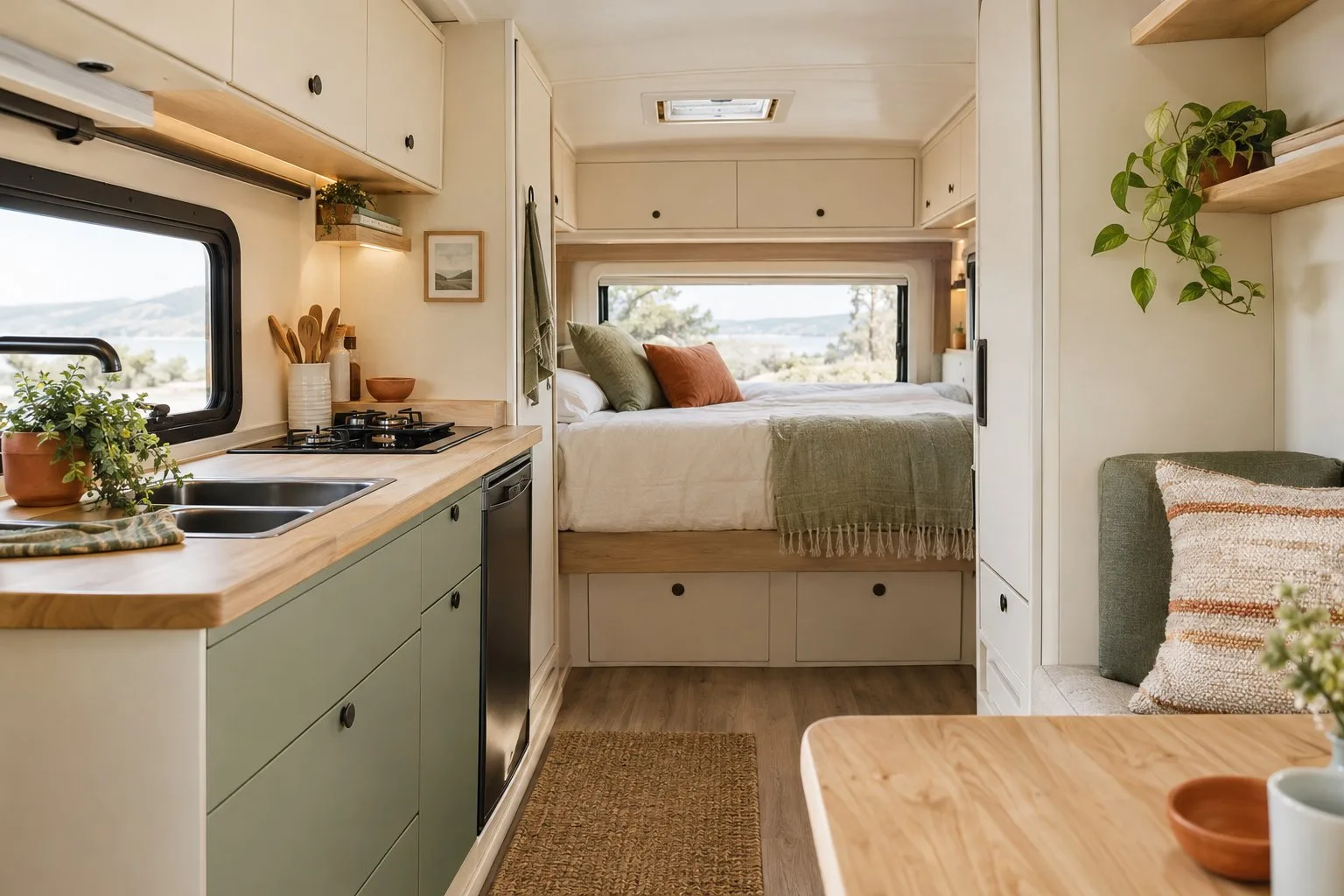
Three palettes show up again and again in successful small rigs: modern farmhouse neutrals, bold accents on a neutral base, and light Scandinavian tones. Each of these RV color schemes keeps the base light so the camper feels roomy.
Modern Farmhouse Neutrals
Crisp white opens up a small camper almost overnight, especially on cabinets. To keep it from looking cold, layer several neutral shades together.
A farmhouse look pairs warm beige floors with soft gray accents and cream textiles. Set beige cushions against white walls, then bring in warmth with wood touches and woven baskets. Thrift stores are a great place to find baskets cheap, and you’ll find more ideas in these rustic farmhouse camper decor ideas on a budget.
For cabinets, try white uppers with light gray lowers. Gold or black pulls add just enough contrast to give the room depth.
Bold Accent Pairings
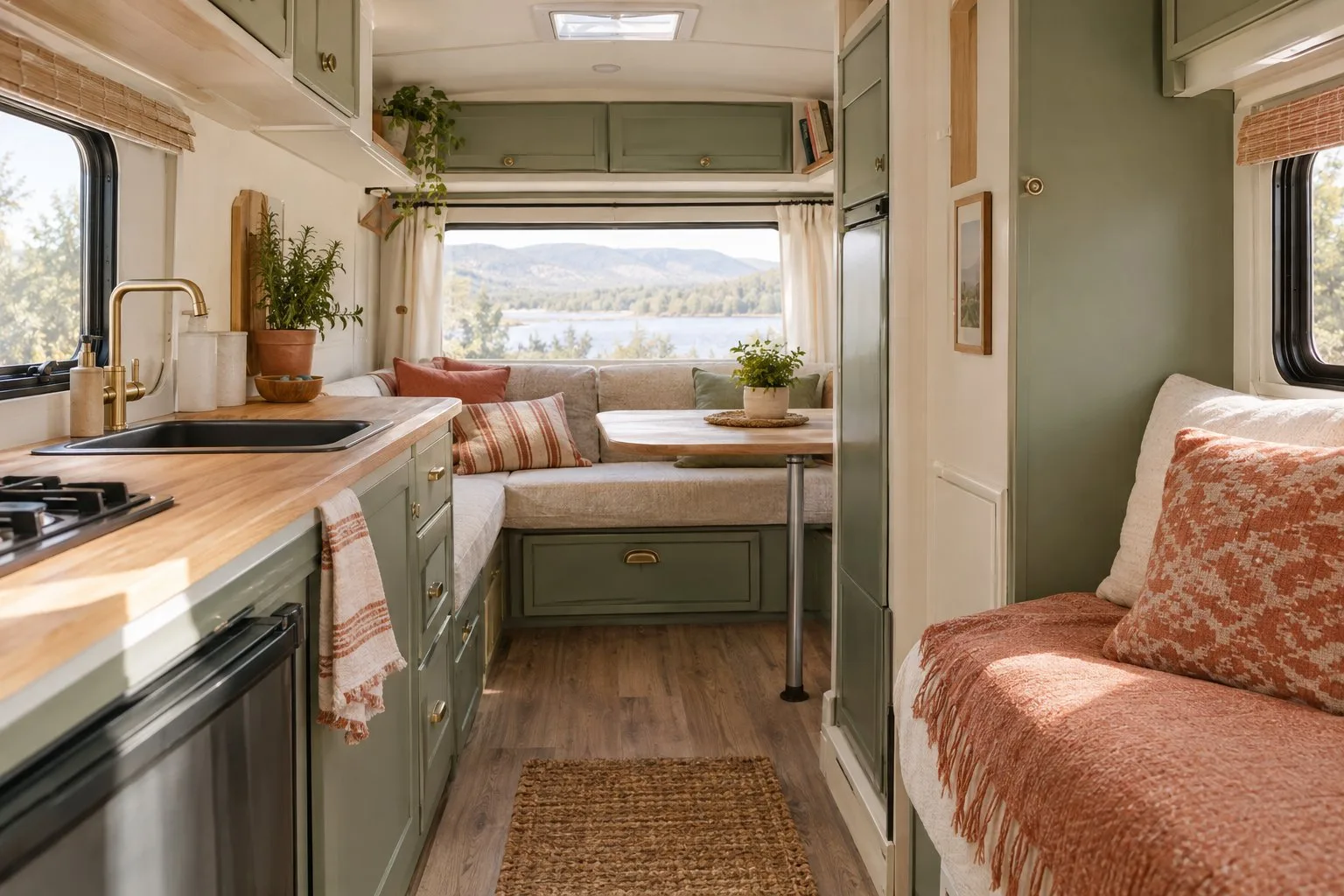
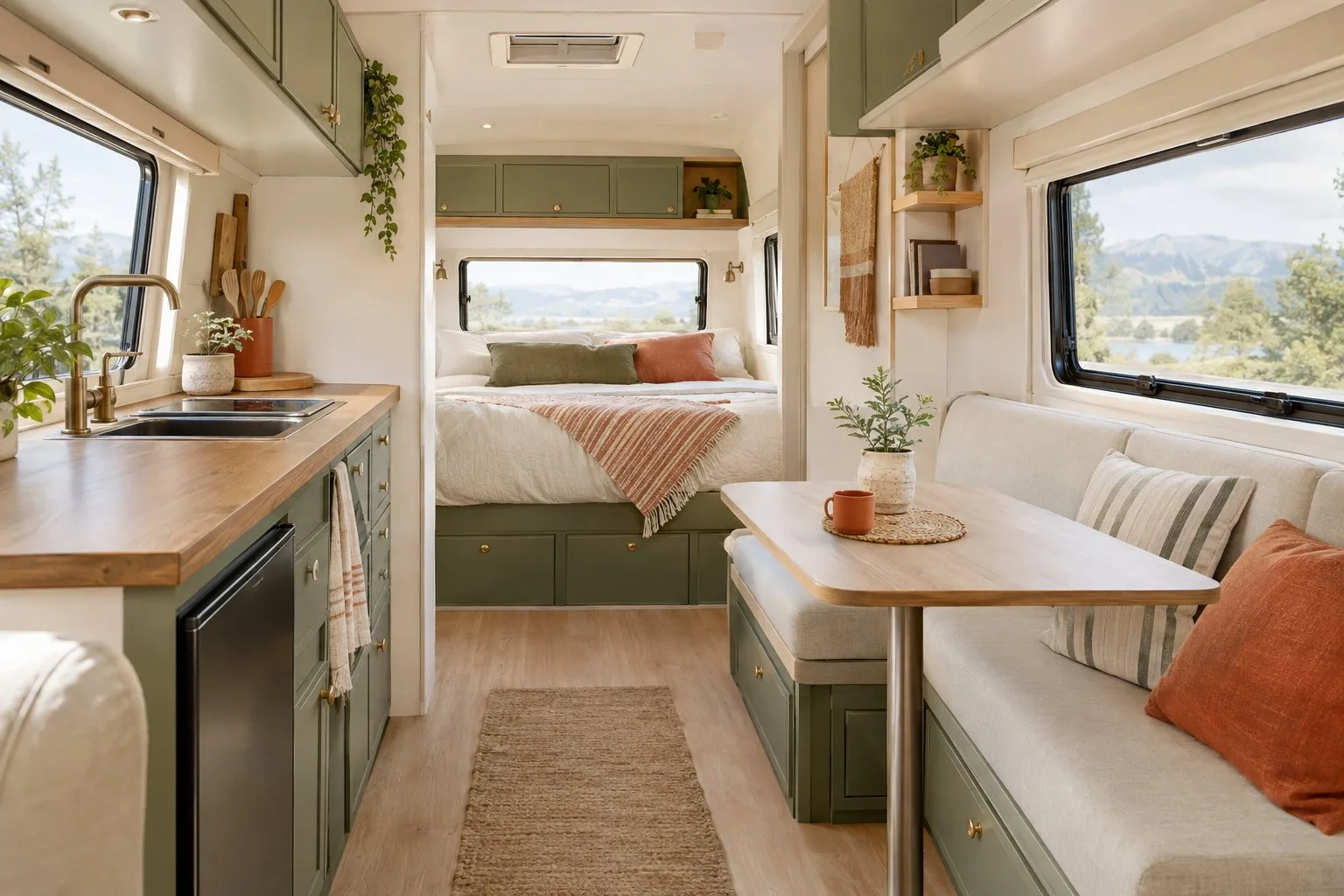
One strong color against a neutral background is one of the best moves in RV interior color schemes. Sage green cabinets with white walls feel fresh and tie the inside to nature. Emerald green pillows and curtains give a similar effect for the price of fabric.
Burnt orange or warm terracotta adds coziness when you keep it small, like a throw blanket or one accent chair. Use the 60-30-10 rule as a guide:
| Share of space | Color role | Example |
|---|---|---|
| 60% | Neutral base | White or soft gray walls |
| 30% | Secondary color | Sage cabinets |
| 10% | Bold accent | Terracotta pillows |
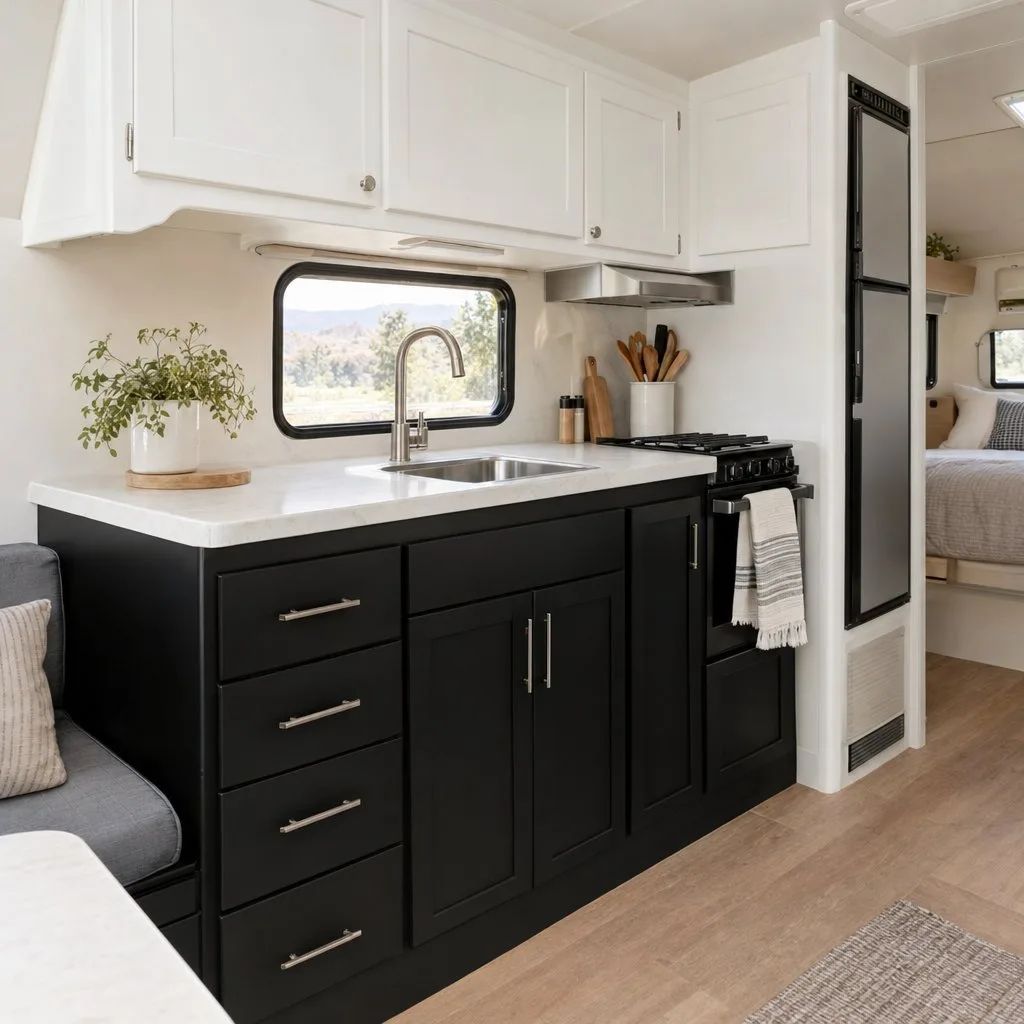
Navy lower cabinets with white everywhere else work well in compact rigs. Even black cabinets can look great if you have plenty of daylight and light countertops. If you love a colorful RV interior, these colorful camper decor ideas show how far you can push it.
Light and Airy Scandinavian Tones
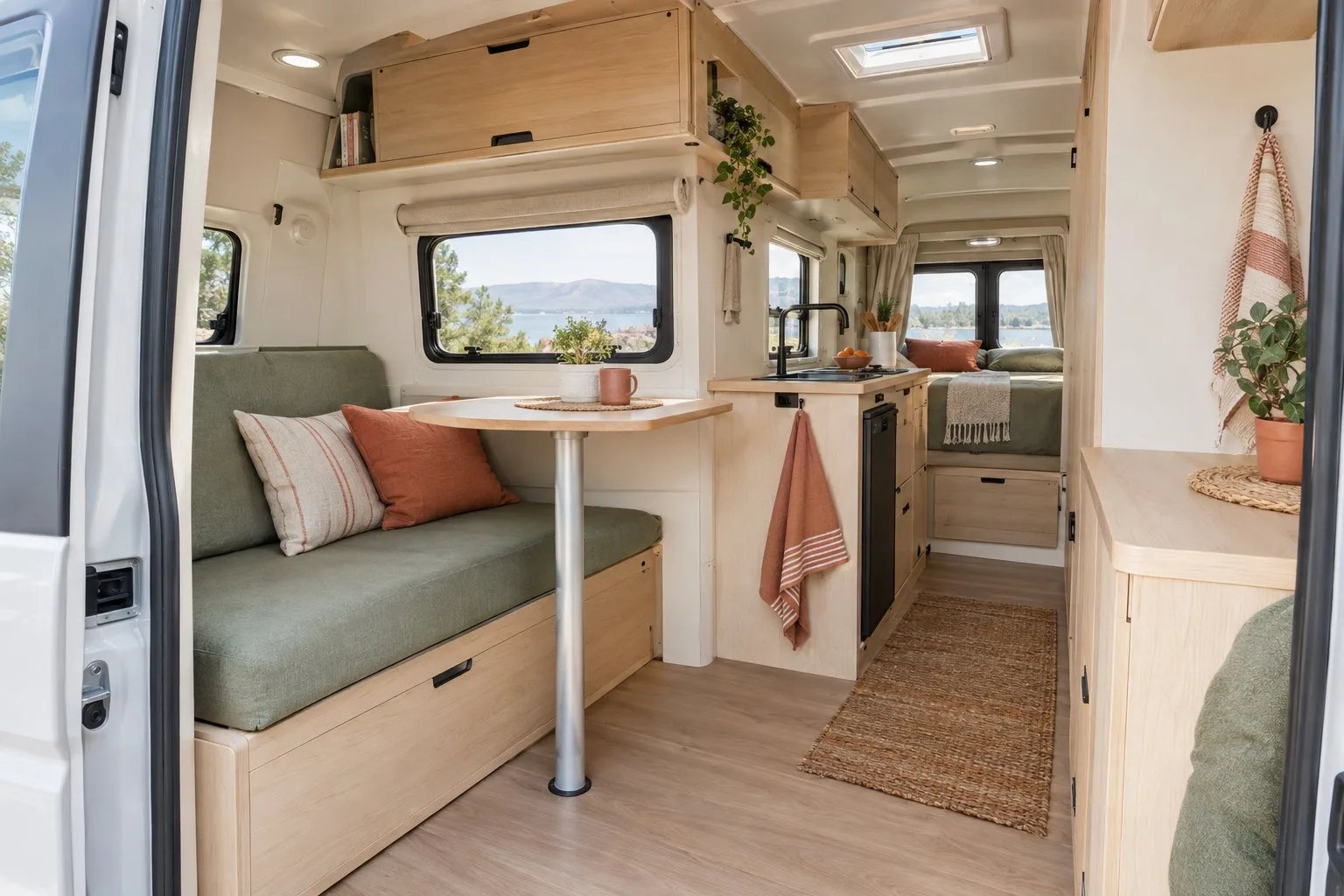
Scandinavian-style light neutrals remove visual barriers better than almost any other palette. Soft white walls with blonde wood create a clean, simple look that feels restful after a day on the road.
This style is about cutting clutter and adding texture through natural materials such as white linen curtains, a wool throw, and a jute rug. Matte black pulls on soft sage cabinets add a sharp, modern contrast.
It shines in older campers with few windows, since light bounces off every pale surface. Swap heavy drapes for simple roll-up blinds to let in more sun. Cream walls, pale wood, and a few green plants keep things feeling open and fresh.
Painting Your Way to a New Camper Interior
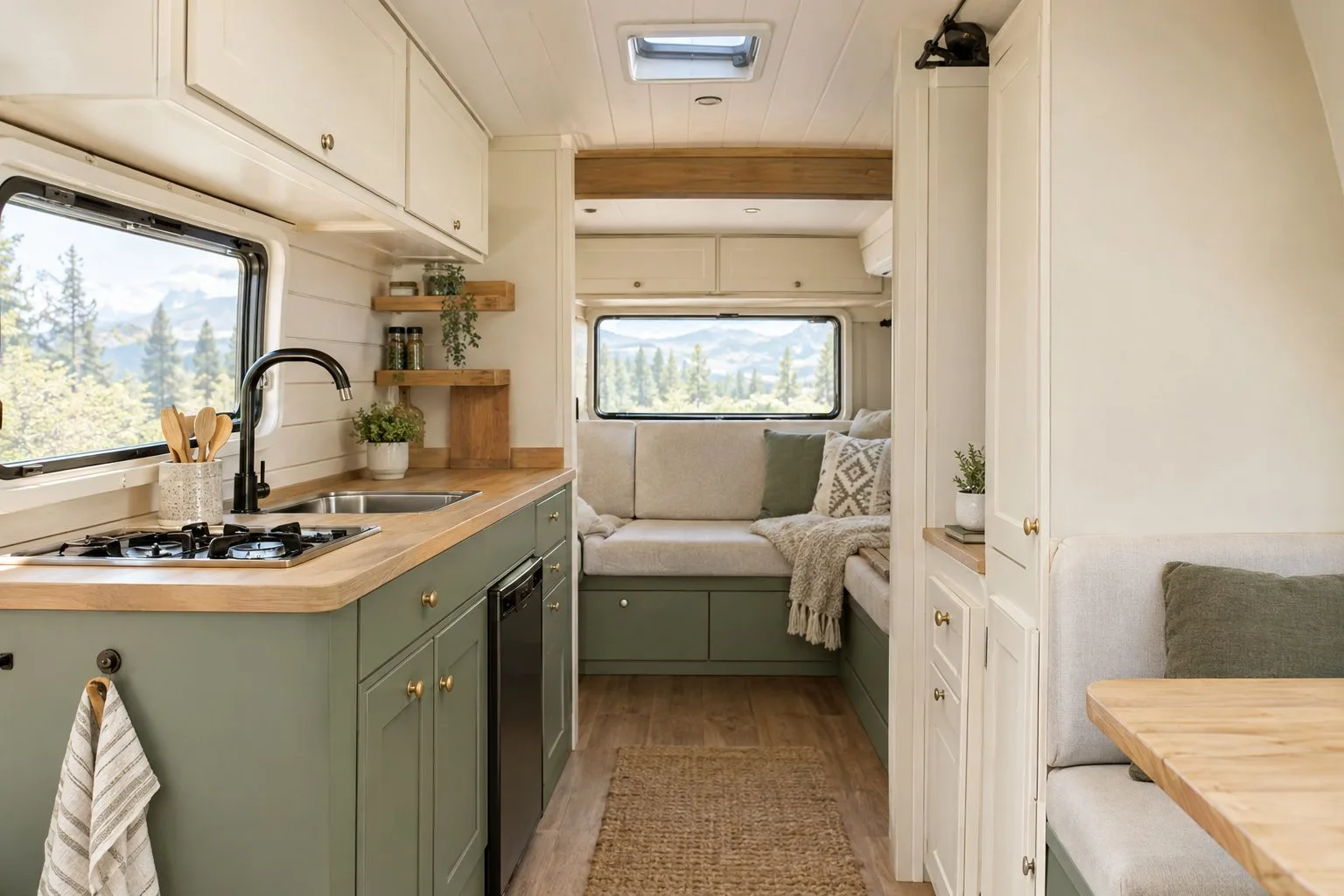
Paint is the cheapest big upgrade you can make, as long as you pick the right product and prep well. Your finish choice, your cleanup before painting, and how you apply each coat all decide how long the job lasts. For more ways to stretch your dollars, see this guide to camper renovation on a budget.
Picking a Paint Finish
Use semi-gloss or satin for RV interior paint because both hold up well and wipe clean. Semi-gloss suits cabinets since it shrugs off grease and fingerprints. Satin suits walls because it hides small flaws.
Flat or matte paint is hard to keep clean in a space where you touch every surface. For cabinets, cabinet-grade or furniture paint grips better and dries to a harder, chip-resistant finish.
Chalk paint is popular, but it needs several coats plus a protective topcoat. For most beginners, acrylic latex paint with built-in primer saves time and money.
Prepping Surfaces the Right Way
Prep decides whether your paint lasts or peels. A camper shakes and bounces down the road, so poor adhesion shows up within weeks.
- Take off every cabinet door and all the hardware.
- Scrub surfaces with a degreaser such as TSP (trisodium phosphate) to remove oils and old cooking grease.
- Sand everything with 120-grit sandpaper so paint has something to grip.
- Fill holes or dents with wood filler, then sand smooth.
- Wipe it all down with a tack cloth, since even tiny specks of dust will show in the final coat.
Painting Tips for Beginners
Good airflow is a must. Open every window and door, and run fans to keep air moving. A foam roller gives cabinets a smooth finish, and a small angled brush handles edges.
Go with thin coats to avoid drips. Wait at least four hours between coats; rushing leaves cabinets tacky for weeks. Plan on two to three coats for full coverage.
Let the last coat cure for at least 72 hours before you rehang doors or load the cabinets back up.
Handling Tricky Surfaces
Some camper surfaces need extra steps before paint will stick:
Vinyl wallpaper: Remove it if you can. If not, coat it heavily with oil-based primer to stop bubbling.
Laminate: Use a bonding primer made for slick surfaces, such as Zinsser B-I-N or Kilz Adhesion, before your topcoat.
Textured wallboard: Skim on joint compound and sand smooth before priming.
Metal vent covers: Clean with rubbing alcohol and use a metal primer.
Smart Ways to Place Color for Big Results
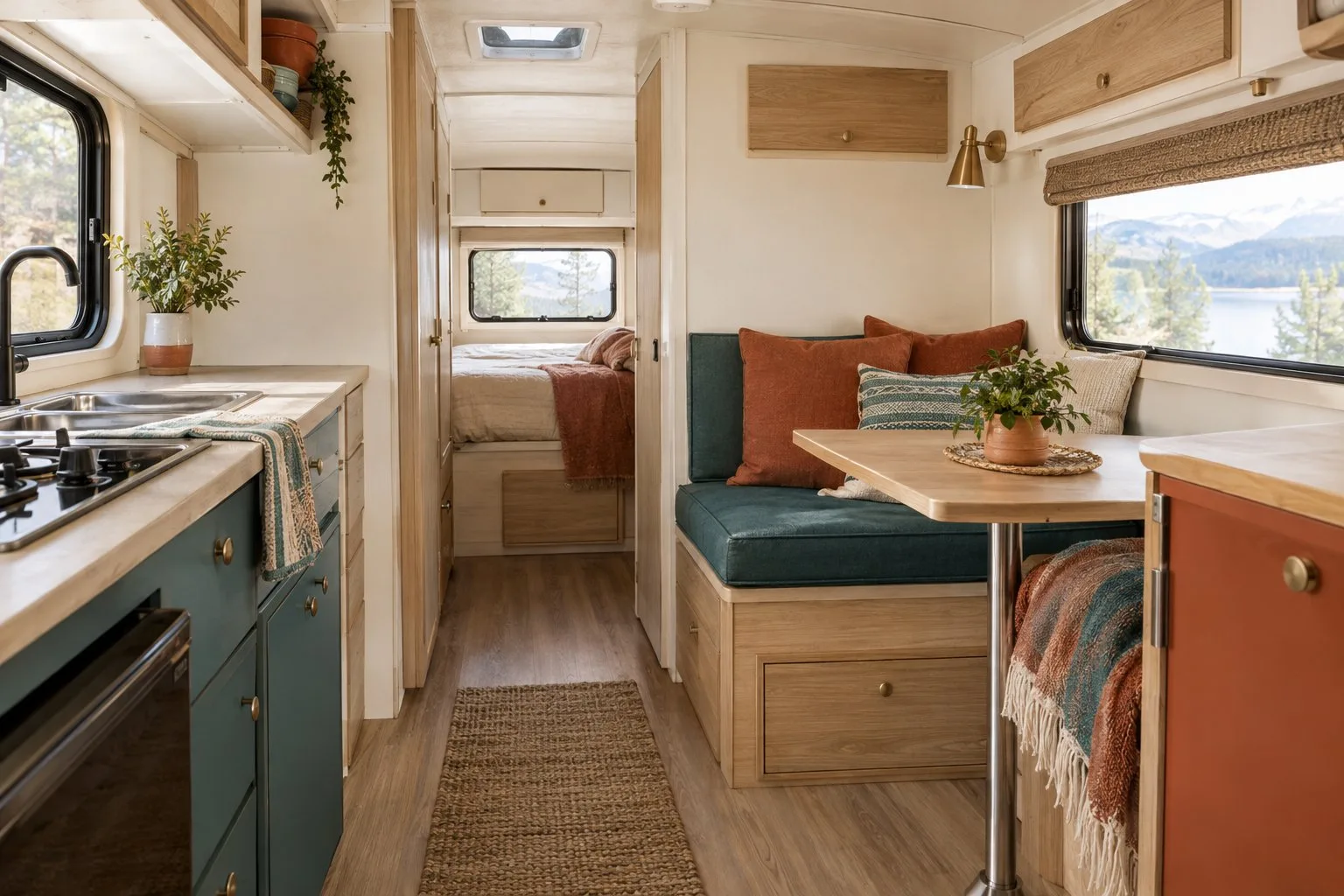
Where you put color counts as much as which color you pick. A few well-chosen spots make the camper pop while keeping the space balanced.
Two-Tone Cabinets and Contrast
Splitting your cabinet colors looks polished right away. Paint the lowers a deeper shade like emerald or charcoal, and keep the uppers bright white. The dark base grounds the room, and the light top keeps the ceiling from feeling low.
Black lowers work too when paired with white uppers and pale counters. The dark bottom hides scuffs from feet and dogs, while the bright top reflects light.
Easy pairings to try:
- Sage green lower + white upper: calm and natural
- Navy lower + cream upper: classic nautical
- Charcoal lower + pale gray upper: sleek and modern
Matching pulls in brushed nickel or matte black tie both halves together.
Accent Walls That Stand Out
A single bold wall changes the feel of your camper without painting the whole thing. The wall behind the dinette is a favorite spot; a botanical wallpaper there brings the outdoors in and gives the living area a focal point.
Burnt orange and other warm shades make a striking accent behind the bed or in the bathroom. Pick surfaces that already draw attention, like the seating area or the wall you see first when you step inside.
Removable wallpaper lets you try loud patterns you’d never paint across the whole rig, and you can swap it out when your taste changes. Browse these wall decor ideas for camper interiors for more options.
Using Ceilings and Trim
Your ceiling is a secret tool in a tiny space. Painting it one shade lighter than the walls makes the camper feel taller, and a soft sky blue opens it up even more.
Trim shapes how you see the walls. White trim gives crisp lines, while trim painted to match the walls creates a seamless look that blurs edges. Before you commit, paint a few colors on poster board and look at them from different spots inside the camper at different times of day.
Decor That Pulls Your Color Scheme Together
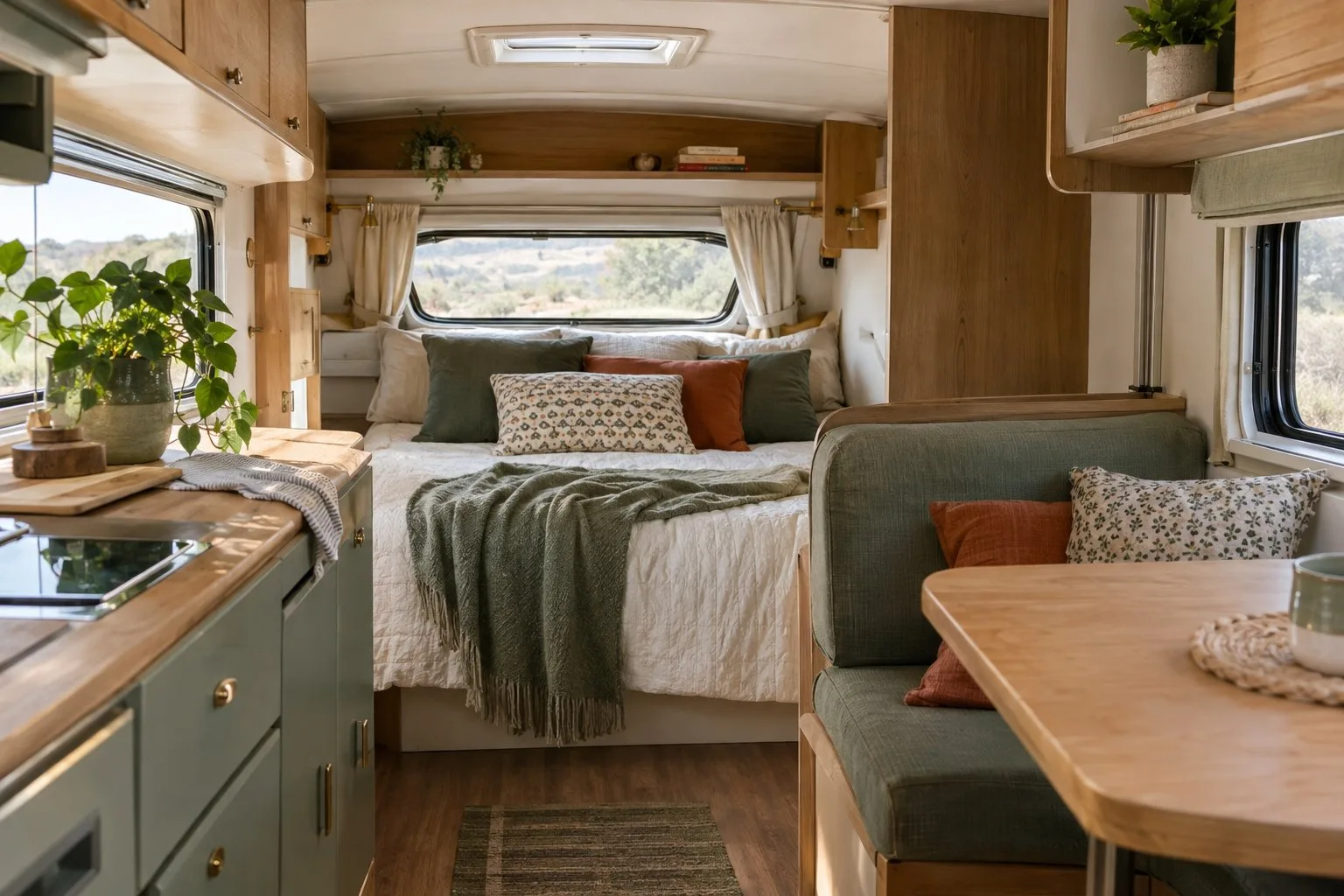
Textiles, wallpaper, and hardware finish off your palette without a big remodel. Wood tones in baskets, shelves, or trim add warmth to any of these choices. For more on making the space your own, read about customizing small camper interiors.
Pillows and Fabrics That Match
Throw pillows are the cheapest way to refresh your camper. Pick ones that include your main wall color plus one or two accent shades. Cream walls look great with cream pillows patterned in burnt orange.
Keep a stack of pillow covers so you can change them with the seasons: florals in spring, rust tones in fall. Covers cost far less than new pillows and store flat. Window treatments matter too; trading heavy curtains for light linen panels makes the space feel brighter.
Let bedding, towels, and rugs follow the same color story. Match your duvet to the walls, then add contrast with a throw. A coordinated towel set keeps the bathroom from looking plain.
Getting the Most From Removable Wallpaper
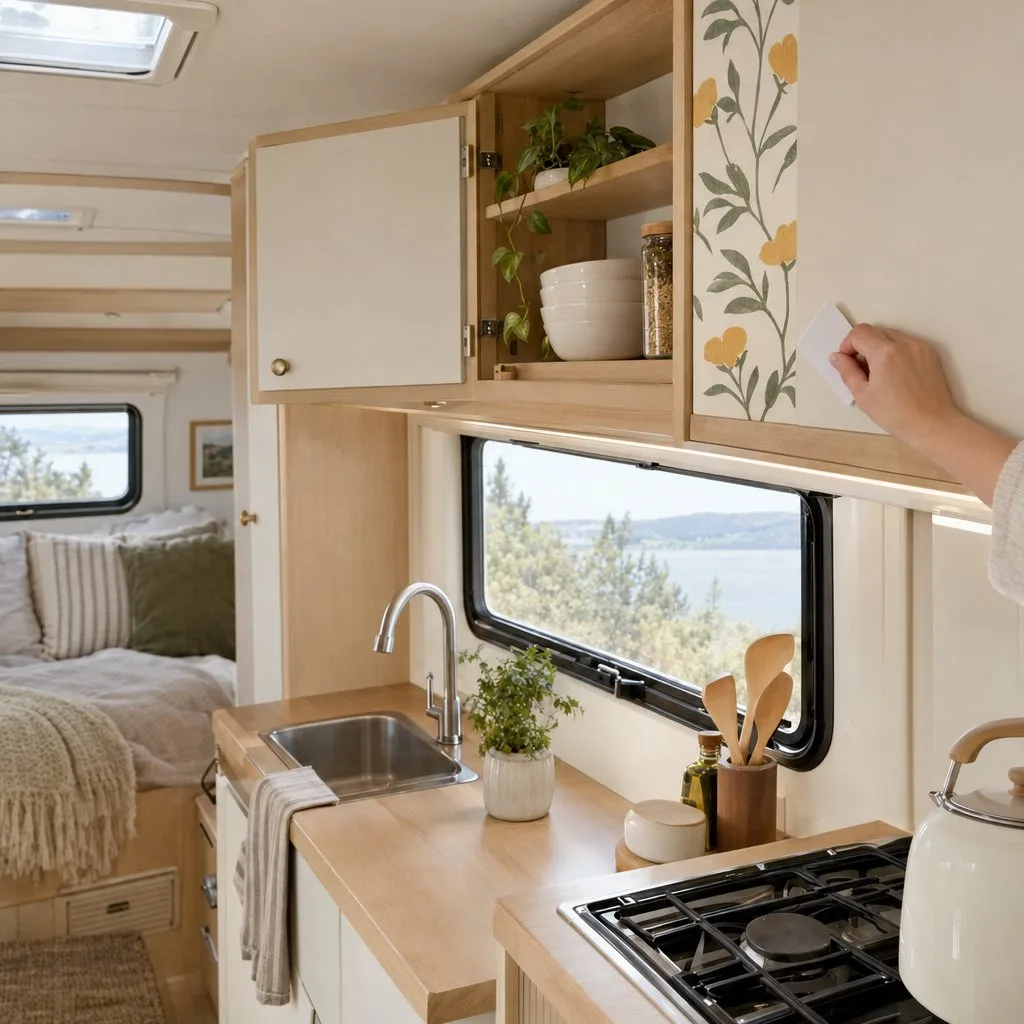
Removable wallpaper lets you test bold patterns with zero risk. You can peel it off later and leave the wall underneath unharmed.
Small doses often beat full coverage. Try it inside cabinet doors or on a strip along the side of the upper cabinets for a surprise pop. Watch the scale: bigger prints with plenty of space between them look calmer than tiny, busy patterns in a small room.
To install, clean the surface with rubbing alcohol, then press out bubbles with a smooth edge like a credit card.
Hardware and Fixtures for the Final Touch
New cabinet pulls give you a big change for a small price. Swapping dated brass pulls for matte black ones makes a camper kitchen look newer almost instantly.
Each finish sets a mood. Brushed nickel feels modern, oil-rubbed bronze feels warm, and gold feels a bit glam. Matching your light fixtures and faucet to the pulls brings the whole look up to date. Stick to two metal finishes at most so the space stays cohesive. Pairing them with natural wood accents keeps black or nickel from feeling cold.
Ideas From Popular Camper Makeovers
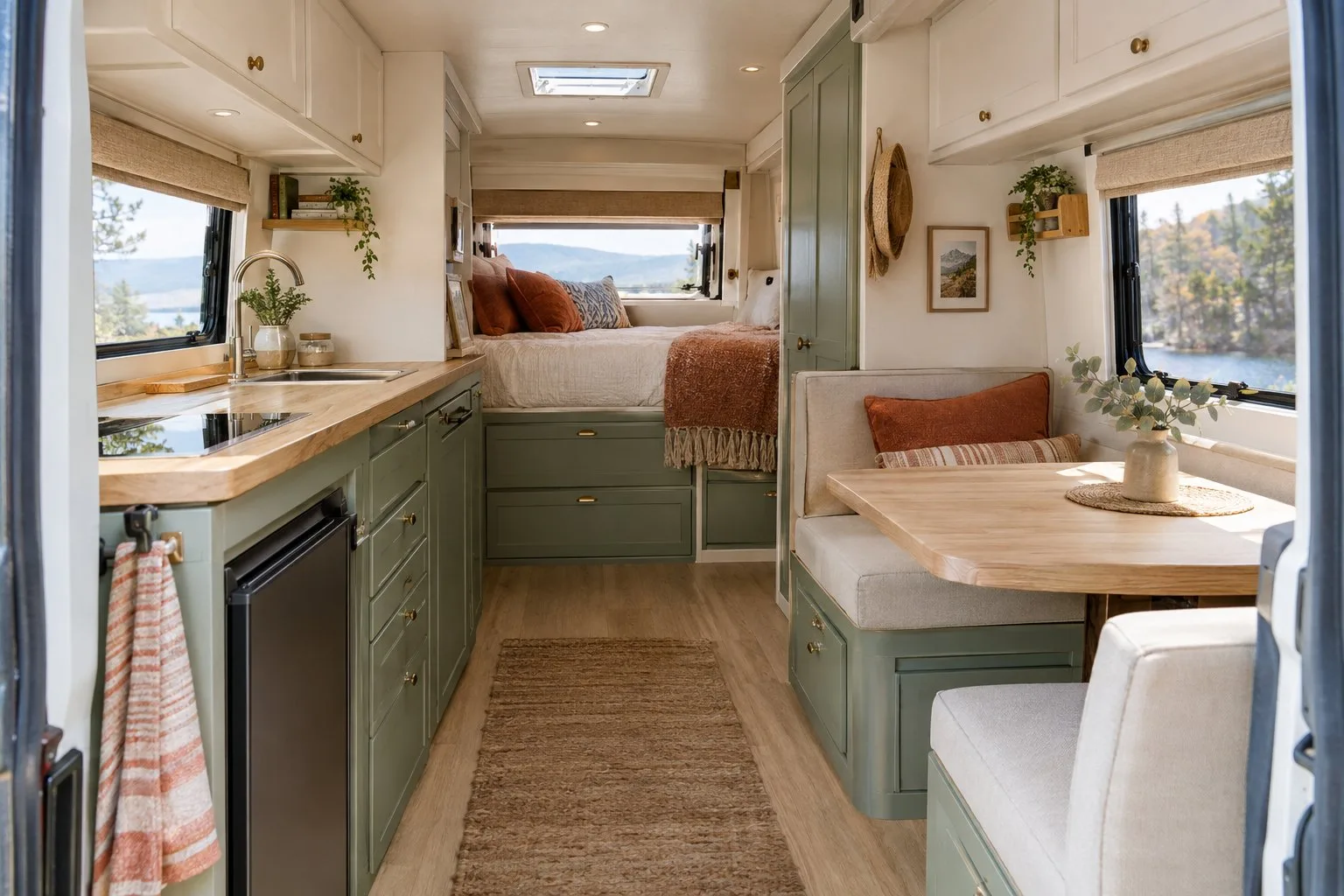
The best camper makeovers tend to follow one clear mood, from earthy and calm to dark and dramatic. Use these as a starting point for your own RV makeover, and check out these camper remodel ideas for more inspiration.
Earthy Greens and Neutrals
Sage green is one of the most popular ways to bring the outdoors inside. This soft, muted shade looks lovely with warm wood and cream accents, and the result feels peaceful.
Olive green is a richer option that pairs well with brass pulls and terracotta pots. Balance these greens with lots of natural materials.
Pairings that work:
- Soft sage + cream + natural wood
- Olive green + warm white + copper accents
- Green tones + beige + black hardware
Dark and Dramatic: Black, White, and a Bold Pop
Black cabinets add drama and make the space look planned. Keep it balanced by using black on the lowers and white on the uppers so the room stays bright.
This look works best with lots of daylight and warm lamps or LED strips at night. A bold accent like mustard yellow or deep teal breaks up the contrast. Choose matte finishes so fingerprints don’t show on every door.
Bright White or Cozy Dark?
All-white interiors stay popular because they reflect light and make small rooms look bigger. Darker shades like navy, charcoal, or deep brown create a snug, cave-like feel instead.
Let your climate and daylight guide you. If you camp in sunny places and have big windows, dark colors look rich and inviting. If you park in shady forests, keep your main surfaces light. You can see how the two styles compare in this look at maximalist vs minimalist camper design.
Bringing Your Camper Colors Together
Start with a light base of white, cream, or soft gray, then add one or two accents through cabinets, pillows, or a single wall. Prep carefully before you paint, choose satin or semi-gloss, and give every coat time to cure. Lean on cheap, swappable pieces like pillow covers, removable wallpaper, and new pulls so you can change your look whenever you like without starting over.
Frequently Asked Questions
What is trending for cozy camper interiors this season?
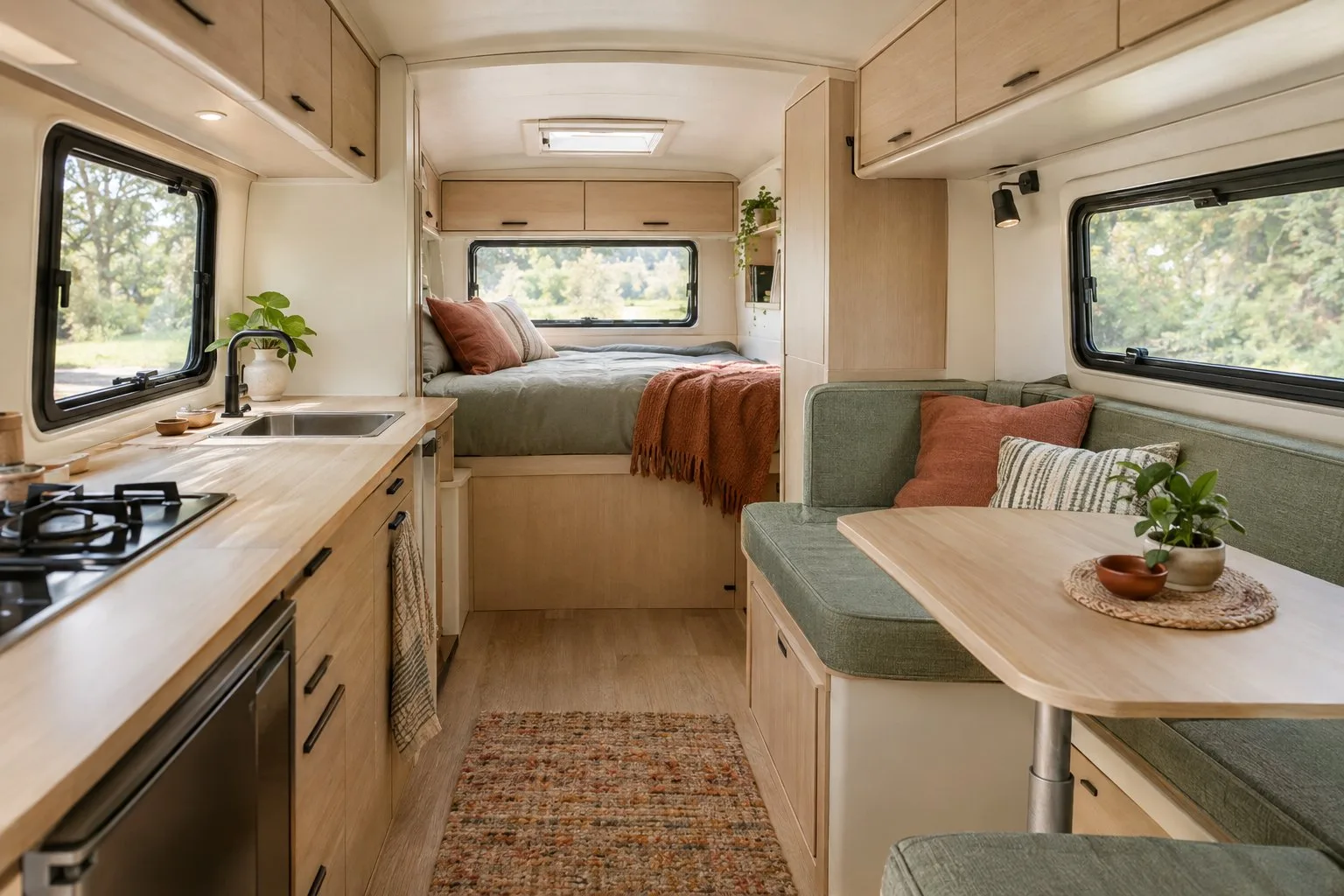
Warm neutrals lead the way, with cream walls, soft gray accents, and natural wood. Sage green is also popular for linking the inside to nature. Terracotta and rust work well as accent colors in pillows and throws.
How can I make a tiny camper look bigger and brighter?
Put white or soft cream on the walls and upper cabinets so light bounces around the room. Darker lower cabinets ground the space without lowering the ceiling visually. Sheer curtains and a mirror across from a window add even more light.
How should I choose an exterior color for my camper?
Think about where you park most. Forest green looks great but blends into wooded campsites, which can be a safety issue, while white and blue combos are classic and easy to see. Light, reflective finishes also help deflect heat in hot climates.
What colors suit a modern RV interior?
Two-tone cabinets give a modern look, such as deep blue or charcoal lowers with white uppers. Matte black pulls and fixtures are replacing older brass and chrome. Soft blush pink with gray is a fresh option if you want something different.
How can I update decor without colors clashing?
Follow the 60-30-10 rule: 60% neutral, 30% secondary color, 10% bold accent. Test new shades with textiles first because they’re cheap to swap. Keep warm tones with warm and cool tones with cool for an easy match.
What are some clever ideas to personalize an RV renovation?
Removable wallpaper on one accent wall adds lots of personality with no long-term commitment. Painting the inside of cabinet doors a fun color gives you a hidden surprise. Colored shelf contact paper and photos in matching frames add charm without clutter.
More Questions About Small Camper Colors
What colors make a small camper feel bigger?
White, cream, light gray, and pale pastels make a small camper feel the most spacious. These shades reflect light and soften the edges of the room. Keep the ceiling the lightest surface for an extra boost in height.
What are the best paint colors for a small camper interior?
Soft white, warm cream, and light gray are safe, budget-friendly picks for walls. Sage green and navy make strong cabinet colors when the walls stay light. Buy sample sizes first so you can check each color in your camper’s own light.
Which two-tone color schemes work well in a small camper?
Sage green with white, navy with cream, and charcoal with pale gray are all reliable pairings. Put the darker shade on the lower cabinets and the lighter one on top. Matching hardware ties both colors together.
How can I add color to a small camper without making it feel cluttered?
Limit yourself to one or two accent colors and repeat them in a few spots. Pillows, a throw, and one accent wall give plenty of color while the base stays calm. Skip small, busy patterns in favor of larger, spaced-out prints.
Should the walls and cabinets in a small camper be the same color?
Matching walls and cabinets creates a seamless look that makes the space feel larger. If that feels too plain, keep the upper cabinets matched to the walls and paint only the lowers a contrast color. You get visual interest while the room still reads as one open space.
What exterior colors look good on a small camper?
White, cream, and light gray look clean and stay cooler in the sun. Blue-and-white combos give a retro feel, and you’ll find more of that style in these vintage camper interior ideas. Bold navy or charcoal stands out at a campsite but absorbs more heat in hot weather.