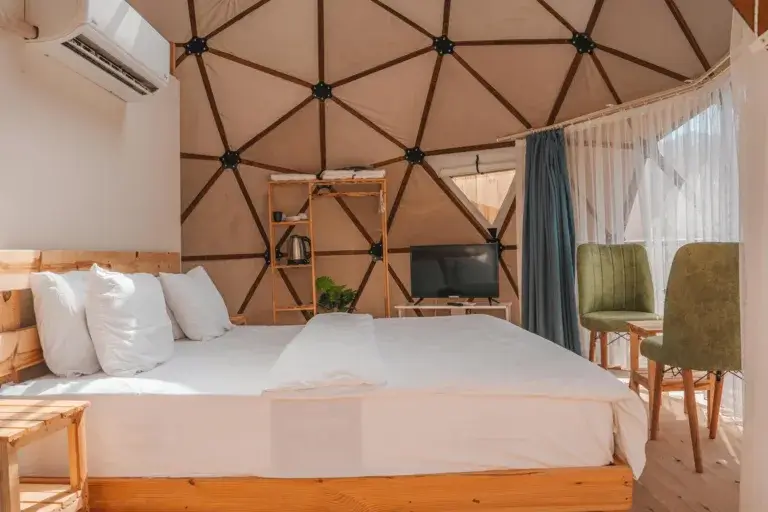

Maximalist vs. Minimalist Camper Design: Which Suits You?
When I first started looking into camper design, I realized pretty quickly that people fall into two very different camps. Minimalist camper design is all about clean lines, multifunctional furniture, and only keeping what you really need. Maximalist design, on the other hand, celebrates bold colors, personal collections, and a home-on-wheels packed with personality.
It’s not just about how much stuff you bring. It’s about how you want to feel on the road and what kind of experience you’re chasing.
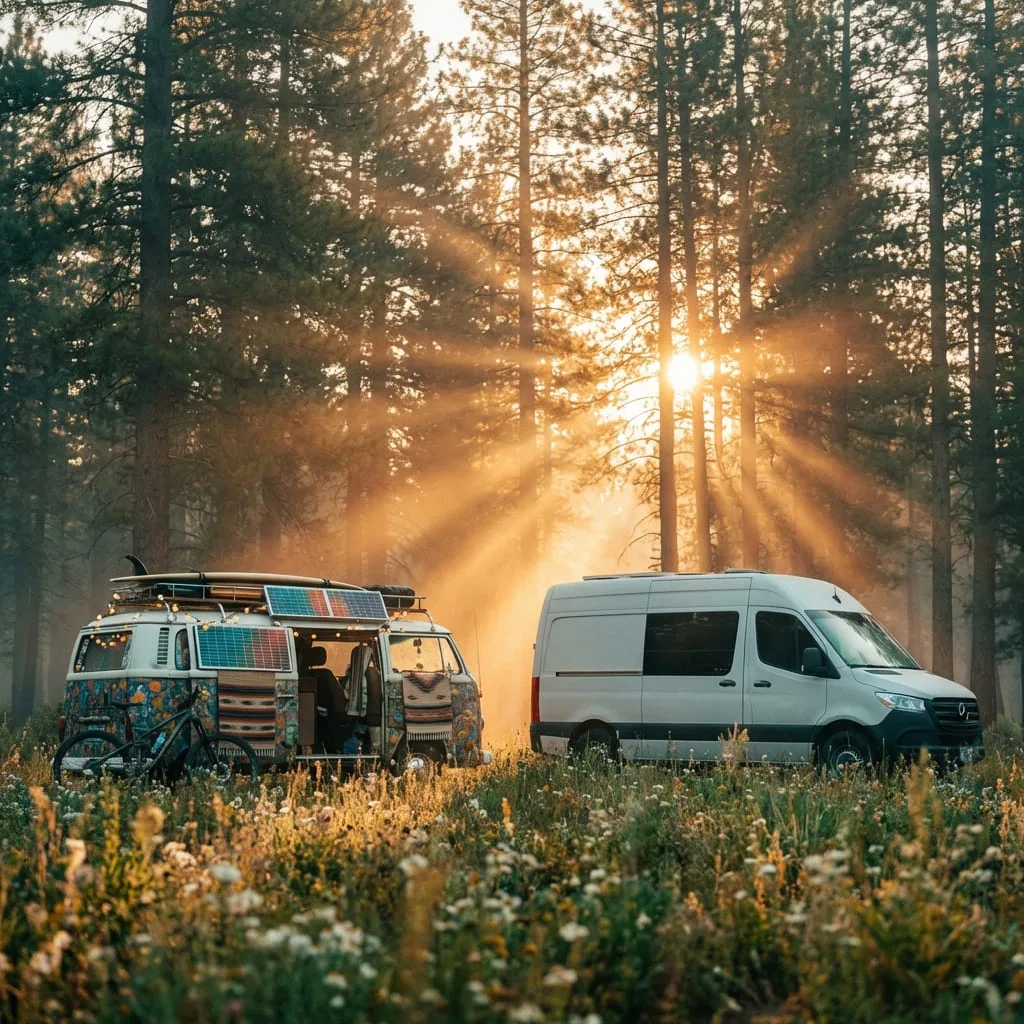
I’ve seen gorgeous minimalist builds with hidden storage and sleek surfaces that make a tiny space feel open and calm. I’ve also toured maximalist campers that look like cozy living rooms, full of gallery walls and vintage finds – so much character, you could shoot a magazine spread inside.
This whole design debate between minimalism and maximalism is everywhere right now, and campers are no exception.
Your ideal camper design depends on your personality, travel style, and what makes you feel at home. Whether you’re drawn to the calm focus of a minimalist setup or the creative energy of a maximalist space, understanding both options helps you figure out what really works for your life.
Key Takeaways
- Minimalist campers prioritize simplicity and multifunctional features, while maximalist campers embrace bold personal expression and lots of decor.
- Your ideal camper design should match your personality, travel habits, and what makes you comfortable on the road.
- Hybrid approaches let you mix and match elements from both styles to create a custom space that adapts to your changing needs.
The Core Differences: Maximalist vs. Minimalist Camper Design
Minimalist and maximalist campers start at opposite ends of the spectrum. Minimalism focuses on bare essentials and open space; maximalism packs in storage, decorative elements, and functional abundance.
These design philosophies shape everything from layout choices to daily routines.
Philosophy and Mindset
Minimalist camper design, for me, means a “less is more” approach where every item has to earn its spot. The philosophy centers on freedom from excess stuff and maintenance, letting you focus more on experiences than managing belongings.
Minimalist van dwellers typically own around 100-200 items. They love multi-use gear and avoid anything that doesn’t serve more than one purpose.
Maximalist campers see it differently. They believe having the right tool or item for every situation makes life easier and more comfortable. Maximalists treat their van as a mobile home, packed with everything they might need – spare parts, seasonal gear, hobby equipment, and comfort items that minimalists would probably ditch.
The mindset difference really comes down to this: minimalists feel lighter with less, maximalists feel secure with more.
User Experience and Functionality
Minimalist campers are a breeze to move around in and clean because there’s less stuff to shuffle. I can reorganize my whole space in under ten minutes since I’m not digging through storage bins or fighting clutter.
The downside? Sometimes I need something I just don’t have. Minimalists run to the store more often or borrow from others. The user experience leans heavily on adaptability and creative problem-solving.
Maximalist builds go wild with storage – cabinets, overhead bins, under-bed drawers, organizers on every door. Everything has a spot, so time is spent organizing, but less time improvising. These vans handle weather changes better, too, since they’ve got clothing options, backup heating, and entertainment for rainy days.
Functionality here means being prepared. If the water pump breaks, the replacement part and tools are available. When it’s freezing, there are extra blankets stashed away.
Visual Aesthetics in Compact Spaces
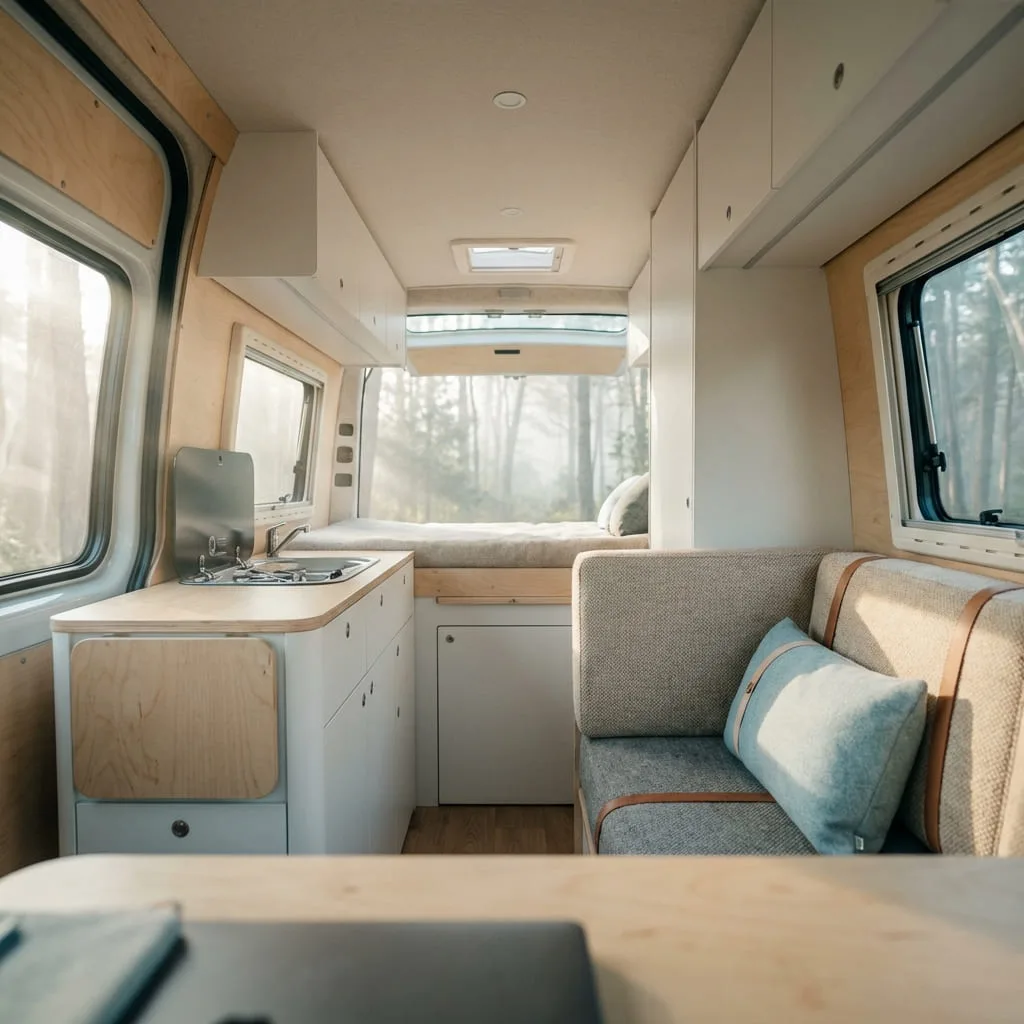
Minimalist camper interiors lean into clean lines, neutral colors – white, gray, natural wood – and lots of negative space. I keep counters clear and walls mostly empty, maybe one piece of art if I’m feeling bold.
The visual impact makes tiny spaces feel bigger and more open. Natural light just bounces around, and the simple look photographs beautifully for social media.
Maximalist vans just ooze personality through:
- Bold patterns on cushions, curtains, and rugs
- Gallery walls with photos, art, and mementos
- Colorful storage bins and organizers
- Plants, string lights, and decorative objects
- Layered textiles for that cozy, lived-in feeling
These spaces feel warm and personal, but they can look cluttered in photos. The richness works when you coordinate colors and place things thoughtfully, but it’s easy to go overboard.
Impact on Daily Life
My daily routine in a minimalist camper? Less cleaning, less organizing. I spend maybe five minutes tidying up because there’s just not much to put away.
Packing up to move takes under 30 minutes since I don’t have to secure a bunch of loose items. The downside shows up at meal prep – one pot, one pan, limited utensils. I wash dishes after every meal because I don’t have backups.
Maximalist van life means more maintenance, but also more convenience. Think more like 15-20 minutes a day putting things back in their spots. Moving camp takes 45-60 minutes since every cabinet needs checking and everything has to be stowed.
But when you want to cook something fancy, you’ve got the tools.
For remote work, I’ve got backup chargers, different lighting options, and a comfy setup. The impact on emotional well-being shifts, too – minimalists often feel calmer, while maximalists feel more at home surrounded by their things.
Minimalist Camper Design: Embracing Simplicity on the Road
Minimalist camper design strips away the excess to focus on what matters: functionality, breathing room, and a calming environment that doesn’t overwhelm your senses or your square footage.
Defining Features and Principles
When I picture minimalist design in campers, I see clean lines that don’t compete for attention and open spaces where I can move around without playing Tetris with my stuff. The core principle is simplicity and functionality working together.
Quality over quantity drives every choice. Instead of cramming five so-so storage solutions into a wall, I’d rather have one cabinet that actually works. This approach borrows from Bauhaus and other design movements that favored function over decoration.
Key features I look for:
- Multi-purpose furniture that transforms during the day
- Built-in storage that fades into the walls
- Fixtures and fittings with a purpose, not just for looks
- Timeless pieces that won’t look dated in five years
Color Palettes and Materials
My go-to color scheme is a neutral palette with lots of white space to keep things airy. I’m talking soft grays, warm whites, and an earthy tone here and there – natural wood or muted sage, maybe.
Bamboo interior kits work beautifully in minimalist conversions. They add warmth without visual clutter, so the material itself becomes the design element.
Neutral color schemes aren’t boring if you layer textures for depth:
| Material | Purpose | Visual Effect |
|---|---|---|
| Light wood | Warmth | Natural grain adds interest |
| Matte white panels | Brightness | Expands perceived space |
| Brushed metal | Durability | Subtle industrial touch |
| Natural fabrics | Comfort | Softness without pattern overload |
The subdued color palettes and sleek lines I’ve seen in professional builds prove you don’t need bold colors to make a space visually interesting.
Decluttering Techniques
Decluttering isn’t just a one-time event in van life – it’s a daily practice. I’ve had to get ruthless about what actually deserves a spot in my camper.
My three-question test for every item:
- Have I used this in the last month?
- Does it serve multiple purposes?
- Would I buy it again knowing my space limitations?
Hidden storage compartments are my secret weapon. I built them into bench seats, under the bed platform, and even inside cabinet doors.
Everything needs a designated home, or it just becomes visual noise that ruins the whole minimalist aesthetics vibe.
I also stick to the “one in, one out” rule. When something new comes in, something old has to leave.
This keeps my space from slowly morphing back into chaos.
Minimalist Layouts for Small Spaces
The layout makes or breaks a minimalist camper design. I always prioritize open spaces over cramming in features I’ll rarely use.
My ideal minimalist layout includes:
- A compact wet bath instead of a separate shower stall
- Galley kitchen along one wall with fold-down counter extensions
- Convertible dinette that works as workspace, dining area, and extra sleeping
- Minimal upper cabinets to keep the visual flow clean
I’ve noticed that modular components let me reconfigure my space for work, adventure, or just relaxing. The composition of my layout changes, but the minimalist principles stick around.
Maximalist Camper Design: Making a Statement Wherever You Park
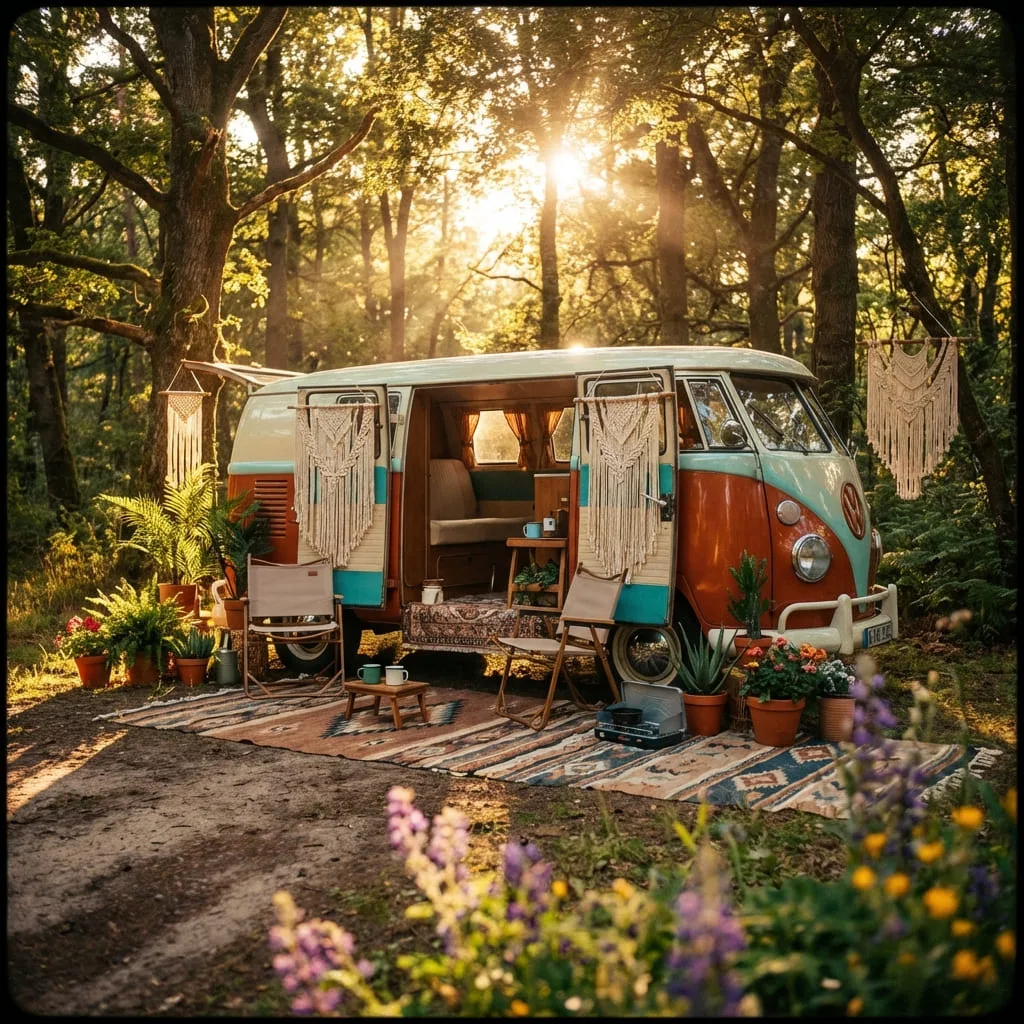
Maximalist camper design turns your mobile space into a bold expression of who you are. It’s all about vibrant colors, eye-catching patterns, and letting your personality spill into every corner.
This approach proves small spaces can handle big style when you embrace decorative elements that make every inch count.
Key Elements of Maximalist Interiors
Maximalist design in campers relies on three core elements. First, you need bold colors that bring energy and warmth. Think jewel tones like emerald and sapphire, with pops of coral or mustard.
Second, pattern mixing is your best friend. I love combining florals with geometrics and even animal prints for visual interest. The trick? Keep a common color thread running through your choices.
Third, layering adds depth. Stack textiles, hang art at different heights, and fill vertical spaces with meaningful objects.
The beauty of maximalist interiors is that nothing’s really off-limits. Velvet cushions, fringe trim, vintage mirrors, quirky collectibles – you can put them all together. Just make sure each piece feels intentional, not random.
Essential maximalist elements include:
- Multiple textile layers (throw pillows, blankets, rugs)
- Mixed metal finishes and hardware
- Statement lighting fixtures
- Collected treasures and art pieces
Bold Color Palettes and Statement Pieces
Your color palette sets the mood for your whole camper. I suggest starting with two or three main colors, then tossing in accent shades that surprise the eye.
Jewel tones work beautifully because they feel rich but don’t overwhelm small spaces. Pair deep teal walls with burnt orange accents and gold fixtures for instant drama. Or go with navy blue, hot pink, and brass for a playful vibe.
Statement pieces anchor your design. A vintage velvet sofa – even a tiny one – can be the star of your living area. A hand-painted cabinet or bold wallpaper on one wall creates an instant focal point.
Don’t be afraid of neon accents or retro shades. A neon sign or bright yellow chair brings unexpected energy. These bold visuals show you’re confident in your style choices.
Color blocking helps define different zones. Paint your sleeping area one color and your dining space another. This technique creates distinct areas in tiny interiors while keeping the overall maximalist vibe together.
Layering Patterns and Textures
Pattern mixing sounds intimidating, but it’s really not that hard. Start with one dominant pattern as your hero – maybe that’s a bold geometric rug or floral curtains.
Add supporting patterns in smaller doses with pillows, dish towels, or seat cushions. The key is to vary the scale. Pair big patterns with smaller, more delicate ones.
A shared color will tie everything together. If your main rug has navy blue, echo that blue in a striped pillow or patterned dish set.
Texture adds another layer of interest without making things too busy. Mix smooth velvet with rough woven baskets. Combine glossy painted surfaces with matte wood. Toss in some metal accents alongside soft textiles.
Natural materials like rattan, jute, and raw wood ground all those bold patterns and textures. They keep the space from feeling fake or overwhelming.
Successful pattern combinations:
- Large florals + small geometrics
- Bold stripes + animal prints in matching colors
- Vintage paisley + modern abstract shapes
Showcasing Personal Expression
Maximalism is all about you and your story. Every item in your camper should reflect your interests, travels, or memories. This is where personal expression through eclectic decor really shines.
Create a gallery wall with photos, postcards, small paintings, and found objects from your adventures. Don’t stress about matching frames – the mix adds character.
Display your collections proudly. Vintage cameras, quirky salt shakers, or colorful plates all deserve wall space or a spot on a shelf. These items spark conversations and make your camper feel truly yours.
Thrift store finds and secondhand treasures work perfectly in maximalist spaces. That mismatched chair or odd lamp you found adds charm you just can’t get from new stuff. It’s fun to hunt for pieces with history and personality.
Your maximalist camper becomes a moving gallery of what you love. Unlike minimalist approaches that hide personal items, this style puts your passions out there. Every surface tells part of your story, making your camper feel like home no matter where you park.
Which Camper Design Is Right for You?
Choosing between maximalist and minimalist camper design really depends on how you live on the road, what you can afford to maintain, and which environment actually feels like home to you.
Lifestyle Considerations
Your daily habits reveal which design works best. If you thrive on having everything in its place and want quick cleanups after a long day of hiking or remote work, minimalist design offers real usability perks.
You’ll spend less time organizing and more time just enjoying your travels.
Maximalist designs shine when your camper needs to serve multiple purposes. Maybe you work remotely and want a cozy office vibe with inspiring decor. Or maybe you host friends a lot and want memorable experiences in a space that’s warm and inviting, not sterile.
Think about your actual gear needs too. Full-time van lifers who cook a lot need more kitchen tools than weekend warriors. Rock climbers hauling tons of equipment might struggle with a super minimal setup.
The user experience really depends on whether your design fits what you truly need, not just what looks good on Instagram.
Storage is the deciding factor for most people. Minimalism forces you to be ruthless about what comes along, while maximalism needs clever organization to prevent chaos.
Budget and Sustainability
Minimalist camper builds usually cost less upfront. Fewer cabinets, simpler finishes, and basic fixtures keep expenses down.
I’ve seen beautiful minimal conversions done for under $5,000 because they focus on essentials instead of fancy built-ins.
Maximalist designs tend to require more materials and labor. Custom storage, decorative elements, and quality furnishings add up fast. Still, investing in durable, multi-functional pieces fits with circular economy principles better than buying cheap stuff you’ll toss later.
Minimalism naturally reduces consumerism by limiting what you own. But maximalism done right means buying quality vintage or secondhand pieces that last decades, not just fast-fashion decor that’ll end up in landfills.
Maintenance costs vary too. Minimalist spaces need less cleaning and fewer replacement parts. Maximalist setups with more decor need ongoing care to prevent wear and tear from road vibrations and temperature changes.
Psychological and Emotional Impact
Your camper becomes your whole world on long trips, so how you feel inside matters more than any design trends. I feel most relaxed in minimal spaces with clean lines and neutral colors.
That clarity and focus helps me unwind after driving through stressful traffic or unfamiliar towns.
But my friend Sarah swears by her maximalist setup filled with colorful textiles and travel souvenirs. She says all that visual richness energizes her and makes the small space feel like a real home, not just a vehicle.
Her camper tells stories through collected objects, creating emotional comfort that simple designs just can’t match.
Some folks get anxious in sparse environments that feel too empty or institutional. Others get overwhelmed by visual clutter and pattern mixing. Neither reaction is wrong – it’s just how you’re wired.
Consider whether you need your camper to be a calming retreat or an inspiring creative space. That answer reveals which design philosophy supports your mental health on the road.
Blending Both Worlds: Hybrid and Custom Strategies
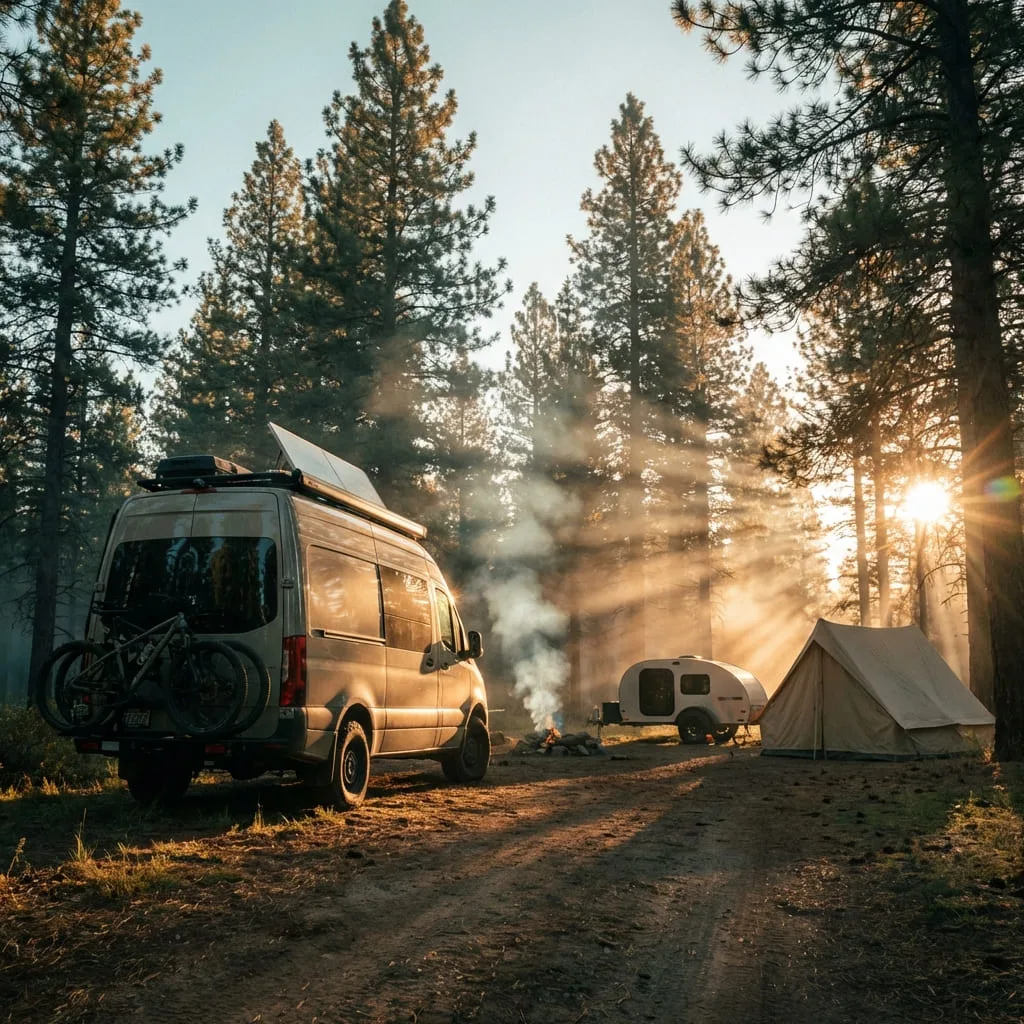
You don’t have to pick a side in the minimalism versus maximalism debate. I’ve found that mixing both design principles creates camper spaces that feel uniquely yours and still work practically on the road.
Mixing Minimalist Layouts With Maximalist Touches
I love starting with a clean, minimalist base and then tossing in pops of personality using maximalist details. For me, that means keeping the floor plan open and functional, but decorating with bold textiles, colorful cushions, or maybe some quirky wall art.
Designers often talk about a hybrid approach that blends simplicity with intricate design elements. In my camper, I hide storage and keep surfaces clear, but I’ll throw in vibrant patterns on curtains or a statement rug to add visual interest.
Think of it like this: the layout follows minimalist rules for easy movement and cleaning, but the decor choices bring in that maximalist energy. I’ve hung up a gallery wall of travel photos or swapped in colorful throw pillows when I want a new vibe.
This way, I get all the perks of simplicity and function, but it never feels like I’m living in a sterile box.
Balancing Utility and Aesthetics
Everything in my camper has to earn its place by being useful and looking good. Over time, I’ve realized that mixing minimalist layouts with maximalist visuals creates immersive but user-friendly spaces.
Here’s how I try to strike a balance:
- Pick multi-purpose furniture that looks great (like an ottoman that hides blankets inside).
- Display functional items artfully—think hanging copper pots or vintage mugs.
- Use bold colors strategically on things you need anyway (bright dish towels, patterned bedding, you get the idea).
I don’t give up storage for style, or style for storage. My coffee mugs are colorful and mismatched – love the variety – but they stack neatly. My spice jars are all different shapes, lined up on an open shelf I can reach while cooking.
Personalizing for Flexibility
My camper’s design shifts with my needs and moods. I keep a minimal, organized base layer and then rotate decorations depending on the season or where I’m headed.
In summer, I add bright textiles and open up the space. When winter hits, I pull out cozy blankets and warmer tones. I’ve got bins of cushion covers, small artwork, and little decor pieces I can swap in or out.
I’m not really following strict interior design rules from either camp. I focus on what actually makes me comfortable on long trips, and what keeps things visually interesting. Some weeks, I want that clean, minimal look, so I stash away the extra decor. Other times, I cover every surface with memories and treasures from my travels.
Design Trends and Inspiration for Modern Camper Enthusiasts
The camper design world is moving fast – new styles pop up everywhere, it seems. Smart storage and tech upgrades make small spaces work harder, while design trends let you pick between bold patterns or clean lines.
Current Popular Movements
I keep seeing that minimalism and maximalism are still huge in 2026. Both styles just keep getting bolder.
Minimalist layouts focus on clean lines and hidden storage to make small spaces feel open. White walls and natural wood give that bright, airy vibe everyone seems to want. Japandi blends Scandinavian coziness with Japanese simplicity – lots of pale wood and beige everywhere.
On the other hand, maximalist decorating thrives on bold colors and layered patterns. Pattern drenching is everywhere – covering an entire space in one repeating pattern for a dramatic look.
Coastal styles are still in, with soft ocean blues and whitewashed wood. French country brings in European charm with blue-gray cabinets and toile fabrics. Desert oasis designs use terracotta walls and cacti for a warm, southwestern vibe.
Innovative Storage and Smart Tech
Storage can make or break camper life. I’m always hunting for furniture that does double duty.
Built-in solutions squeeze every inch out of the space without sacrificing style. Murphy beds fold up to make room during the day. Bench seats with lift-up tops hide gear and supplies. Pull-out pantries fit into those awkward little gaps between appliances.
Smart tech is changing the game. LED lighting strips with color controls set the mood. Compact appliances designed for tiny spaces save precious counter space. Solar panels and battery systems let you stay off-grid longer.
Wall-mounted fold-down tables disappear when you’re not using them. Magnetic strips hold knives and tools, freeing up drawer space. Hanging organizers make use of vertical space on doors and walls, I wish I’d started using them sooner.
Sourcing Timeless or Statement Pieces
Finding the right pieces really depends on your style. For minimalist spaces, I always go for quality over quantity.
Timeless minimalist finds:
- Natural linen curtains
- Wooden cutting boards
- Ceramic dishware in neutral tones
- Bamboo storage baskets
Bold maximalist statement pieces:
- Geometric patterned rugs
- Velvet throw pillows in jewel tones
- Gallery wall frames in mixed metals
- Colorful mosaic backsplash tiles
Thrift stores and vintage shops are goldmines for unique items with character. Brass hardware and antique mirrors give old-world charm. Handmade macrame and woven wall hangings add texture without eating up floor space.
I always measure twice before buying – learned that lesson the hard way. A statement chandelier looks amazing if your ceiling is high enough. Bold wallpaper can transform boring walls in no time.
The Road Ahead: Choosing Your Camper’s Character
I’ve realized that picking between maximalist and minimalist camper design isn’t really about trends. It’s about how you actually want to live on the road.
Think about your travel style for a second. Do you pack three outfits for a weekend, or do you haul your whole closet just in case? That’s usually a clue about which design camp you’ll fall into.
Here’s what I ask people to consider:
- Daily habits – Do you need specific items for every activity, or can you make do with versatile basics?
- Stress levels – Does visual clutter drain you, or does a sparse space feel cold and uninspiring?
- Storage needs – Are you carrying sports gear, art supplies, or work equipment that needs its own spot?
The best part of modern camper van design is that you don’t have to pick just one extreme. I’ve seen plenty of builds that mix both styles and pull it off beautifully.
Your camper ends up being a rolling reflection of who you are. Maybe you want clean counters but love colorful textiles. Or maybe you stick to neutrals but dedicate one wall to photos and mementos from your travels.
The trick is being honest about what you’ll actually use versus what just looks good on Instagram. I’ve seen people build super minimalist vans, only to realize they miss their stuff. And I’ve seen the opposite, too.
Test out your theory before jumping in. Try a weekend with only what would fit in your planned design. You’ll figure out what really matters to you, fast.
Frequently Asked Questions
People always ask about the practical side of cramming everything into a camper versus keeping it bare bones. Both styles have their perks, but there are trade-offs for comfort, maintenance, and how the space actually feels when you’re living in it.
What’s the scoop on stuffing your camper to the brim – does more stuff mean more fun?
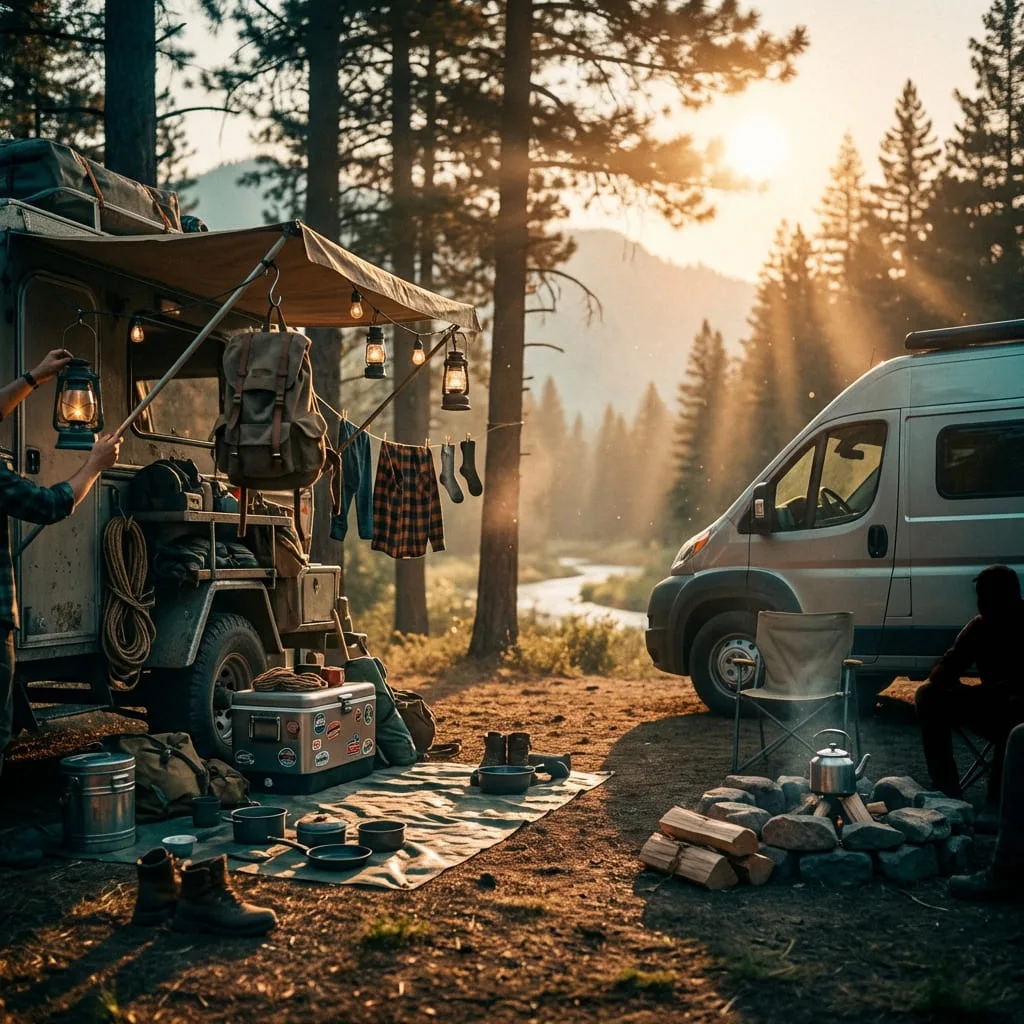
More stuff doesn’t always mean more fun, but it does mean more options. When I load my camper with gear, decorations, and extras, I’m ready for anything. That guitar for campfire nights? It’s there. Espresso maker for lazy mornings? Wouldn’t go without it.
The downside is, all this stuff takes up space and needs organizing. I spend more time managing my belongings than I’d like to admit. Sometimes, finding that one thing turns into a scavenger hunt.
Maximalist camping works best if you’re staying put for a while. If I’m parked somewhere for a week, all my creature comforts make it feel richer. But for quick weekend trips, I end up digging through piles just to find my toothbrush.
How do tiny spaces stay sane? Tips for a minimalist camper, please!
I keep my minimalist camper sane by being ruthless about what comes inside. Every item needs to earn its spot by serving multiple purposes or being absolutely essential.
My cutting board doubles as a serving tray. My camping chair folds flat and slides behind the bed.
Vertical storage is my best friend in tight quarters. I use hooks, magnetic strips, and hanging organizers to keep surfaces clear.
When everything has a designated spot off the floor and counters, the space feels twice as big.
I also follow a simple rule: if something new comes in, something old goes out. This keeps clutter from creeping back in over time.
It’s kind of like those simplicity and clean lines principles from interior design, just applied to camping.
Every few trips, I reassess what I actually used versus what just took up space.
Cramped quarters or airy minimalism—what’s the real deal on living space vibes in campers?
The vibe difference is huge, and I feel it immediately when I step inside. My minimalist setup creates this open, breathable atmosphere where I can move freely without bumping into stuff.
There’s something calming about seeing clear surfaces and uncluttered corners. Maximalist campers feel cozier and more homey to me, but they also feel smaller.
When I visit friends with packed campers, the visual noise from all the decorations and gear makes the walls feel closer. It’s not necessarily bad – just different.
Light plays a big role too. In my minimal space, natural light bounces around freely and makes everything feel larger.
When there are curtains, wall hangings, and shelves full of stuff, those shadows and layers compress the space visually.
I’ve noticed that maximalist design fosters warmth in social spaces, which applies to campers too.
If I’m hosting friends for dinner, a decorated space feels more inviting than stark walls.
Can a camper be too empty? Where’s the line between minimalist cool and echo chamber?
Yes, I’ve definitely crossed that line before. I once stripped my camper down so much that it felt cold and unwelcoming.
When I opened the door, it looked more like a medical waiting room than a cozy camping spot. The line sits right where function meets comfort.
I need enough stuff to live comfortably – a few soft textiles, some personal touches, basic cooking gear. But I don’t need three sets of dishes or decorative pillows that just get tossed aside.
A camper gets too empty when I’m constantly wishing I had something I left behind. If I’m eating meals with my hands because I didn’t bring utensils, that’s too minimal.
If I’m cold at night because I skipped the extra blanket, I’ve gone overboard. I find that adding just a few warm elements prevents that echo chamber feeling.
A small rug, a throw blanket, maybe a plant or photo. These tiny additions make the space mine without cluttering it up.
Is it just me or does the maximalist camper style feel a tad overwhelming?
No, it’s not just you – I get overwhelmed too sometimes. Walking into a camper packed with decorations, gear, and knickknacks can trigger this low-level stress for me.
My eyes don’t know where to focus, and I feel like I need to tidy up even when everything is technically in its place. The visual interest from maximalism can definitely tip into visual chaos in small spaces.
What looks vibrant and exciting in a large living room can feel suffocating in 200 square feet. All those patterns, colors, and textures compete for attention.
I’ve also found that maintaining a maximalist camper takes serious energy. Every surface has objects that need dusting, rearranging, or securing before driving.
It’s exhausting. Some people thrive in that environment though.
My friend loves her packed camper and says it makes her feel at home. I think it depends on your tolerance for sensory input and how much time you want to spend on upkeep.
Minimalist camping: a closet-sized challenge or the ultimate zen zone?
For me, it’s become the ultimate zen zone, but getting here wasn’t easy. Those first trips felt so restrictive – I kept wishing for more tools or a little extra comfort.
I missed having options. The challenge is real when you’re starting out.
You have to get creative with limited resources and accept you can’t do everything. No, I can’t bake cookies in my minimalist setup.
No, I don’t have five outfit changes for a weekend trip. But after a while, my expectations shifted.
I spend less time cleaning, packing, and organizing. There’s just more time to actually enjoy nature.
My stress levels dropped because there’s less to manage or worry about. The tranquility from minimalist spaces is real.
When I wake up in my streamlined camper, I feel clear-headed and ready for the day. There’s no clutter screaming for my attention or making me feel boxed in.