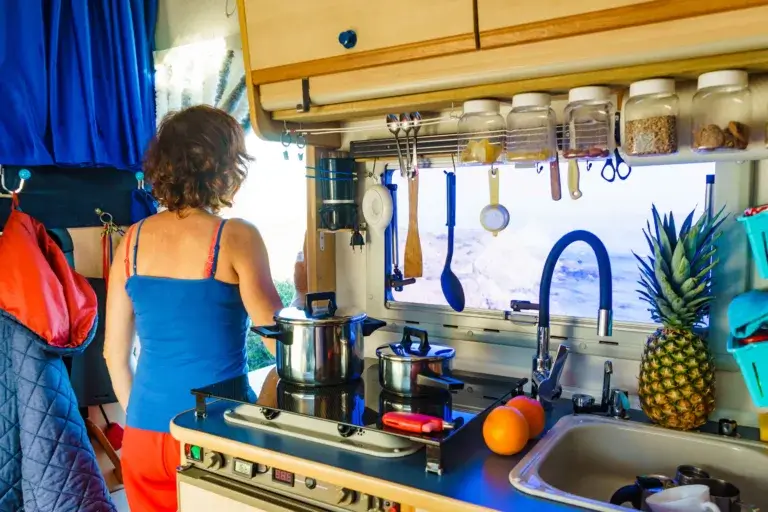

RockPot Review: Cooking Off-Grid, Real Meals, and the Trade-Offs
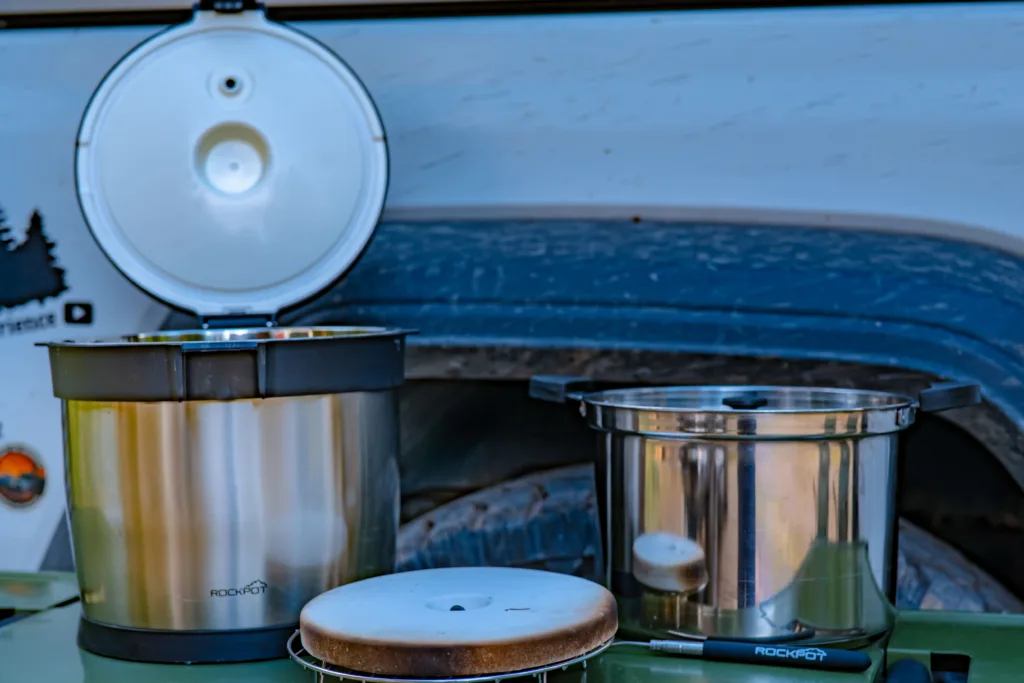
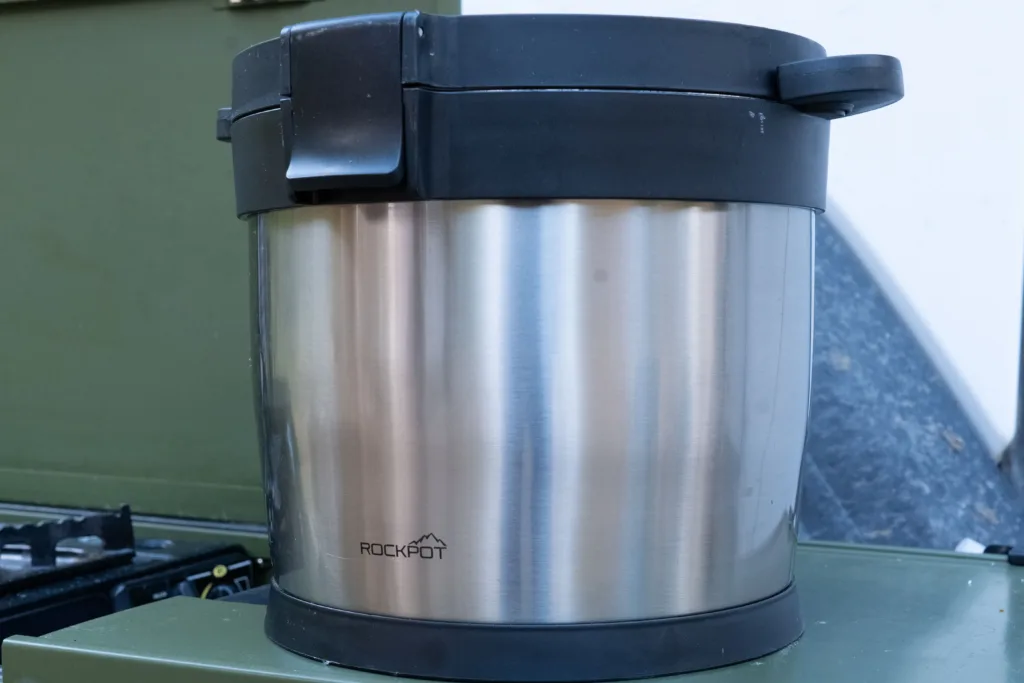
The RockPot is worth it for off-grid, road-based camping if you’re willing to plan meals hours ahead and you have room for a heavy pot. I own the 7QT and have used it while living and traveling on the road. For me, the payoff is opening the lid at camp to a hot meal that cooked while I drove. It won’t suit you if you want to decide on dinner at 5 PM or if you’re backpacking.
Here’s my at-a-glance take before the details:
| My take | |
|---|---|
| Best for | Car campers, overlanders, RV travelers, and road trippers who plan meals in the morning |
| What worked for me | Lasagna cooked during a drive, enchiladas, and other slow-cooked meals |
| What went wrong | A pork shoulder came out undercooked after I loaded it cold and overfilled the pot |
| Trade-offs | Advance planning, bulk and weight, slow cooking only, and no searing or frying |
| Beginner tip | Preheat thoroughly, keep perishables safely chilled until cooking, and do not overfill |
If you’re new to this kind of cooker, this rock pot review should help you decide whether it fits your trips and your budget. When you’re ready to compare it with other camp cooking gear, browse my camping gear and reviews and pick the setup that matches how you travel.
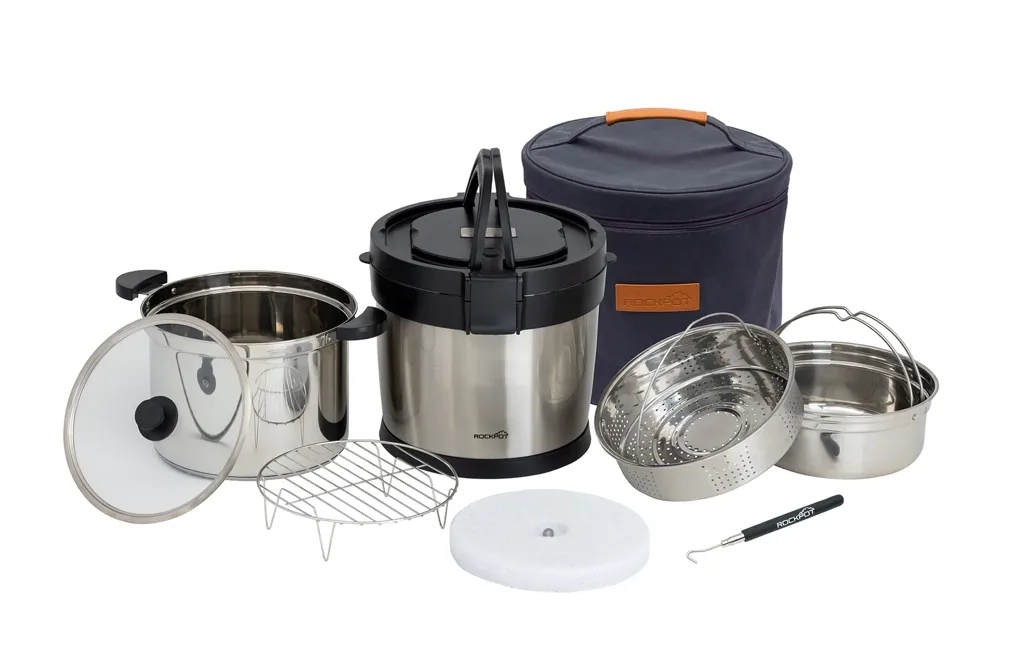
The RockPot is a portable cooker for camping, overlanding, and road trips. Heat its RockTablet on a suitable stove or other permitted heat source first; once the pot is loaded and sealed, it cooks without an attached flame or electrical connection. It suits travelers who plan meals ahead and have room for a bulky pot. Follow the maker’s directions and check food safety before serving.
How Does the RockPot Cook Without an Attached Heat Source?
The RockPot cooks with stored heat from a stone called the RockTablet, which sits inside a double-wall insulated stainless steel pot. You charge the stone with heat first, and the sealed pot holds that heat around your food for hours.
What Must Be Heated Before Cooking?
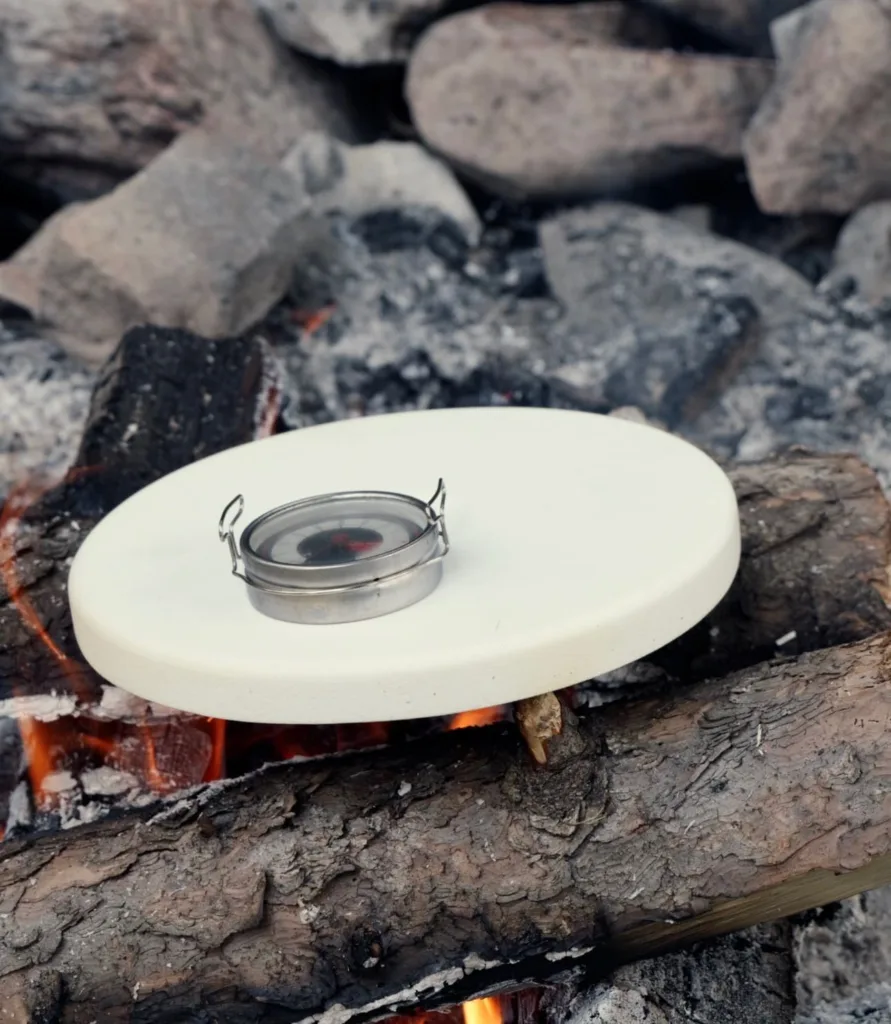
The RockTablet must be heated before anything cooks. I leave it on a heat source for a full 30 minutes. I once tried a shorter heat-up, and the meal didn’t cook properly. Since then, I treat 30 minutes as the minimum.
I also preheat the pot itself. I pour boiling water into the empty pot, let it sit, then dump it out. A warm pot pulls less heat away from the food at the start.
A few habits help:
- Use the hook, tongs, or heavy gloves. The tablet holds serious heat and doesn’t look as hot as it is.
- Warm it gradually. I avoid setting a cold tablet on a blazing burner and walking away.
- Keep it centered on a camp stove or grill so the whole stone heats evenly.
- Flip it halfway on campfire coals, since fire heat is uneven.
Why Does Preheating Require Another Heat Source?
The stone has no fuel or battery of its own, so you need a stove or fire to load it with heat. RockPot lists gas, propane, butane, electric coil, glass or ceramic cooktops, campfires, and wood stoves as compatible. The company lists induction, ovens, and microwaves as not compatible.
So the pot runs without an attached heat source only after preheating. You still need a camping packing list that includes a stove, a fire setup, or a kitchen burner at home before you leave. Once the stone is in and the lid is latched, there is no open flame at the pot itself. However, preheating the tablet still requires an external heat source, so always check applicable local fire restrictions for the specific stove or fuel you plan to use.
How Does the 7QT Fit into a Road-Travel Cooking Day?
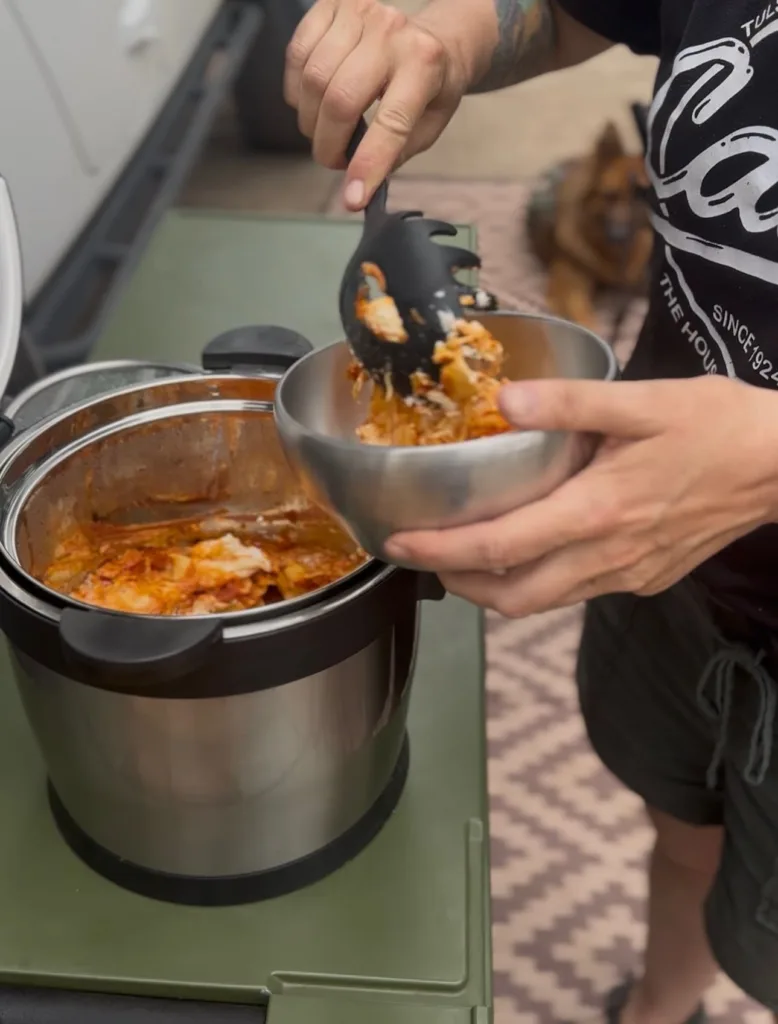
My 7QT fits best on days when I’m driving to a new camp. I start the meal in the morning, strap the pot in, and eat when I arrive.
Preheating the RockTablet and Securing the Latched Pot
My lasagna day ran like this:
| Time | What I did |
|---|---|
| 9:30 AM | Started heating the RockTablet on my propane stove |
| 10:00 AM | Preheated the pot with boiling water |
| 10:10 AM | Dumped the water, loaded the stone and food fast, latched the lid |
| 10:15 AM | Set the pot in the front seat, seatbelted it in, and started driving |
Speed counts once the stone is hot. I try to latch the lid within a minute or two. The outside of the pot stays warm but not hot, so it rides on my truck seat without trouble. A seatbelt keeps it from sliding on curves. If you’re building out a car camping setup, plan a flat, secure spot for it.
Cooking Lasagna During a Drive
The lasagna took about four hours. I arrived at camp around 2:00 PM, set up, and left the pot alone. By about 2:30 PM, lunch was hot and done. The best part was skipping the stove and fuel after a long drive. For a fire-based version of the same dish, see my campfire Dutch oven lasagna.
Which Meals Worked, and What Went Wrong with the Pork Shoulder?
Layered and saucy dishes worked well for me, and big cold cuts of meat gave me trouble. The difference came down to how I loaded the pot.
Enchiladas and Other Slow-Cooked Meals
Enchiladas and lasagna are my go-to meals. Both have sauce that spreads heat through the food. Other slow-cooked meals, like stews and soups, fit the same pattern.
RockPot says the cooker handles raw food. My own habit is more cautious: I pre-cook ground meat and poultry before they go in. That way, the RockPot finishes and holds the dish, and I’m not counting on stored heat alone to bring those meats up to a safe temperature. If you’re a beginner, I’d start the same way. It also stretches a budget, since cheap staples like ground beef, beans, rice, and tortillas build filling meals. My 20 winter camping dinner ideas list has more dishes that suit slow cooking.
The Lesson from Overfilling Dense Cuts
I undercooked a large pork shoulder on one trip. I packed a dense, cold roast tightly into the pot with little clearance. That was my mistake.
Dense, chilled meat draws substantial heat away from the stone right away, and an overfilled pot prevents heat from circulating effectively. Never leave raw meat out at room temperature to compensate; always keep meat, poultry, and other perishable items properly refrigerated until cooking.
For shelf-stable ingredients like dry pasta, canned sauce, or beans, starting at ambient temperature works well. For meat dishes, avoid massive dense roasts and leave ample space in the pot so heat distributes evenly.
What Are the Advantages and Planning Trade-Offs?
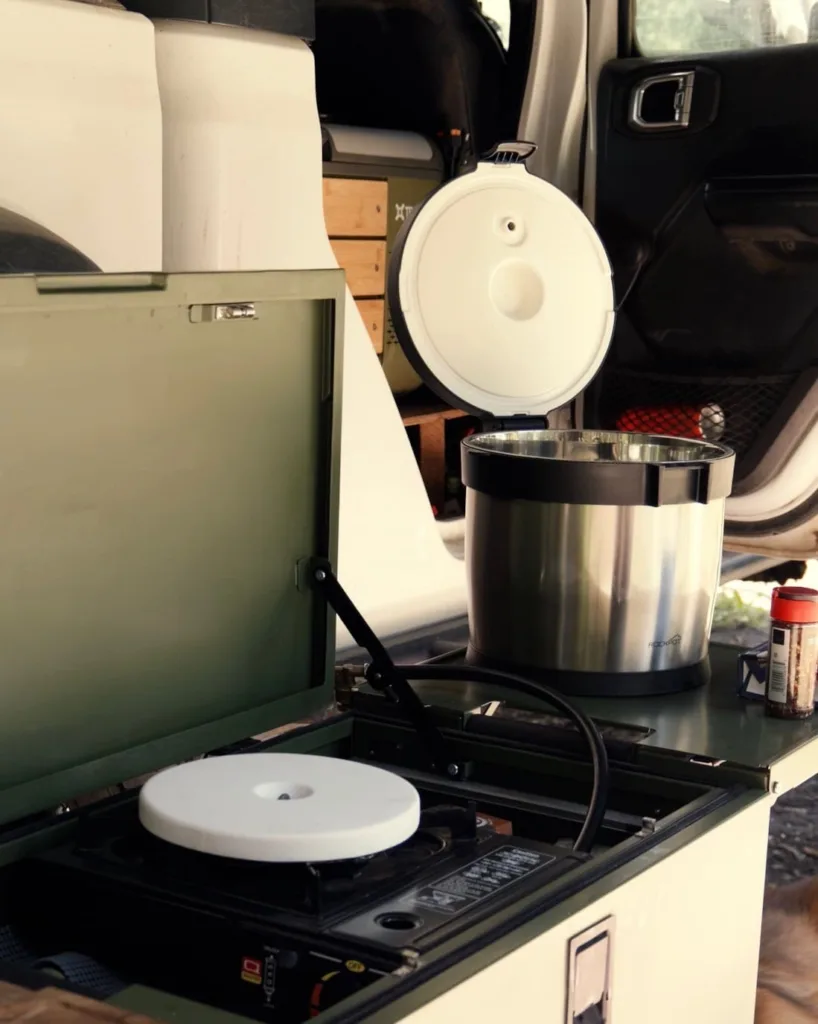
The RockPot’s big plus is hands-off cooking once the stone is hot. The cost is time, space, and a narrow cooking style.
Cooking After Preheating, Without an Attached Heat Source
After preheating, there’s nothing to watch. I don’t manage fuel at the pot or worry about an open flame. That freedom is why I use it on travel days.
Other perks I’ve noticed:
- After preheating, I do not run a stove at the pot.
- The exterior felt warm rather than hot during my own use.
- Easy cleanup. Cleanup is quick, which helps in a tight van or camper. My tips on organizing small camper kitchens cover where to stash bulky gear like this.
Advance Planning, Bulk, Slow Cooking, and No Searing or Frying
The trade-offs are real:
No searing or frying. You won’t brown meat or crisp anything in it. For that, I pair it with a griddle like the one in my Blackstone Adventure Ready 14 propane camping griddle review.
Advance planning. You decide on dinner at breakfast. Thirty minutes of preheating comes first, then hours of cooking.
Bulk. Stone plus insulated steel is heavy. This is gear for vehicles, not backpacks.
Slow cooking only. Most meals take several hours. There is no temperature dial.
Should You Choose the 7QT or the Mini?
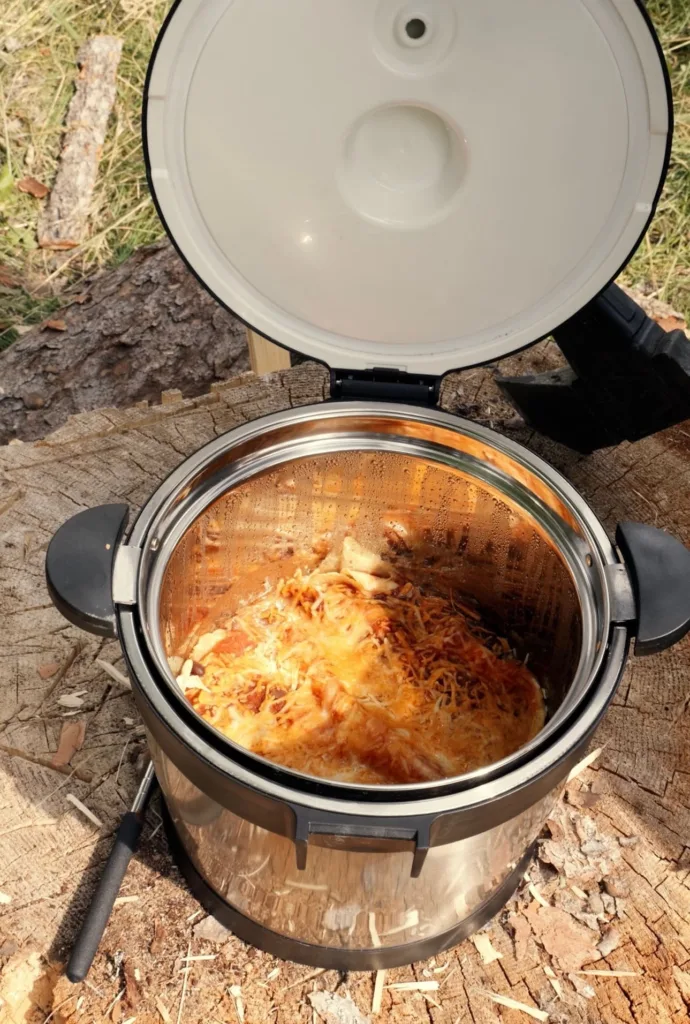
I’d pick the 7QT for groups or batch cooking and look at the Mini for solo travel or small spaces. I own the 7QT, so my experience comes from the larger pot only.
| 7QT | Mini | |
|---|---|---|
| Capacity (maker’s listing) | 7 quarts | 4 quarts |
| Servings (maker’s listing) | 6+ people | 1 to 3 people |
| My hands-on use | Yes | No |
| Best fit | Families, groups, leftovers | Solo trips, tight vans |
Why I Chose the 7QT
The 7QT suits me because I like leftovers and room for layered dishes like lasagna. It fits on a truck seat or in a cargo area. If you cook for a family or want two meals from one heat-up, the bigger pot is the practical pick.
What to Verify Before Buying the Smaller Mini
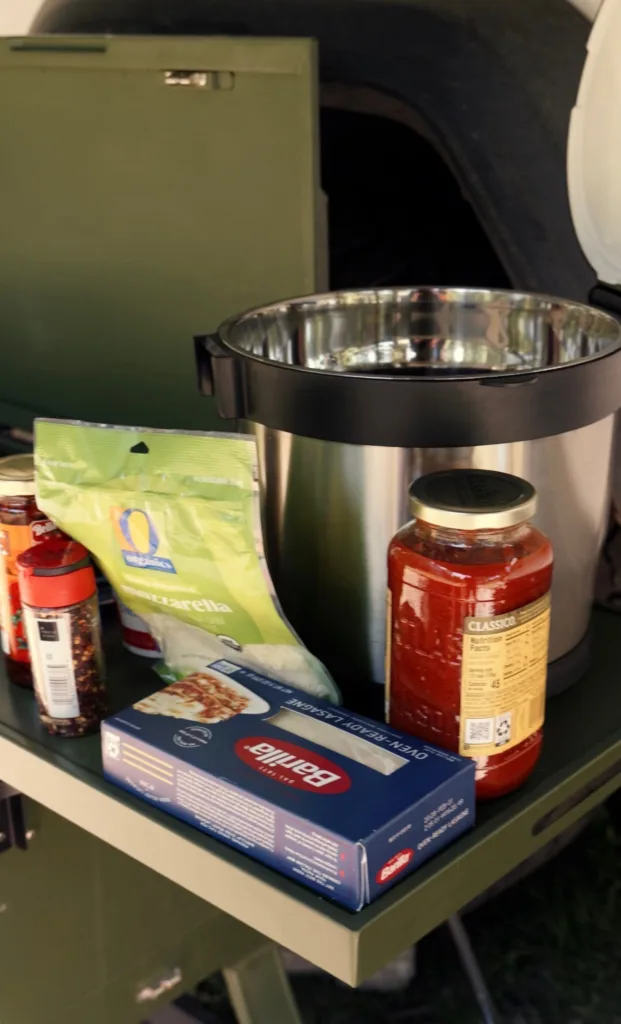
I haven’t used the Mini, so check these on RockPot’s site before you buy:
Return policy and warranty terms
Current price and what comes in the box
Size, weight, and whether it fits your storage space
Whether it uses the same RockTablet and heat sources as the 7QT
Stock and shipping dates, since batches sell out
How Can You Check Food Safety and Troubleshoot an Undercooked Meal?
Food safety in a retained-heat cooker requires caution because heat drops over time rather than staying constant. A fixed preheat time, total elapsed cooking hours, or even a final thermometer reading alone cannot prove food stayed safe if it spent too long in the temperature danger zone.
Checking Food Temperature Against Current Authoritative Guidance
According to the USDA Food Safety and Inspection Service (FSIS), perishable foods must not linger in the danger zone where harmful bacteria multiply rapidly.
Check current guidance from the USDA FSIS for recommended minimum internal temperatures before serving. Note that reaching a target final temperature does not establish safety on its own, because it cannot prove whether the food spent too long at unsafe temperatures during a slow retained-heat cook.
Troubleshooting Handling, Temperature History, and Fill Level
If a meal comes out undercooked or lukewarm, consider its time and temperature history. Reheating cannot reliably rescue food that has lingered too long in the danger zone, because bacterial toxins may persist. When safe handling and steady cooking temperatures cannot be confirmed, discard the food.
For future cooks, manage the factors that protect heat retention:
- Preheating. Ensure the tablet and the stainless pot are thoroughly preheated according to directions.
- Perishable handling. Keep meats and poultry chilled below 40°F until prep time; do not leave raw perishables sitting out at room temperature.
- Fill level and batch size. Leave adequate headspace so heat distributes evenly through the food.
Who Should Buy a RockPot for Road-Based Camping?
You should buy a RockPot if you camp from a vehicle, plan meals in the morning, and want dinner ready when you stop driving. It fits overlanders, RV travelers, and road trippers who have room for a heavy pot and a stove or fire for preheating.
Skip it if you backpack, cook on short notice, or want seared and fried food. A griddle or premade camping meals will serve you better.
For beginners on a budget, start simple:
- Heat the RockTablet thoroughly and preheat the inner pot.
- Keep perishables safely refrigerated until loading, and leave headspace at the top.
- Pre-cook ground meat and poultry for added safety and reliability.
- Check internal doneness with a food thermometer, though a final reading alone cannot verify the full time-temperature history in a retained-heat cooker.
Begin with a saucy dish like enchiladas or lasagna on a short travel day, and add it to your road trip essentials once you trust your timing.